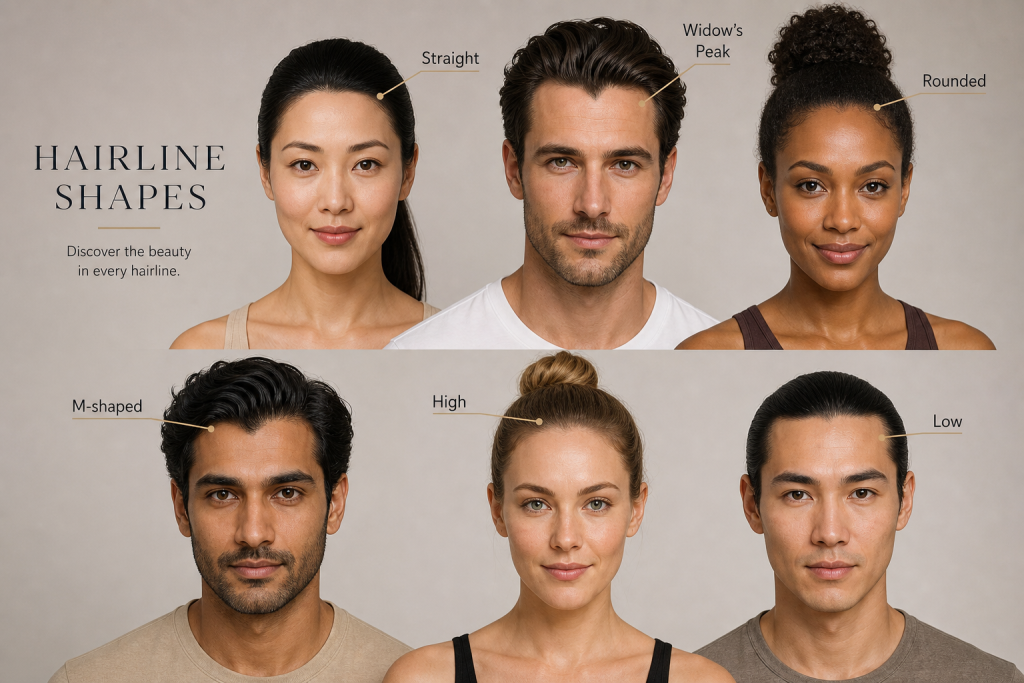

Your hairline is more than the edge where your hair begins. It helps frame your face, affects how hairstyles look, and can sometimes reveal changes in hair density, scalp health, or early hair loss. Because hairlines vary widely, there is no single “perfect” shape. Some people naturally have a low, rounded hairline, while others have a high forehead, widow’s peak, uneven edges, or a mature hairline that has shifted slightly with age.

Introductory illustration
Understanding the most common types of hairlines can help you choose flattering haircuts, notice signs of a receding hairline, and care for fragile hair around the temples and forehead. Below is a practical guide to common hairline shapes for men and women, what they usually look like, and how to maintain a healthy-looking hairline over time.
What Is a Hairline?
A hairline is the natural border where hair grows along the forehead and temples. It may sit low, medium, or high on the forehead, and it may form a straight, curved, pointed, or irregular shape. Hairline shape is influenced by genetics, age, hormones, styling habits, hair texture, and overall hair density.
In the United States, many people talk about hairlines in relation to male pattern baldness, female hair thinning, or cosmetic styling. Still, many hairline shapes are completely normal and not signs of hair loss. A naturally high hairline, for example, does not always mean hair is receding. The key is whether the position or thickness has changed over time.
13 Common Types of Hairlines
1. Round Hairline
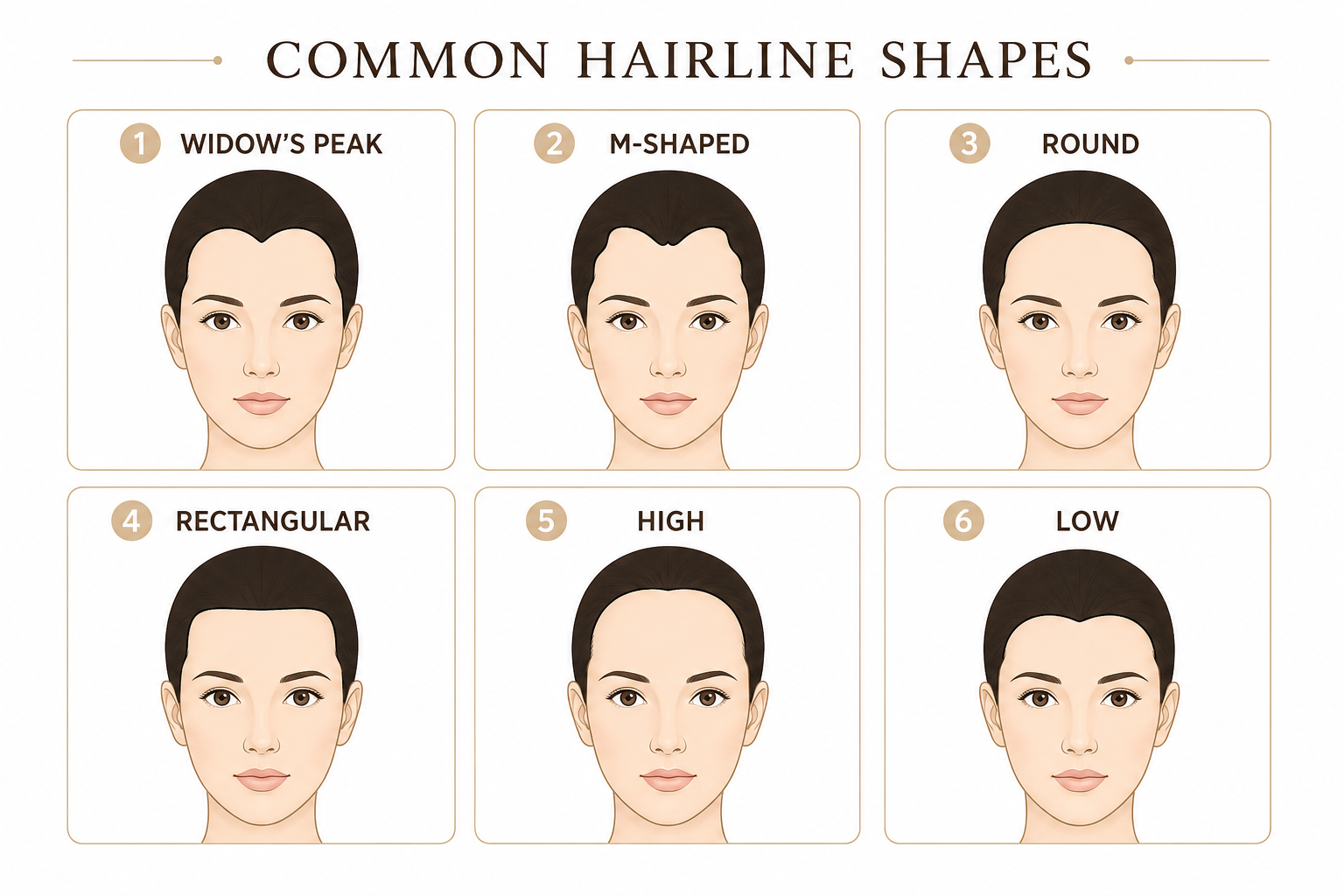
A round hairline curves gently across the forehead, often dipping slightly lower near the center. It creates a soft, balanced frame and is common in both men and women. This shape may look fuller when hair density is strong along the front edge.
2. M-Shaped Hairline
An M-shaped hairline has a central point or section of hair at the front, with the temples sitting farther back. It may be natural, but it can also become more visible when the temples thin. This is one of the most discussed hairline shapes because it can overlap with early signs of a receding hairline.
3. Widow’s Peak
A widow’s peak forms a distinct downward point in the middle of the forehead. Unlike a strongly receding M shape, a widow’s peak usually has a softer curve from the center toward the temples. Many people are born with this feature, and it can be attractive and easy to style with layered cuts, side parts, or slicked-back looks.
4. Rectangular Hairline
A rectangular hairline appears mostly straight across the forehead with sharper corners near the temples. It is common in both men and women and can create a structured, symmetrical look. Barbers often enhance this shape with a lineup, especially for short hairstyles.
5. Cowlick Hairline
A cowlick hairline occurs when hair near the front grows in a swirl or unusual direction. It can make the hairline look uneven even when hair density is normal. Cowlicks are genetic and usually not a health concern, though they may require specific styling techniques, such as blow-drying in the growth direction or using lightweight styling cream.
6. High Hairline
A high hairline sits farther back on the forehead, making the forehead look taller. Some people naturally have this shape from childhood, while others develop it as hair recedes with age. A high hairline can be balanced with bangs, textured layers, fringe, or shorter sides depending on face shape and hair type.
7. Middle Hairline
A middle hairline sits in a balanced position between the eyebrows and the top of the head. It is often considered proportionate because it does not make the forehead look especially short or tall. However, what looks “middle” can vary based on facial structure.
8. Low Hairline
A low hairline begins closer to the eyebrows, creating a shorter forehead. It may make the hair look fuller at the front and can give the face a youthful appearance. People with low hairlines may prefer styles that lift hair away from the face to create more openness.
9. Mature Hairline
A mature hairline is a slight, stable shift backward from a youthful hairline. It often appears in adulthood and does not always mean active balding. The difference between a mature hairline and progressive hair loss is usually change: if the hairline continues moving back, becomes patchy, or thins quickly, it may need attention.
10. U-Shaped Hairline
A U-shaped hairline curves upward at the temples and dips lower in the center, creating a rounded U form. In men, it is sometimes associated with temple recession, especially if the sides keep moving back. In women, a softer U shape may be natural.
11. Uneven Hairline
An uneven hairline has irregular edges, asymmetry, thin spots, or jagged areas. It may be caused by genetics, cowlicks, tight hairstyles, past hair breakage, or hair thinning. If unevenness appears suddenly, especially with shedding or scalp irritation, a dermatologist can help identify the cause.
12. Bell-Shaped Hairline
A bell-shaped hairline forms a rounded arch that rises higher on the forehead and curves down toward the temples. It is often described in women’s hairline patterns, but anyone can have it. If it becomes more dramatic over time, it may be worth monitoring for thinning.
13. Triangular Hairline
A triangular hairline creates a shape where the hairline rises toward the center and angles down toward the temples. It can be natural, but it may also appear when the front hairline changes unevenly. Styling with soft layers or face-framing pieces can help balance this shape.
What Is Considered a Good Hairline?
A good hairline is usually one that looks healthy, stable, and suited to your face. Many people prefer a hairline that is thick, even, and not too high, but beauty standards vary. A widow’s peak, high hairline, or uneven hairline can still look great with the right haircut and healthy hair density.
Instead of chasing one ideal shape, focus on three practical signs: hairline thickness, consistency, and scalp condition. If hair feels strong, shedding is normal, and the hairline has not changed much over time, it is likely healthy.
Signs Your Hairline May Be Receding
Detailed illustration
A receding hairline happens when hair gradually moves back from the forehead or temples. It is common with age, especially in men, but women can also experience front hair thinning. Because changes can be slow, photos are useful. Take a clear picture of your hairline every few months in similar lighting and compare.
- Temples look thinner or farther back than before.
- The hairline forms a stronger M shape over time.
- More scalp shows through at the front.
- Hair sheds more than usual during washing or brushing.
- Hair near the forehead feels finer, weaker, or shorter.
- Volume decreases around the crown or part line.
If these signs appear quickly, or if hair loss comes with itching, scaling, pain, or redness, medical evaluation is important. Conditions such as thyroid disease, anemia, scalp inflammation, medication side effects, and nutritional deficiencies can contribute to hair loss.
Common Causes of Hairline Changes
Genetics and Hormones
Genetics strongly affect hairline shape and hair loss risk. Androgenetic alopecia, often called male pattern baldness or female pattern hair loss, is linked to inherited sensitivity to hormones that shrink hair follicles over time. In men, this often starts at the temples or crown. In women, thinning may appear around the part, temples, or frontal hairline.
Age
Hair naturally changes with age. Growth cycles may shorten, strands may become finer, and density can decrease. A mature hairline is normal for many adults, but ongoing thinning may need treatment if you want to slow or reverse it.
Tight Hairstyles and Friction
Repeated tension from tight ponytails, braids, buns, wigs, extensions, headbands, and tight hats can damage follicles near the hairline. This condition, called traction alopecia, often affects the temples and front edges. Early traction damage may improve if tension stops, but long-term damage can become permanent.
Heat, Chemicals, and Harsh Products
Frequent flat ironing, hot blow-drying, bleaching, relaxing, perming, and alcohol-heavy styling products can weaken hair fibers and cause breakage around the hairline. The front hairline is delicate, so damage may show there first.
Stress, Diet, and Health
Major stress, crash dieting, dehydration, low iron, low vitamin D, low zinc, and inadequate protein can trigger shedding. This type of hair loss often appears as diffuse thinning rather than one specific hairline shape, but the front may look thinner if density drops overall.
How to Maintain a Healthy Hairline
Use Gentle Styling Habits
Choose loose hairstyles more often, especially if your edges feel tender or thin. Avoid pulling hair tightly at the temples. If you wear protective styles, ask your stylist to keep tension low around the hairline and avoid tiny, tight braids at the front.
Limit Heat Exposure
Use cool or medium heat when blow-drying. Apply heat protectant before hot tools, and reserve flat irons or curling irons for occasional styling. Less heat means less breakage, especially around fragile front hairs.
Brush and Detangle Carefully
Use a wide-tooth comb or gentle brush. Start detangling from the ends and work upward instead of pulling from the roots. For textured or curly hair, detangling with conditioner may reduce breakage, but avoid rough brushing when hair is wet and stretched.
Choose Hair Products Wisely
Look for mild shampoos, moisturizing conditioners, and lightweight styling products. Avoid products that leave heavy buildup on the scalp. If your scalp becomes itchy, flaky, or irritated after using a product, stop using it and consider seeing a dermatologist.
Support Hair Growth From Within
A balanced diet supports hair growth. Include protein, leafy greens, eggs, fish, beans, nuts, seeds, whole grains, and vitamin-rich fruits. Staying hydrated also supports scalp and hair health. Supplements such as biotin may help only when a deficiency exists, so testing is better than guessing.
Options for Changing or Improving Your Hairline
Related context illustration
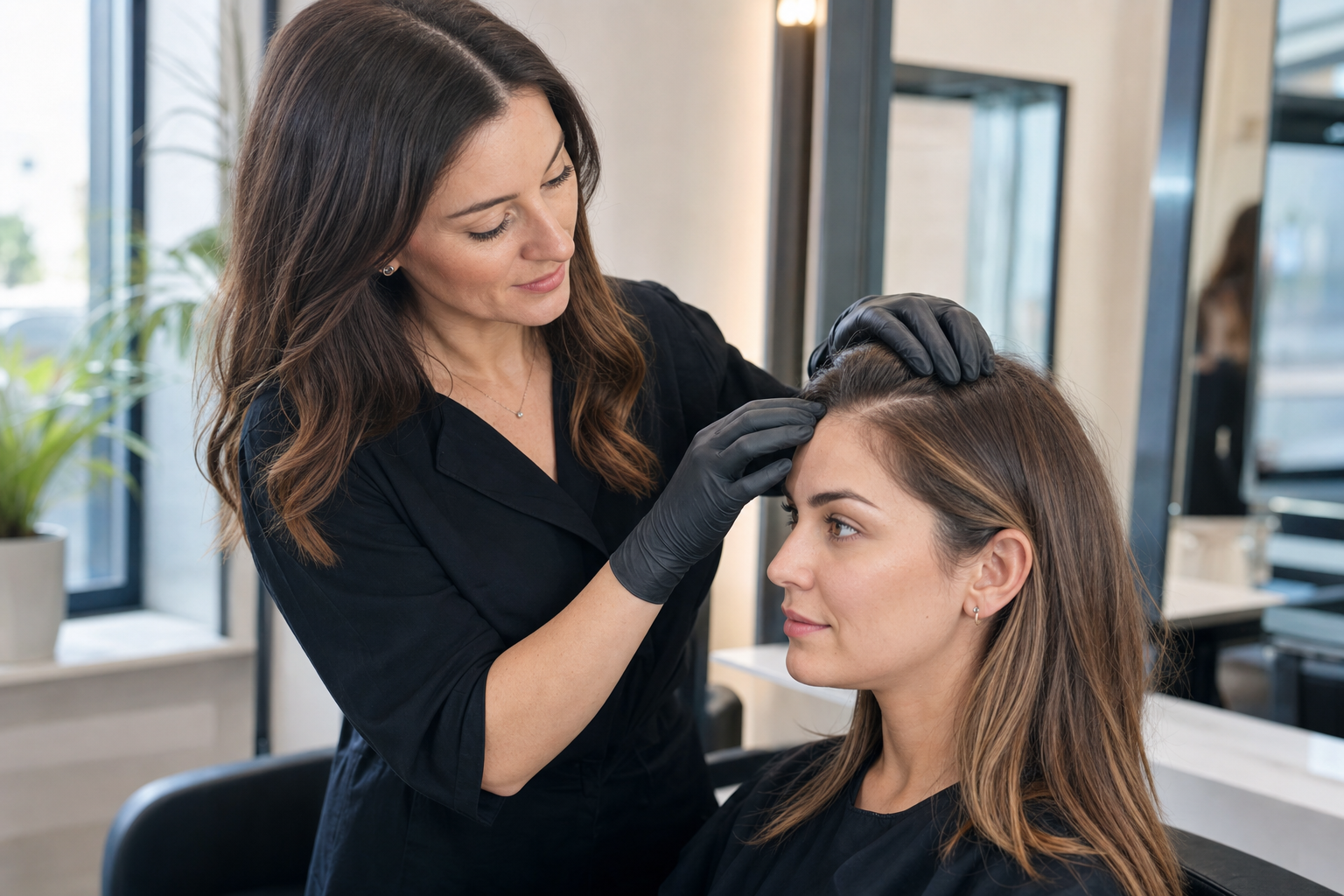
If you want to change how your hairline looks, options range from styling to medical treatment. For mild concerns, a haircut may be enough. Bangs, fades, textured crops, side parts, curls, waves, and layered styles can all make hairline shape less noticeable or more flattering.
For thinning, over-the-counter minoxidil is commonly used in the U.S. to support hair growth. Prescription treatments such as finasteride may be recommended for some men, while other therapies may be considered for women depending on diagnosis, pregnancy plans, and health history. Always discuss medication with a qualified clinician.
Cosmetic options include barber lineups, laser hair removal for unwanted low or uneven hairs, scalp micropigmentation, microblading-style cosmetic tattooing, and hair transplant surgery. Hair transplants can be effective for suitable candidates, but they require medical consultation, realistic expectations, and time for results to grow in.
When to See a Dermatologist
See a board-certified dermatologist if your hairline changes rapidly, shedding becomes heavy, bald patches appear, or your scalp feels painful, itchy, scaly, or inflamed. You should also seek help if you suspect hair loss from medication, hormonal changes, postpartum shedding, thyroid problems, anemia, or autoimmune conditions.
Early diagnosis matters. Some forms of hair loss respond best when treated early, before follicles become permanently inactive. A dermatologist may examine your scalp, review your medical history, order blood tests, or recommend targeted treatments.
Conclusion
The many types of hairlines include round, M-shaped, widow’s peak, rectangular, cowlick, high, middle, low, mature, U-shaped, uneven, bell-shaped, and triangular patterns. Most are normal variations, not problems. What matters most is whether your hairline is stable, comfortable, and healthy-looking.
If your hairline has always looked a certain way, it may simply be part of your natural features. If it is changing, thinning, or shedding more than usual, track it with photos and consider professional advice. With gentle styling, good nutrition, scalp care, and the right treatment when needed, you can protect your hairline and choose styles that work with your natural shape.