

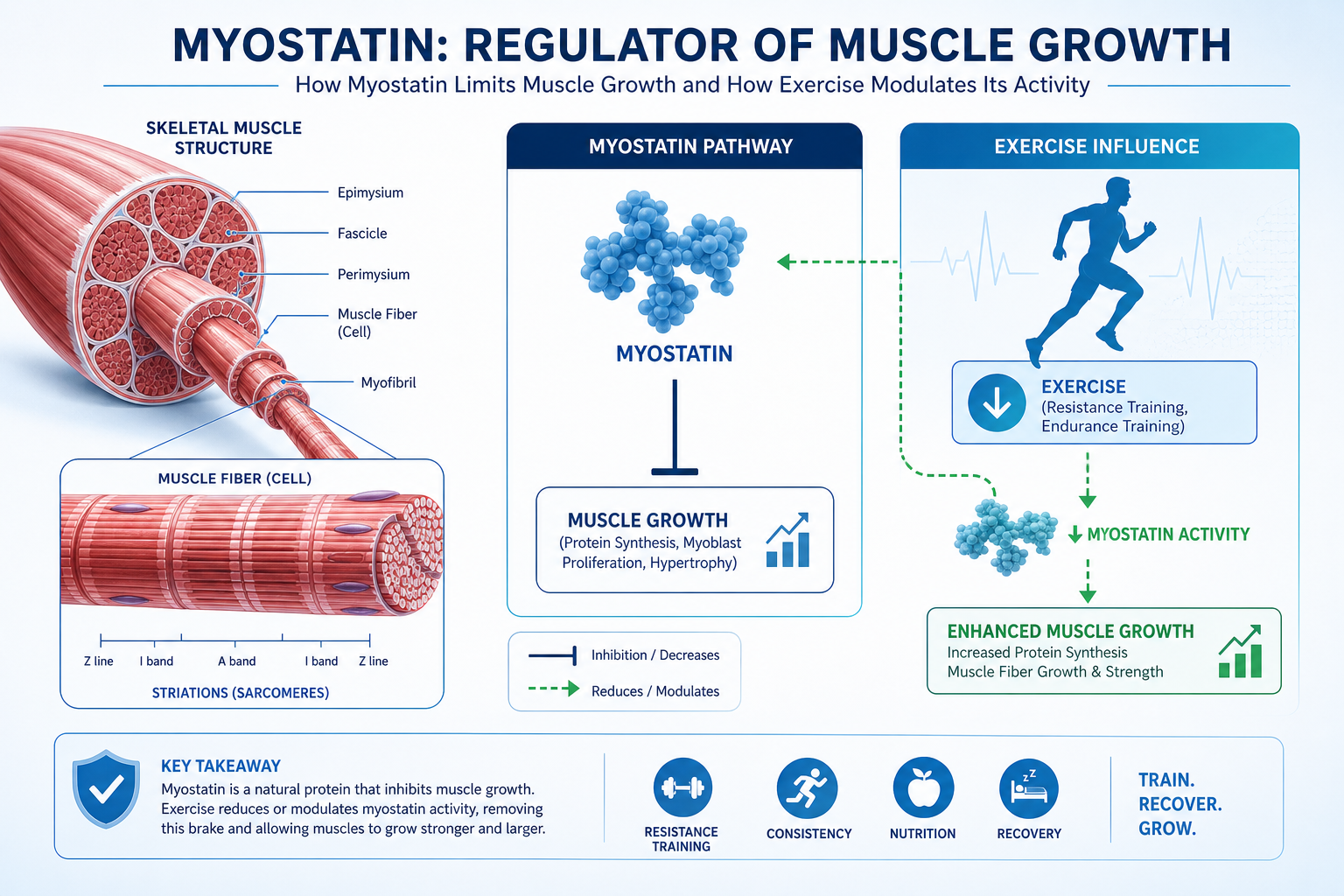
Myostatin is a protein that helps regulate muscle growth. In practical terms, it acts like a biological brake: when myostatin activity is higher, muscle growth can be more limited; when myostatin signaling is lower, the body may have more room to build and maintain muscle. That is why many athletes, older adults, and people interested in strength training search for how to lower myostatin naturally.
Introductory illustration
The safest, most realistic approach is not extreme supplementation or experimental treatment. For most healthy adults in the United States, the best-supported strategies are consistent resistance training, aerobic exercise, recovery, and avoiding smoking. Medical therapies that block myostatin exist mostly in research or clinical contexts and should only be discussed with a qualified healthcare professional, especially for people with muscular dystrophy, muscle wasting disorders, liver disease, or other medical conditions.
What Myostatin Does in the Body
Myostatin, also known as growth differentiation factor 8, is produced mainly in skeletal muscle. Its job is to help prevent uncontrolled muscle growth. That function is normal and necessary, but excessive myostatin activity may be linked with reduced muscle mass, poor strength, and difficulty maintaining lean tissue in certain conditions.
Lowering myostatin does not mean turning the body into a limitless muscle-building machine. Muscle growth still depends on training stimulus, protein intake, sleep, hormones, genetics, age, and overall health. The goal is better muscle protein balance, improved strength, and healthier body composition through habits that also support cardiovascular and metabolic health.
Best Natural Way to Lower Myostatin: Resistance Training
Resistance training is one of the most practical ways to influence myostatin levels and improve muscle growth. Weight training creates mechanical tension in muscle fibers. The body responds by repairing and strengthening those fibers, which may reduce myostatin activity while supporting muscle-building pathways.
For beginners, this does not require advanced bodybuilding routines. A basic strength training plan that uses major movement patterns can be effective. Focus on exercises that train legs, back, chest, shoulders, arms, and core. Consistency matters more than complexity.
Effective resistance exercises
- Squats: Train quadriceps, glutes, hamstrings, and core.
- Deadlifts or hip hinges: Build posterior chain strength when performed with proper form.
- Push-ups or chest press: Train chest, shoulders, and triceps.
- Rows or pull-ups: Strengthen back and biceps.
- Shoulder press: Develop shoulders and upper-body stability.
- Biceps curls and triceps extensions: Add direct arm training.
- Resistance band exercises: Useful for home workouts and joint-friendly strength work.
A practical plan is two to four resistance training sessions per week. Use a weight that makes the final two or three repetitions challenging while still allowing controlled form. Most adults can start with two to three sets of 8 to 12 repetitions per exercise.
High-Intensity Resistance Training and Myostatin
High-intensity resistance training, often called HIRT, may produce a stronger stimulus for reducing myostatin than easy strength work. HIRT combines challenging loads, short rest periods, and full-body effort. It should be used carefully because it is more demanding on muscles, joints, and the nervous system.
A sample HIRT-style circuit might include push-ups, rows, squats, shoulder presses, and lunges performed back-to-back with brief rest. Another option is a superset structure, such as pairing chest press with rows or squats with Romanian deadlifts. The key is intensity, not sloppy speed. Every repetition should stay controlled.
High-intensity training should challenge the body, not punish it. Pain, dizziness, sharp joint discomfort, or loss of form means stop and reassess.
Most people should not do HIRT on consecutive days. Two or three weekly sessions are usually enough, especially when combined with moderate aerobic exercise. Beginners, older adults, and anyone with heart disease, uncontrolled blood pressure, diabetes complications, or orthopedic issues should speak with a healthcare professional before starting intense training.
Aerobic Exercise Also Helps Lower Myostatin

Detailed illustration
Cardio is often overlooked in muscle-building discussions, but aerobic exercise may also help lower myostatin and support muscle health. Moderate-intensity cardio improves blood flow, insulin sensitivity, mitochondrial function, and recovery capacity. These effects can make strength training more productive.
Useful aerobic exercise options include brisk walking, cycling, jogging, swimming, rowing, elliptical training, hiking, and jump rope. In U.S. fitness guidelines, adults are commonly encouraged to get at least 150 minutes of moderate-intensity aerobic activity per week, along with muscle-strengthening exercise on two or more days.
Moderate intensity guideline
Moderate intensity usually means breathing faster but still being able to speak in short sentences. A brisk walk, steady bike ride, or elliptical workout can fit this zone. People who are already fit may add short higher-intensity intervals, but steady moderate work remains valuable and easier to recover from.
If fat loss is also a goal, cardio can help create a calorie deficit. If muscle gain or weight maintenance is the priority, calories and protein should be high enough to support recovery. Too much cardio with too little food can work against muscle growth.
Recovery Matters: Muscle Growth Happens Between Workouts
Training signals the body to adapt, but recovery allows that adaptation to happen. Poor sleep, inadequate calories, dehydration, and chronic stress can reduce performance and interfere with muscle repair. Anyone trying to lower myostatin naturally should treat recovery as part of the plan.
Most adults need seven to nine hours of sleep per night. Protein intake should be spread across meals, especially after resistance training. Common high-protein foods include eggs, Greek yogurt, chicken, turkey, fish, lean beef, tofu, tempeh, beans, lentils, and whey or plant-based protein powder.
Rest days are not wasted days. Light walking, mobility work, stretching, and easy cycling can improve circulation without adding heavy fatigue. If soreness lasts for several days or performance keeps dropping, reduce training volume before adding more intensity.
Smoking and Myostatin: Reason to Quit
Smoking is associated with worse cardiovascular health, poorer recovery, lower exercise capacity, and higher risk of muscle loss. It may also be linked with higher myostatin activity. Quitting tobacco is one of the most important steps for long-term muscle health and overall health.
People in the United States have several evidence-based quit options, including nicotine replacement therapy, prescription medications, counseling, quitlines, and support programs. Combining behavioral support with medication often works better than willpower alone.
What About Myostatin Inhibitors and Follistatin?

Related context illustration
Myostatin inhibitors are being studied for medical conditions involving severe muscle loss or impaired muscle development. These treatments are not general fitness tools. They may carry risks and are not the same as a workout supplement from a retail store. Anyone interested in myostatin-blocking therapy should speak with a physician, preferably one familiar with neuromuscular medicine.
Follistatin is a protein that can inhibit myostatin activity. Some supplements claim to support follistatin or block myostatin, often using egg-derived ingredients. Evidence for real-world benefits in healthy adults is limited, product quality varies, and safety concerns may exist, including possible liver-related risks. People with egg allergies should be especially cautious with egg-yolk-based products.
No supplement should replace training, nutrition, sleep, and medical guidance. If a product promises dramatic muscle growth without effort, treat that claim with skepticism.
Simple Weekly Plan to Support Lower Myostatin
A balanced weekly routine can combine resistance training, aerobic exercise, and recovery without becoming extreme. Here is a practical example for a healthy adult with basic fitness experience.
- Monday: Full-body strength training with squats, rows, chest press, shoulder press, and core work.
- Tuesday: 30 to 45 minutes of brisk walking, cycling, or elliptical training.
- Wednesday: Rest or light mobility work.
- Thursday: Full-body strength training with deadlift variation, lunges, pull-downs, push-ups, and arm work.
- Friday: 20 to 30 minutes of moderate cardio or intervals if already conditioned.
- Saturday: Optional resistance band session, hiking, swimming, or recreational sport.
- Sunday: Rest, stretching, meal prep, and sleep priority.
This structure supports muscle growth while keeping injury risk lower than daily hard training. Over time, increase weight, repetitions, or sets gradually. Progressive overload is essential: muscles need a reason to adapt.
Safety Tips Before Changing Your Training
Anyone new to exercise should start conservatively. Proper technique is more important than lifting heavier weights. A certified personal trainer, physical therapist, or strength coach can help correct form and build an appropriate plan.
People with chronic disease, chest pain, fainting episodes, uncontrolled hypertension, recent surgery, pregnancy complications, or significant joint pain should get medical clearance before starting intense exercise. Myostatin is related to muscle biology, but health decisions should consider the whole body.
Conclusion
The best answer to how to lower myostatin is built on proven habits: resistance training, moderate aerobic exercise, enough recovery, good nutrition, and not smoking. High-intensity resistance training may offer added benefit, but it must be used wisely. Experimental myostatin inhibitors and follistatin supplements are not first-line options for healthy adults and require caution. For most people, the strongest path is steady training, smart recovery, and a long-term plan that supports both muscle growth and overall health.