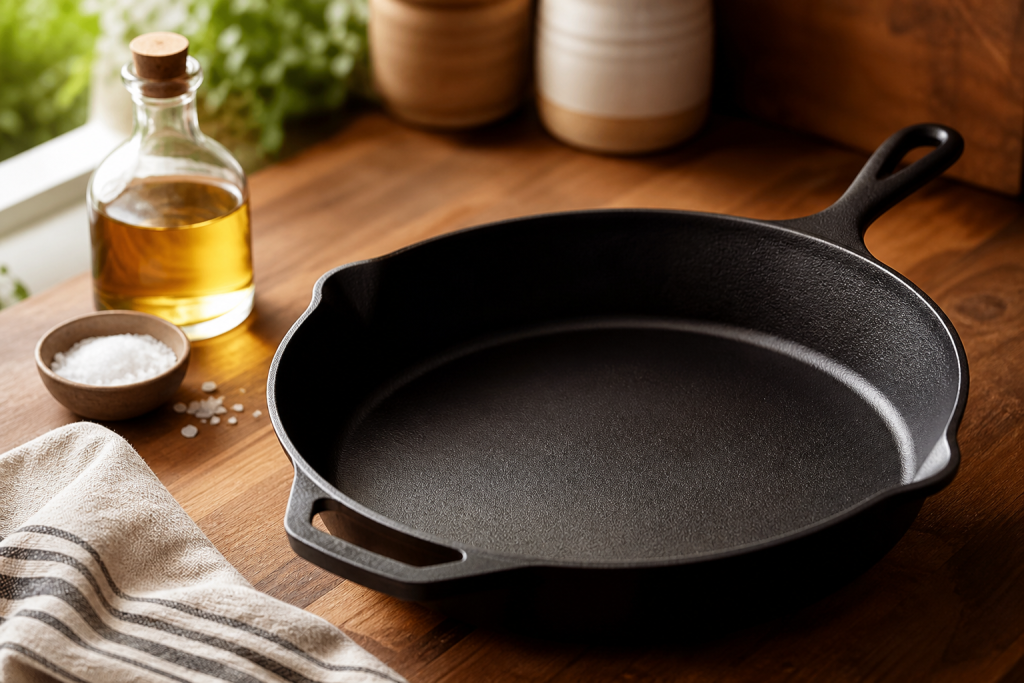

A well-used cast iron skillet can handle weeknight burgers, Sunday cornbread, crispy potatoes, seared steak, and campfire breakfasts. It is tough, affordable, and built to last for generations, but it does need the right cleaning routine. Learning how to clean a cast iron skillet is less about complicated rules and more about protecting its seasoning, removing food residue, and drying it fully before rust has a chance to form.
Introductory illustration
Many home cooks in the U.S. grew up hearing strict cast iron advice: never use soap, never cook acidic foods, never scrub hard, never wash while hot. Some of those rules are outdated, and some are only partly true. Modern dish soap is mild enough for occasional use, stuck-on food can be removed safely, and a skillet can be restored even if rust appears. What matters most is cleaning it promptly, drying it completely, and adding a light oil layer when needed.
What Makes Cast Iron Different From Other Cookware?
Cast iron is porous, heavy, and excellent at holding heat. Unlike stainless steel or nonstick pans, it develops a layer of polymerized oil called seasoning. This seasoned surface helps prevent sticking, improves browning, and protects the pan from moisture. Every time you cook with fat and heat, you can build this layer a little more.
Because seasoning is part of the pan’s performance, cleaning cast iron is not about stripping it until it looks brand new. A clean skillet can still look dark, glossy, and slightly uneven. That is normal. Your goal is to remove food bits, grease buildup, and moisture while keeping the protective surface intact.
Supplies You Need for Safe Cast Iron Cleaning
You do not need special products for everyday cast iron skillet care. Most kitchens already have the basics. For routine cleaning, gather these items:
-
Hot water
-
A non-abrasive sponge, dish brush, or chainmail scrubber
-
Mild dish soap, used only when needed
-
Kosher salt for stubborn stuck-on food
-
Paper towels or a clean lint-free kitchen towel
-
Neutral oil, such as canola, vegetable, grapeseed, or avocado oil
-
Stovetop burner or warm oven for drying
Avoid soaking the skillet in a sink full of water. Also avoid putting it in the dishwasher. Long water exposure and harsh dishwasher detergents can damage the seasoning and cause rust.
How to Clean a Cast Iron Skillet After Everyday Cooking
For most meals, cleaning a cast iron pan takes only a few minutes. This method works well after cooking eggs, bacon, grilled cheese, pancakes, vegetables, burgers, or cornbread.
Step 1: Let the Skillet Cool Slightly
Do not drop a smoking-hot skillet into cold water. Sudden temperature changes can cause thermal shock and may crack or warp cookware. Let the skillet cool until it is warm but safe to handle. Warm cast iron is easier to clean because grease and food residue have not hardened fully.
Step 2: Rinse With Hot Water
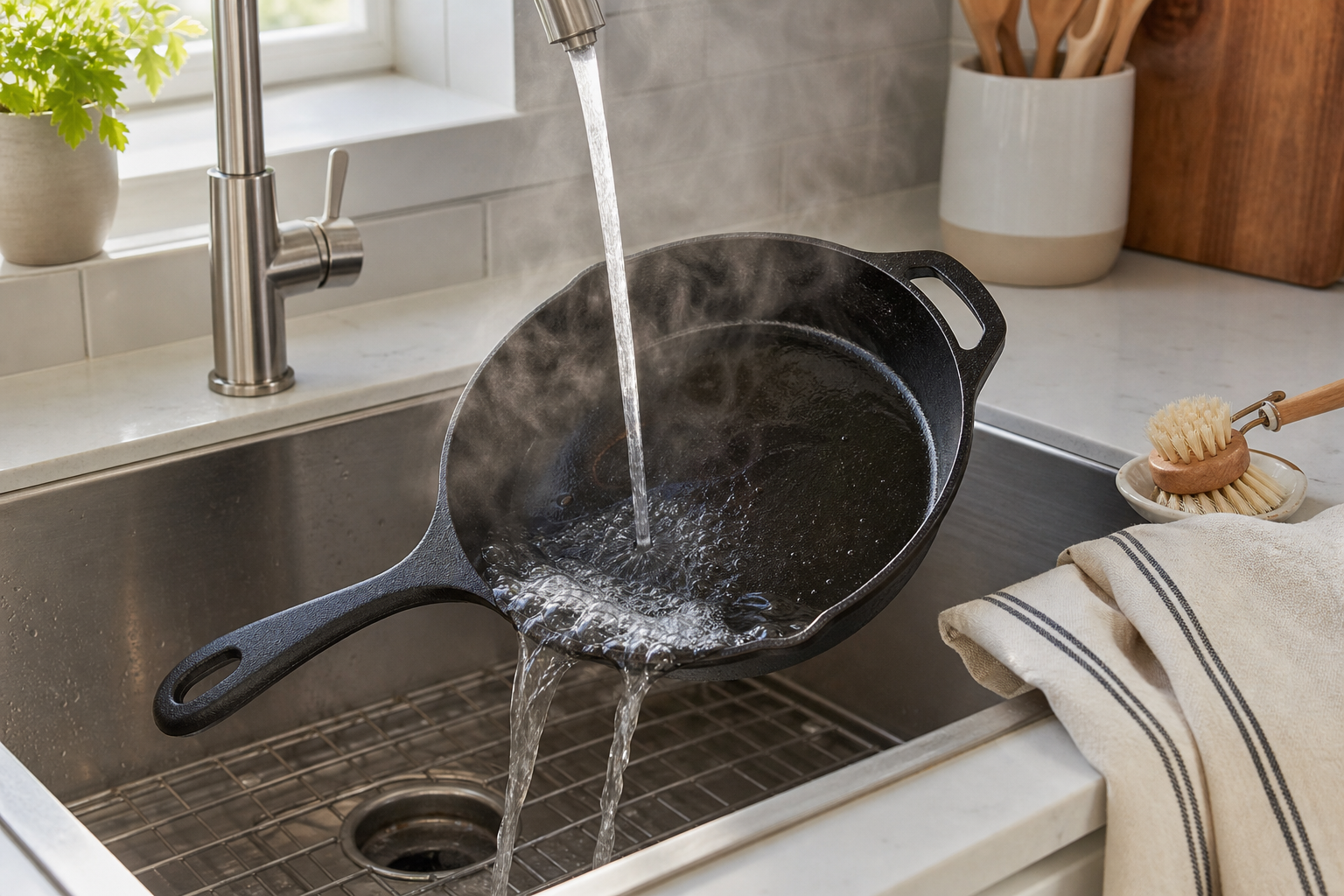
Run hot water over the cooking surface. Use a dish brush or soft sponge to loosen food particles. If the skillet is well seasoned, most residue should release quickly. For light grease, hot water and wiping may be enough.
Step 3: Use Mild Soap When Needed
Soap is not forbidden. A small amount of mild dish soap can help remove strong smells, sticky sauce, or excess oil. Modern soap does not contain the harsh lye once used in older products, so it will not instantly ruin a seasoned cast iron pan. Use it sparingly, rinse well, and dry right away.
Step 4: Dry Completely
This is the most important step. Wipe the skillet with a towel, then place it over low heat for a few minutes until every trace of moisture evaporates. Water left on cast iron can create orange rust spots quickly, especially in humid kitchens or during summer months.
Step 5: Add a Thin Oil Layer
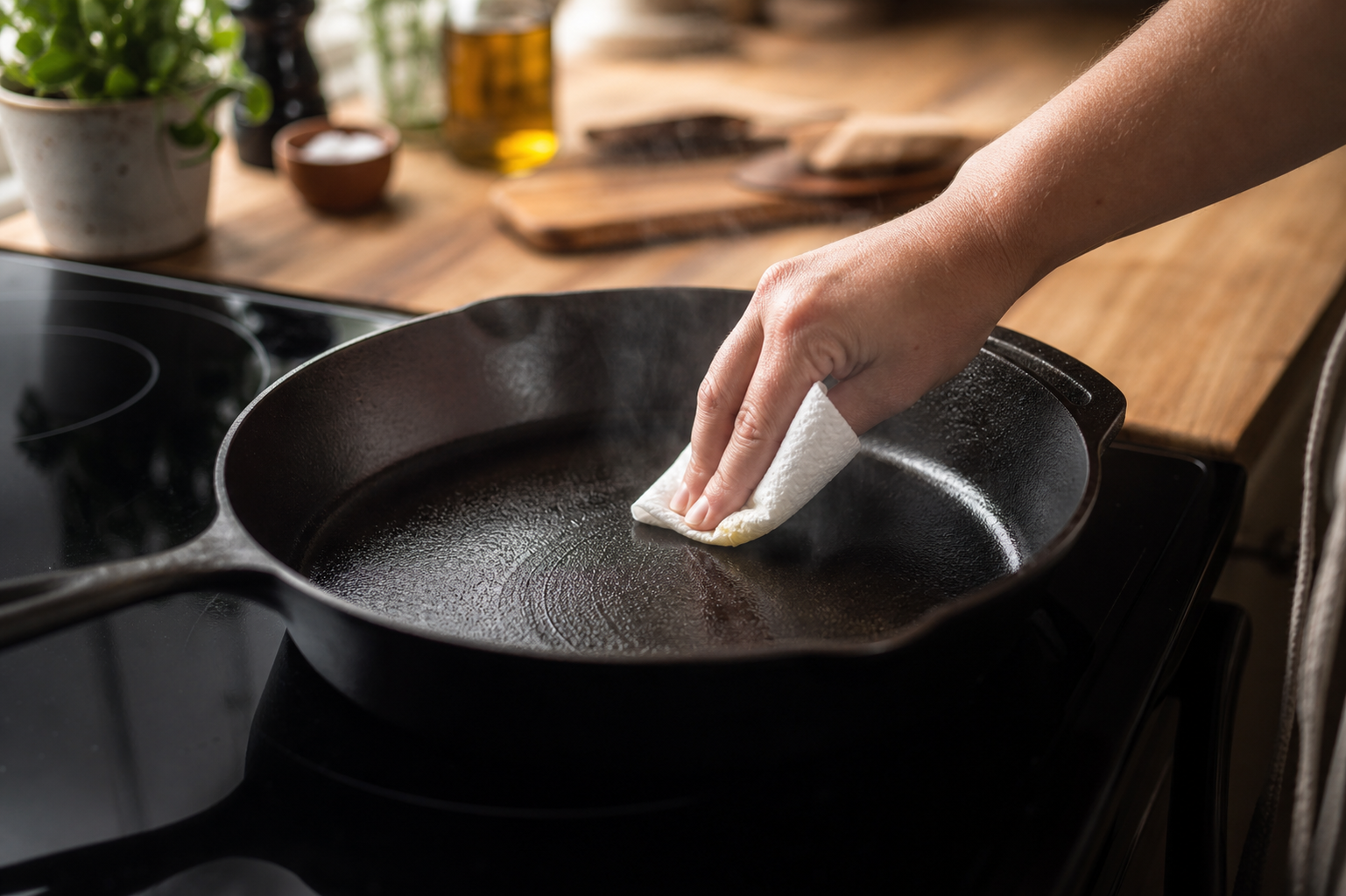
Once dry, add a few drops of neutral oil and rub it across the cooking surface with a paper towel. The pan should look lightly polished, not greasy. If you can see pools of oil, you used too much. Heat the skillet briefly until it looks dry and satin-like, then store it.
How to Remove Stuck-On Food Without Damaging Seasoning
Stuck-on food happens, especially after cooking potatoes, eggs, fish, barbecue sauce, or anything sugary. You can clean it without scraping aggressively or stripping the pan.
Use Kosher Salt as a Gentle Scrub
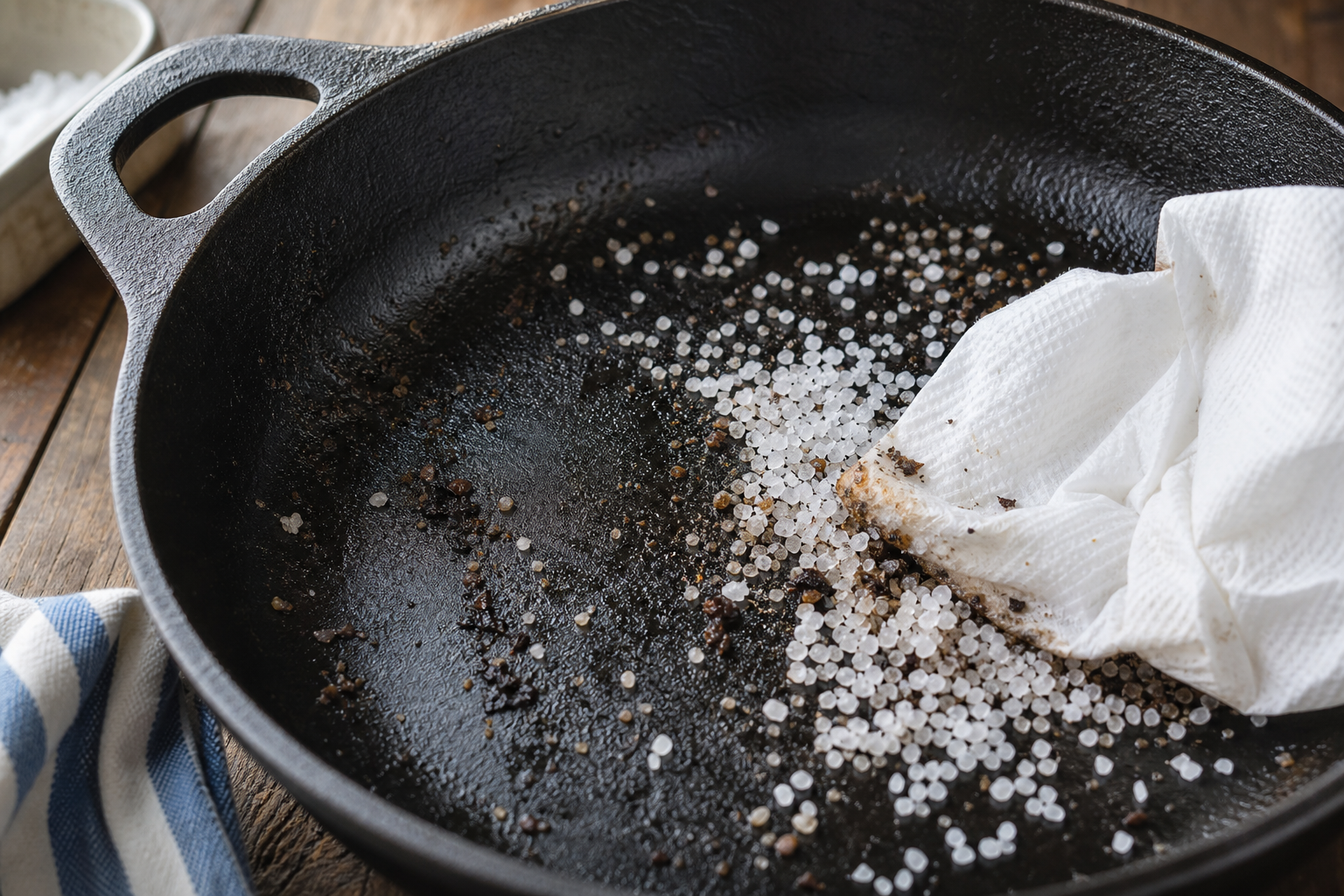
Pour a tablespoon or two of kosher salt into the warm skillet. Add a few drops of water or oil, then scrub with a paper towel or sponge. The salt acts like a mild abrasive and helps lift food without cutting deeply into the seasoning. Rinse, dry over heat, and oil lightly.
Simmer Water for Tough Residue
If food is baked on, add a small amount of water to the skillet and simmer it on the stove for three to five minutes. Use a wooden spatula to loosen stuck bits. Pour out the water, rinse quickly, dry fully, and apply oil. This technique is useful after pan sauces or skillet casseroles.
Use Chainmail for Serious Scrubbing
A chainmail scrubber is popular among cast iron owners because it removes stubborn debris without the same gouging effect as steel wool. Use it with warm water and moderate pressure. Afterward, dry and oil the skillet to refresh the surface.
Can You Use Soap on Cast Iron?
Detailed illustration
Yes, you can use a little soap on cast iron when needed. The belief that soap destroys cast iron comes from a time when soaps were harsher and seasoning layers were often thinner. Today, mild dish soap is safe for routine occasional cleaning if you do not soak the skillet and if you dry it immediately.
That said, soap is not always necessary. If the pan has only light oil and loose crumbs, hot water and a brush are enough. If it smells like fish, has sticky residue, or feels grimy, use soap. Practical cast iron care is about balance, not fear.
How to Clean Rust From a Cast Iron Skillet
Rust does not mean the skillet is ruined. Even a neglected garage-sale pan or an old family skillet can often be brought back. For light rust, scrub with a damp sponge and kosher salt or use a chainmail scrubber. Rinse quickly, dry over heat, and oil.
For heavier rust, use fine steel wool to remove the rusted layer. This may strip some seasoning, but that is acceptable when rust is present. Once the orange rust is gone, wash the skillet with warm water and mild soap, dry thoroughly, coat with a very thin layer of oil, and heat it in the oven to rebuild seasoning.
Basic Re-Seasoning Method
To re-season cast iron, heat the oven to 450 degrees Fahrenheit. Rub a thin layer of neutral oil over the entire skillet, including the handle, sides, bottom, and cooking surface. Wipe off as much oil as possible with a clean towel. Place the skillet upside down on the oven rack with a sheet pan or foil below to catch drips. Bake for one hour, then turn off the oven and let the skillet cool inside. Repeat if the surface still looks dull or patchy.
What Not to Do When Cleaning Cast Iron
Cast iron is durable, but a few bad habits can create problems. Avoid these common mistakes:
-
Do not soak the skillet for long periods.
-
Do not put cast iron in the dishwasher.
-
Do not store it while damp.
-
Do not leave acidic foods like tomato sauce in the pan overnight.
-
Do not use oven cleaner unless you are intentionally stripping the pan for full restoration.
-
Do not apply thick coats of oil, which can turn sticky or rancid.
These mistakes are easy to avoid once cast iron cleaning becomes routine. Fast cleaning, full drying, and thin oiling solve most issues.
Best Oils for Maintaining Cast Iron Seasoning
For everyday maintenance, use a neutral oil with a moderate to high smoke point. Canola oil, vegetable oil, grapeseed oil, and avocado oil all work well. Many U.S. home cooks also use Crisco for oven seasoning because it creates a durable finish and is easy to apply thinly.
Olive oil can work in small amounts, but it has a lower smoke point and may become sticky if applied too heavily. Flaxseed oil is sometimes recommended, but it can create brittle seasoning that flakes if the application is not perfect. The best oil is one you can apply in a very thin layer and heat properly.
How Often Should You Oil Cast Iron?
Related context illustration
You do not need to oil heavily after every use. If the skillet looks glossy, cooks well, and feels smooth, a quick dry may be enough. Add a thin oil layer when the surface looks dry, after using soap, after scrubbing stuck-on food, or before storing the pan for more than a few days.
If your kitchen is humid or you live near the coast, oiling after each wash can help prevent rust. If your climate is dry and you use the skillet often, light oiling every few uses may be enough.
How to Store a Cast Iron Skillet
Store the skillet in a dry place with good airflow. If stacking it with other pans, place a paper towel or thin cloth between them to protect the seasoning and absorb any leftover moisture. Keep the lid off unless both pan and lid are completely dry. Trapped moisture under a lid is a common cause of rust.
For long-term storage, coat the skillet with a very light oil layer and wrap it loosely in paper or cloth. Avoid sealing it in plastic if moisture could be trapped inside.
Quick Cleaning Routine for Busy Weeknights
If you want the shortest reliable method, follow this routine after dinner:
-
Rinse warm skillet with hot water.
-
Scrub food residue with brush, sponge, salt, or chainmail.
-
Use a little soap only if needed.
-
Dry with towel, then heat on stove until fully dry.
-
Rub in a few drops of oil and heat briefly.
This simple process keeps the skillet clean, seasoned, and ready for the next meal.
Conclusion: Clean Cast Iron With Confidence
Cleaning cast iron is easier than its reputation suggests. Use hot water, scrub only as much as needed, dry the pan completely, and protect the surface with a thin coat of oil. Soap is fine in small amounts, rust can be fixed, and stuck-on food has safe solutions. With consistent cast iron skillet care, your pan will become darker, smoother, and more reliable every time you cook.