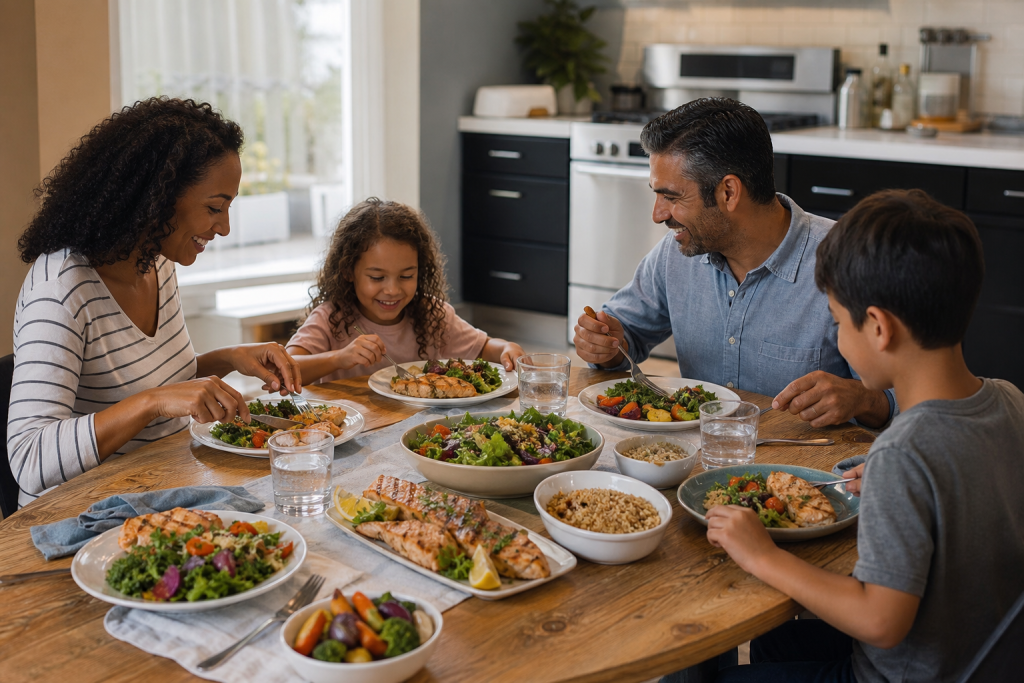

Learning how to optimize Healthy Family Meals starts with one practical goal: make nourishing food easier to cook, serve, and repeat. For many U.S. families, dinner competes with work, school pickups, sports, homework, long commutes, and rising grocery prices. Healthy eating fails when meals feel too hard, too expensive, or too separate from what everyone already likes. Better family meals come from smart planning, flexible ingredients, simple nutrition rules, and realistic routines.
Introductory illustration
Optimized family meals are not perfect meals. They are balanced, affordable, familiar, and doable on weeknights. They help kids build healthy habits, give adults steady energy, reduce food waste, and make grocery shopping less stressful. With a few repeatable systems, breakfast, lunch, and dinner can become healthier without turning kitchen life into a second job.
What Makes a Family Meal Healthy and Practical?
A healthy family meal should include protein, fiber-rich carbohydrates, healthy fats, and colorful produce. In real life, that may look like turkey tacos with black beans and peppers, sheet-pan chicken with potatoes and broccoli, whole-grain pasta with marinara and spinach, or rice bowls with salmon, avocado, and cucumbers. The goal is balance, not restriction.
For families in the United States, practical nutrition also means working with common grocery stores, school schedules, packed lunches, picky eaters, and budget pressure. A meal plan that depends on rare ingredients or long prep times usually fails. A better approach uses familiar foods in stronger combinations.
Simple plate rule: fill half the plate with vegetables or fruit, one quarter with lean protein, and one quarter with whole grains or starchy vegetables. Add dairy, nuts, seeds, olive oil, or avocado when useful for flavor and fullness.
Start With a Weekly Meal Planning System
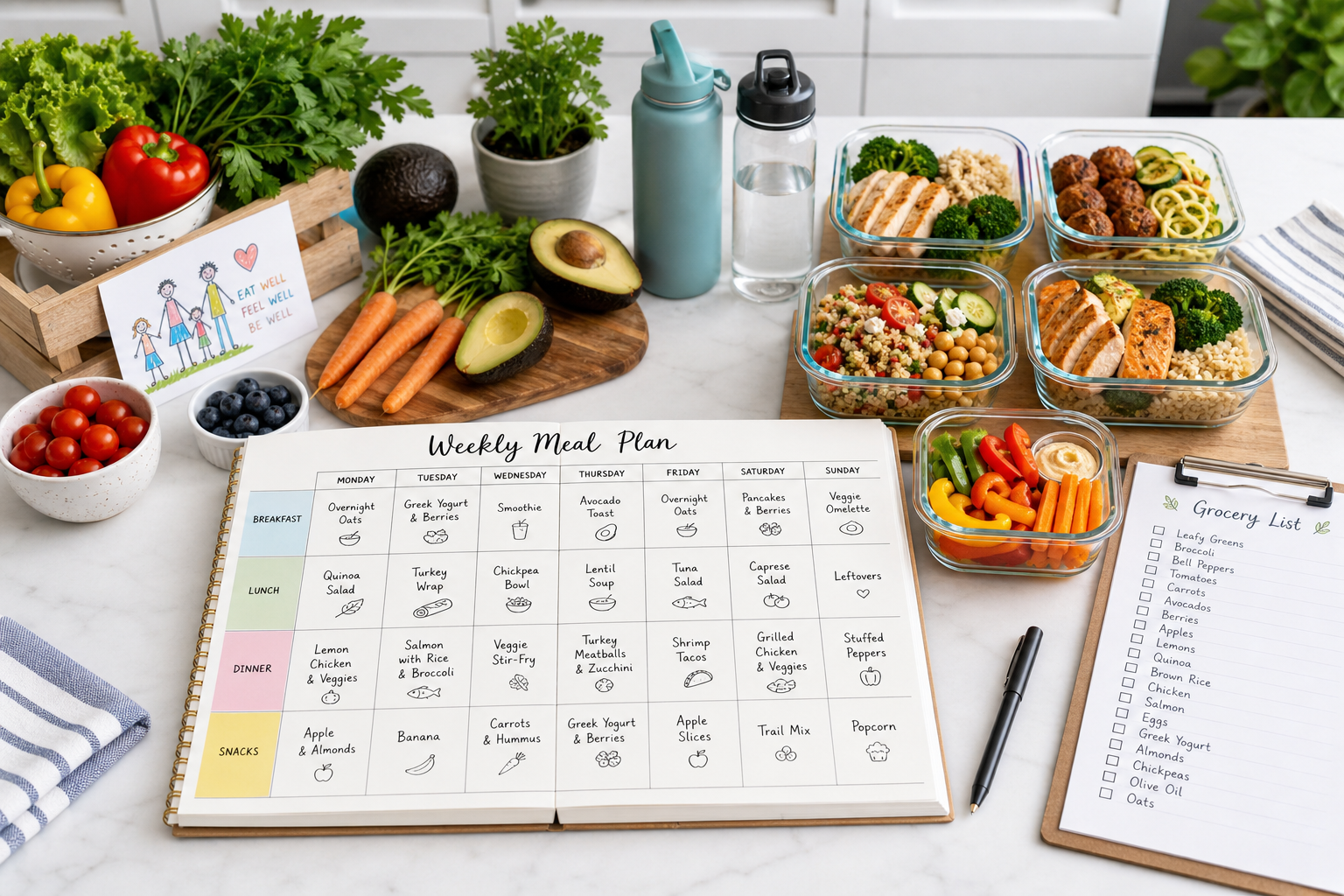
Healthy family meal planning works best when it is repeatable. Instead of creating a brand-new menu every week, build a simple rhythm. For example, Monday can be pasta night, Tuesday taco night, Wednesday slow cooker night, Thursday breakfast-for-dinner night, Friday homemade pizza night, Saturday leftovers or grill night, and Sunday batch-cooking night.
This structure lowers decision fatigue. It also helps kids know what to expect. Within each theme, ingredients can change. Taco night might use ground turkey one week, black beans the next, and shredded chicken after that. Pasta night might include lentil pasta, whole-wheat spaghetti, or vegetable-loaded baked ziti.
Build a Core Grocery List
A core grocery list saves time and keeps healthy choices available. Keep staples that support fast meals: eggs, Greek yogurt, oats, brown rice, whole-wheat tortillas, canned beans, canned tuna or salmon, frozen vegetables, frozen berries, chicken breasts, ground turkey, tofu, low-sodium broth, pasta sauce, olive oil, peanut butter, apples, bananas, carrots, salad greens, and shredded cheese.
When these foods are already in the kitchen, it becomes easier to create balanced meals without takeout. A stocked pantry is one of the strongest tools for quick healthy dinners.
Use Two Prep Blocks Per Week
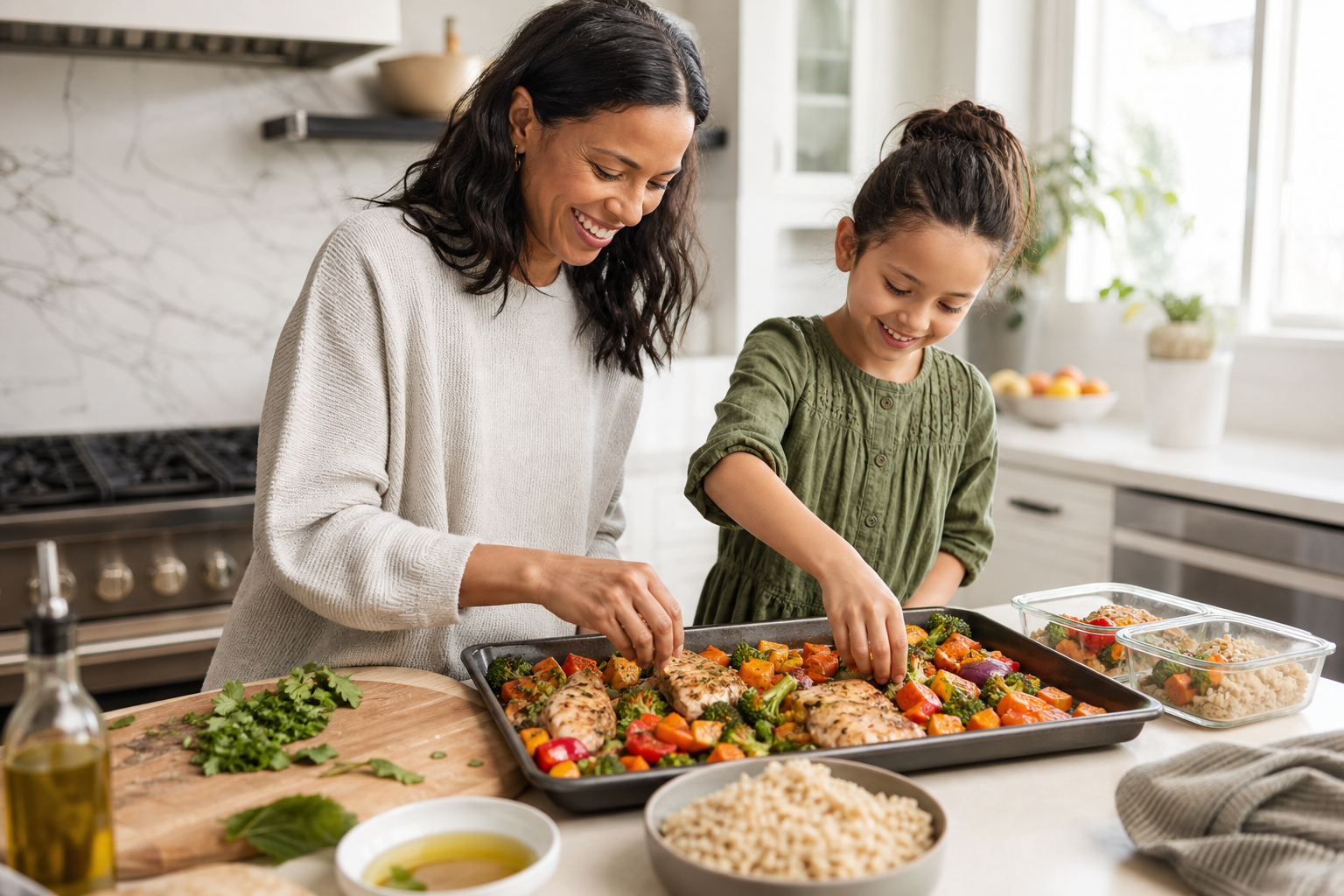
Meal prep does not need to take all Sunday. Two short prep blocks are often better. On Sunday, wash fruit, chop vegetables, cook one grain, and prepare one protein. On Wednesday, refresh produce, cook another protein, or make a soup, chili, or casserole that creates leftovers.
Useful prep tasks include roasting a tray of vegetables, cooking rice or quinoa, boiling eggs, making overnight oats, washing lettuce, mixing a simple vinaigrette, and portioning snacks. These small steps make weekday meals faster.
Optimize Nutrition Without Making Separate Meals
Many parents feel trapped between adult nutrition goals and kid-friendly meals. The fix is not cooking separate dinners. The better method is meal assembly. Serve one main meal with flexible toppings and sides so every person can build a plate.
For example, a chicken rice bowl can include brown rice, chicken, corn, beans, lettuce, salsa, cheese, avocado, and Greek yogurt. One child may eat rice, chicken, and cheese. Another may add beans and salsa. Adults may add extra vegetables. Everyone eats from the same ingredients.
Upgrade Familiar Favorites
Healthy family meals succeed when they respect familiar tastes. Instead of removing favorite foods, improve them. Add finely chopped mushrooms, zucchini, or carrots to meat sauce. Use whole-grain pizza crust and top it with peppers and spinach. Mix cauliflower rice into regular rice. Add beans to taco meat. Choose baked chicken tenders with a whole-grain coating instead of deep-fried nuggets.
Small upgrades are easier to accept than dramatic changes. Over time, family taste preferences shift toward more vegetables, less added sugar, and better portions.
Protein Matters at Every Meal
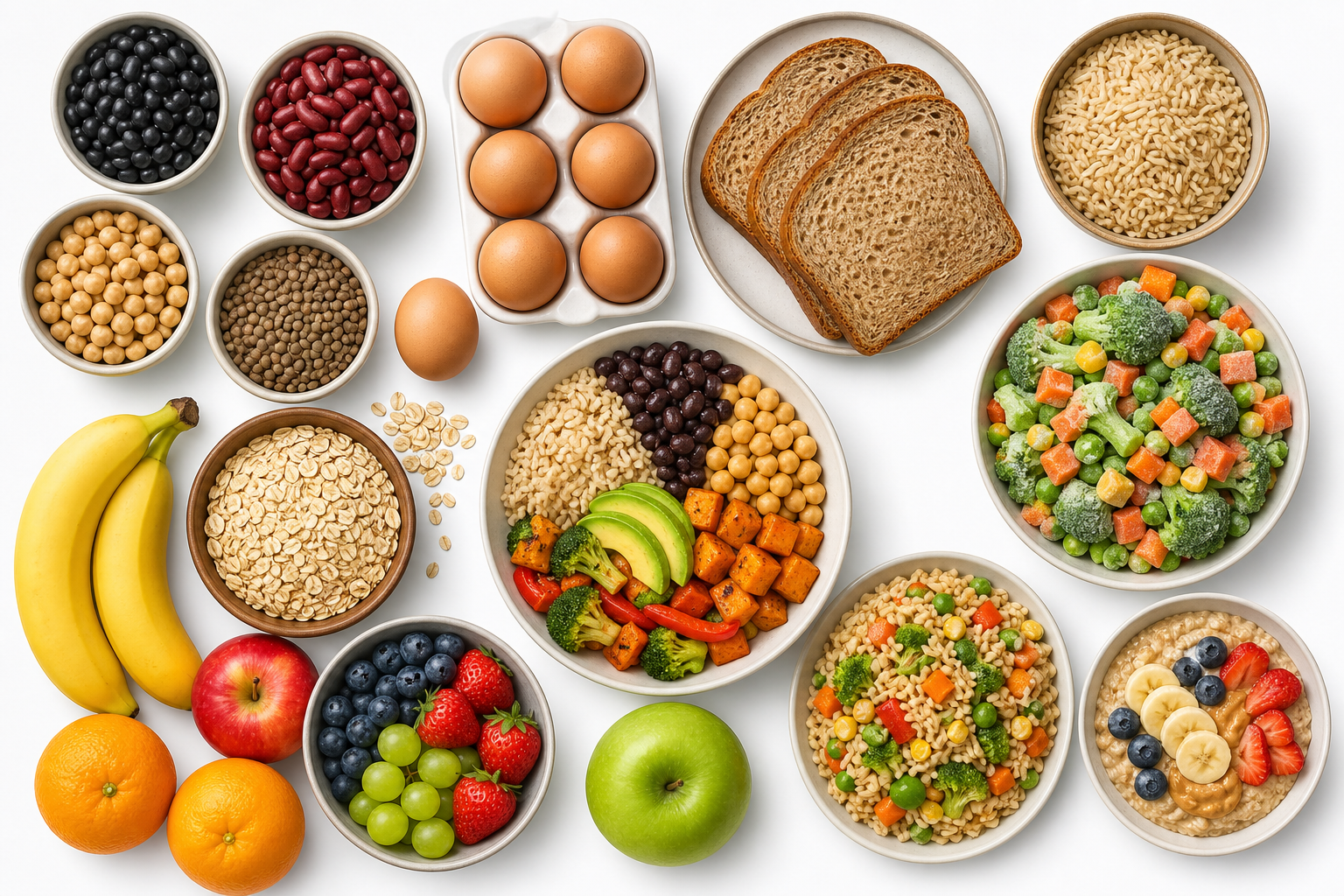
Protein helps adults stay full and supports growth for children and teens. Good family-friendly protein sources include eggs, chicken, turkey, lean beef, fish, beans, lentils, tofu, cottage cheese, Greek yogurt, nuts, and seeds. For breakfast, protein can come from eggs, yogurt, nut butter, or smoothies with milk. For lunch, it can come from turkey wraps, tuna salad, hummus, beans, or leftovers.
Protein does not need to be expensive. Beans, lentils, eggs, canned fish, and plain Greek yogurt are budget-friendly choices that work in many meals.
Smart Strategies for Picky Eaters
Detailed illustration
Picky eating is common, especially among younger children. Pressure, bribing, and short-order cooking often make it worse. A stronger approach is consistent exposure, choice, and low-stress meals. Offer one or two foods the child usually accepts, plus one new or less-preferred food. Let the child decide how much to eat from what is served.
Repeated exposure matters. A child may need to see a vegetable many times before tasting it. Serve small portions without making it a battle. Raw vegetables with dip, roasted vegetables with mild seasoning, and blended vegetables in sauces can all help.
Use the “One Safe Food” Rule
At each meal, include one safe food that the child usually eats, such as rice, bread, fruit, yogurt, cheese, or plain chicken. This prevents hunger and reduces conflict. The rest of the plate can include family foods. This method supports picky eater meal ideas without creating separate menus.
Let Kids Help With Food Choices
Children are more likely to try foods they help choose or prepare. Let them pick one vegetable at the grocery store, rinse berries, stir pancake batter, build taco plates, or choose between broccoli and carrots. Teenagers can help choose meals for the week or cook one simple dinner.
Family involvement builds food confidence. It also turns healthy eating into a shared routine instead of a parent-only responsibility.
Budget-Friendly Healthy Meals for U.S. Families
Healthy eating does not require premium groceries. Budget-friendly healthy meals often rely on simple staples: beans, rice, oats, eggs, frozen vegetables, canned tomatoes, potatoes, cabbage, carrots, pasta, seasonal fruit, and store-brand dairy. Frozen produce is especially useful because it is often cheaper, lasts longer, and keeps strong nutrition.
Plan meals around what is on sale. If chicken thighs are cheaper than chicken breasts, use them in sheet-pan meals, soups, or tacos. If ground turkey is discounted, cook extra and freeze half. If berries are expensive, choose apples, bananas, oranges, or frozen fruit.
Cook Once, Use Twice
Leftovers are a major part of meal optimization. Cook extra protein and turn it into a second meal. Roast chicken can become chicken salad wraps, soup, quesadillas, or grain bowls. Taco meat can become stuffed peppers, nachos with beans, or taco salad. Rice can become fried rice with eggs and vegetables.
This approach saves money, cuts cooking time, and prevents food waste. It also keeps meals varied enough that leftovers do not feel boring.
Best Low-Cost Meal Examples
-
Bean and cheese burritos with salsa, lettuce, and fruit.
-
Vegetable fried rice with eggs and frozen peas.
-
Turkey chili with beans, tomatoes, corn, and brown rice.
-
Oatmeal bowls with peanut butter, banana, and milk.
-
Whole-wheat pasta with marinara, lentils, and spinach.
-
Baked potatoes topped with broccoli, Greek yogurt, and shredded cheese.
Quick Healthy Dinners for Busy Weeknights
Quick healthy dinners need fewer steps, fewer dishes, and flexible ingredients. Sheet-pan meals, skillet meals, slow cooker recipes, and bowl-style dinners work well because they reduce cleanup and allow easy substitutions.
Keep a short list of emergency dinners for nights when plans fall apart. Good options include scrambled eggs with toast and fruit, rotisserie chicken with bagged salad and microwavable brown rice, tuna melts with vegetable soup, bean quesadillas with salsa, or Greek yogurt parfaits with granola and berries.
15-Minute Meal Formula
Use this formula when time is tight: fast protein plus fast produce plus fast carb. Examples include eggs, spinach, and toast; canned salmon, salad kit, and whole-grain crackers; black beans, frozen peppers, and tortillas; chicken sausage, frozen broccoli, and microwave potatoes.
The formula keeps nutrition intact even when dinner is not homemade from scratch. Convenience foods can support healthy eating when chosen wisely.
Healthy Breakfasts and Lunches That Support Dinner
Family meals are not only dinner. Breakfast and lunch influence energy, mood, school focus, and evening hunger. A high-sugar breakfast can lead to cravings later. A weak lunch can cause after-school snacking and dinner struggles.
Better breakfasts include protein and fiber: oatmeal with peanut butter, Greek yogurt with fruit, eggs with whole-grain toast, smoothies with milk and frozen berries, or breakfast burritos with eggs and beans. Better lunches include leftovers, turkey and avocado wraps, hummus boxes, pasta salad with chicken, or bento-style containers with fruit, vegetables, cheese, crackers, and protein.
Pack Lunches Faster
Create lunch zones in the fridge and pantry. Keep washed fruit, cut vegetables, yogurt cups, cheese sticks, whole-grain crackers, nut-free snack options if school requires them, and cooked proteins ready. Packing lunch becomes assembly, not cooking.
Portion Balance Without Diet Talk
Related context illustration
Families benefit from nutrition guidance that avoids shame and diet language. Talk about foods by function: protein helps muscles, carbohydrates give energy, vegetables support health, fats help fullness, and treats add enjoyment. This language helps children build a healthy relationship with food.
Serve reasonable portions and allow seconds based on hunger. Encourage eating slowly, noticing fullness, and enjoying meals at the table when possible. Avoid labeling foods as “good” or “bad.” Instead, use “everyday foods” and “sometimes foods.”
Sample 5-Day Healthy Family Meal Plan
-
Monday: Turkey tacos with black beans, lettuce, salsa, avocado, and fruit.
-
Tuesday: Sheet-pan chicken thighs with sweet potatoes and green beans.
-
Wednesday: Whole-wheat spaghetti with marinara, lentils, spinach, and side salad.
-
Thursday: Breakfast for dinner with scrambled eggs, whole-grain toast, yogurt, and berries.
-
Friday: Homemade pizza on whole-grain crust with mozzarella, peppers, mushrooms, and salad.
This plan uses familiar foods, overlapping ingredients, and balanced plates. It also leaves room for leftovers, school events, and family preferences.
Common Mistakes That Make Healthy Meals Harder
One common mistake is planning too many new recipes at once. New meals take more time and create more risk. Try one new recipe per week and keep the rest familiar. Another mistake is buying fresh produce without a plan. Vegetables should be tied to specific meals or prepped quickly after shopping.
Skipping snacks can also backfire. Kids often need planned snacks after school. Good choices include apple slices with peanut butter, yogurt, cheese and crackers, hummus with carrots, trail mix, or boiled eggs. Planned snacks prevent grazing and help dinner go smoother.
Final Takeaway: Make Healthy Family Meals Repeatable
Knowing how to optimize Healthy Family Meals means building a system that fits real family life. Use meal themes, stock dependable staples, prep small amounts twice per week, upgrade familiar favorites, and keep flexible options for picky eaters. Focus on balance, consistency, and enjoyment.
Healthy family eating does not require perfect recipes or expensive ingredients. It requires meals that people will eat, routines that can survive busy weeks, and small choices repeated often. When healthy meals become easier than takeout, better nutrition becomes family default.