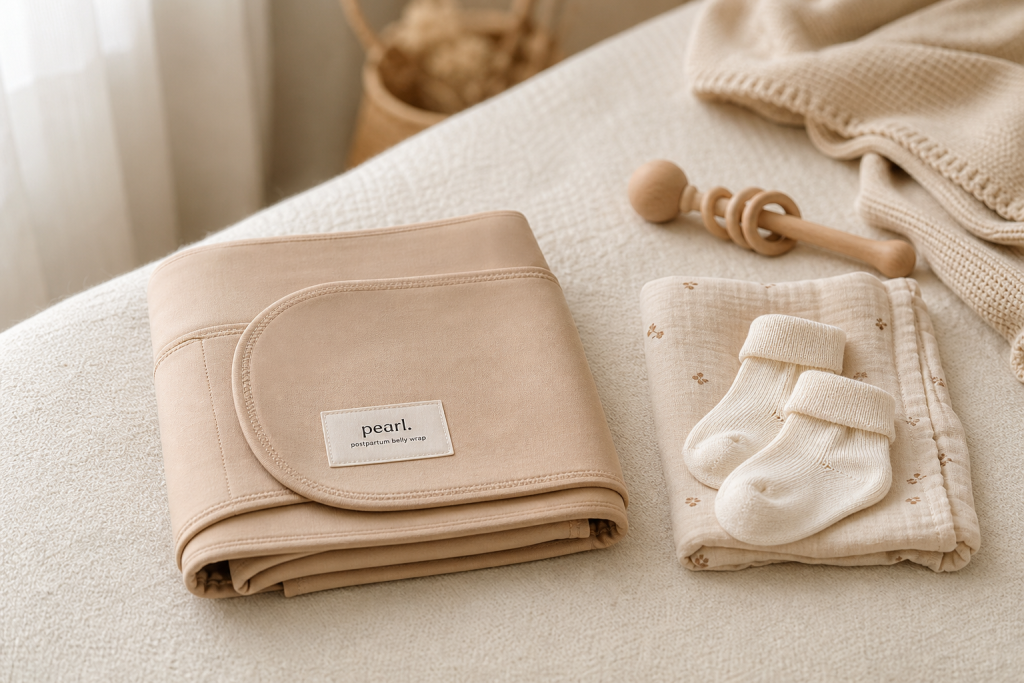

A postpartum belly wrap can offer gentle support during the weeks after birth, especially when your abdominal muscles feel weak, stretched, or sore. Many new parents use one for comfort while standing, walking, breastfeeding, or recovering from a C-section. The key is using it as a supportive tool, not as a shortcut for healing or weight loss.
Introductory illustration
After pregnancy, your core, pelvic floor, back, and incision area if you had a Cesarean birth may need time to recover. A wrap can provide light to moderate compression around the midsection, which may help you feel more stable during daily movement. Used correctly, it should feel supportive without limiting breathing, circulation, digestion, or mobility.
What Is a Postpartum Belly Wrap?
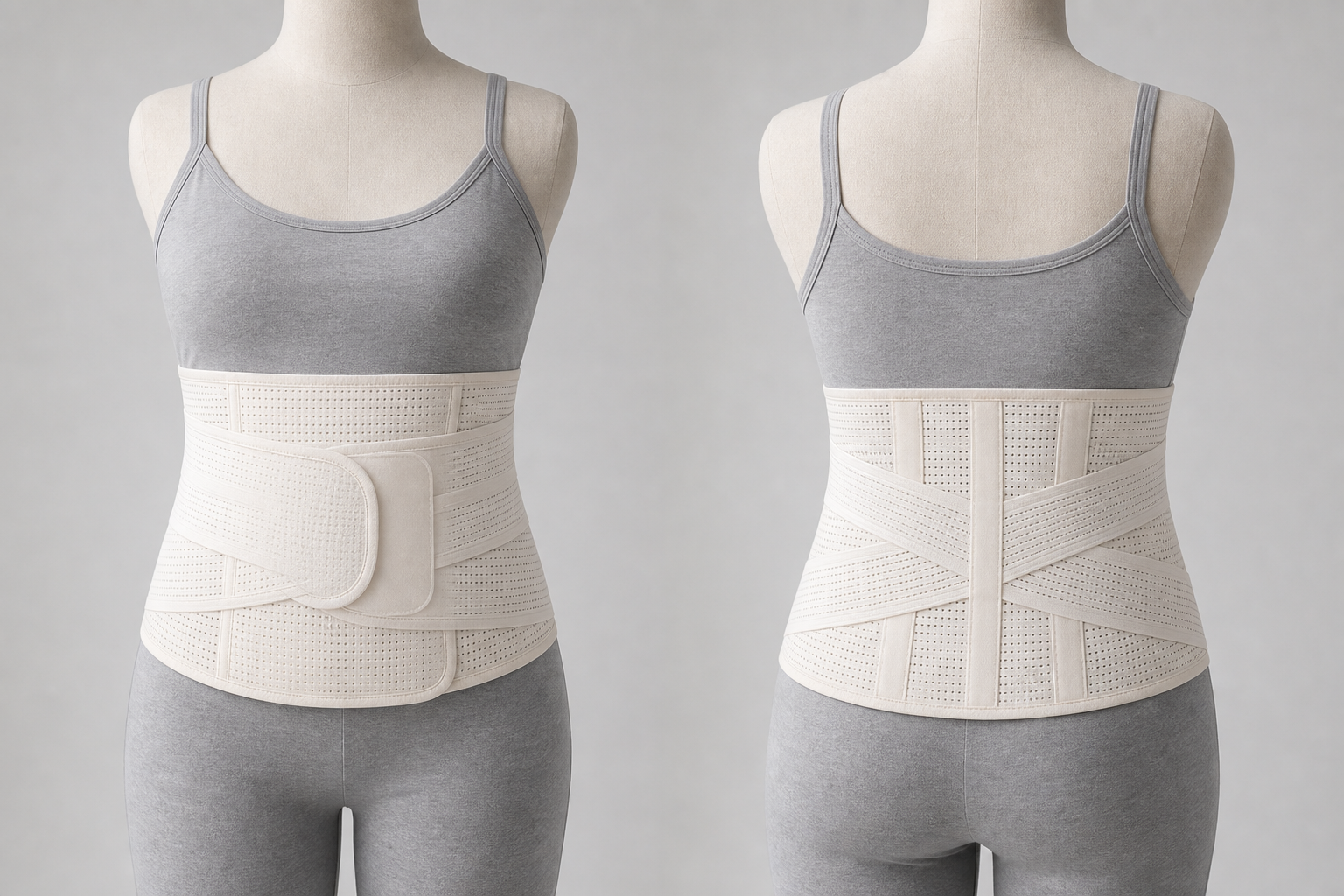
A postpartum belly wrap is a wide band worn around the abdomen after giving birth. It may also be called an abdominal binder, postpartum support belt, belly band, or belly wrap. Most styles use hook-and-loop closures, adjustable panels, or layered straps so you can customize the fit as swelling changes during recovery.
The main purpose is support. Pregnancy stretches the abdominal wall, shifts posture, and places strain on the lower back and pelvis. After delivery, the body gradually adjusts back toward its pre-pregnancy alignment. A belly wrap may help you feel more secure during this transition by supporting the abdominal muscles and reducing tugging sensations around the belly or incision area.
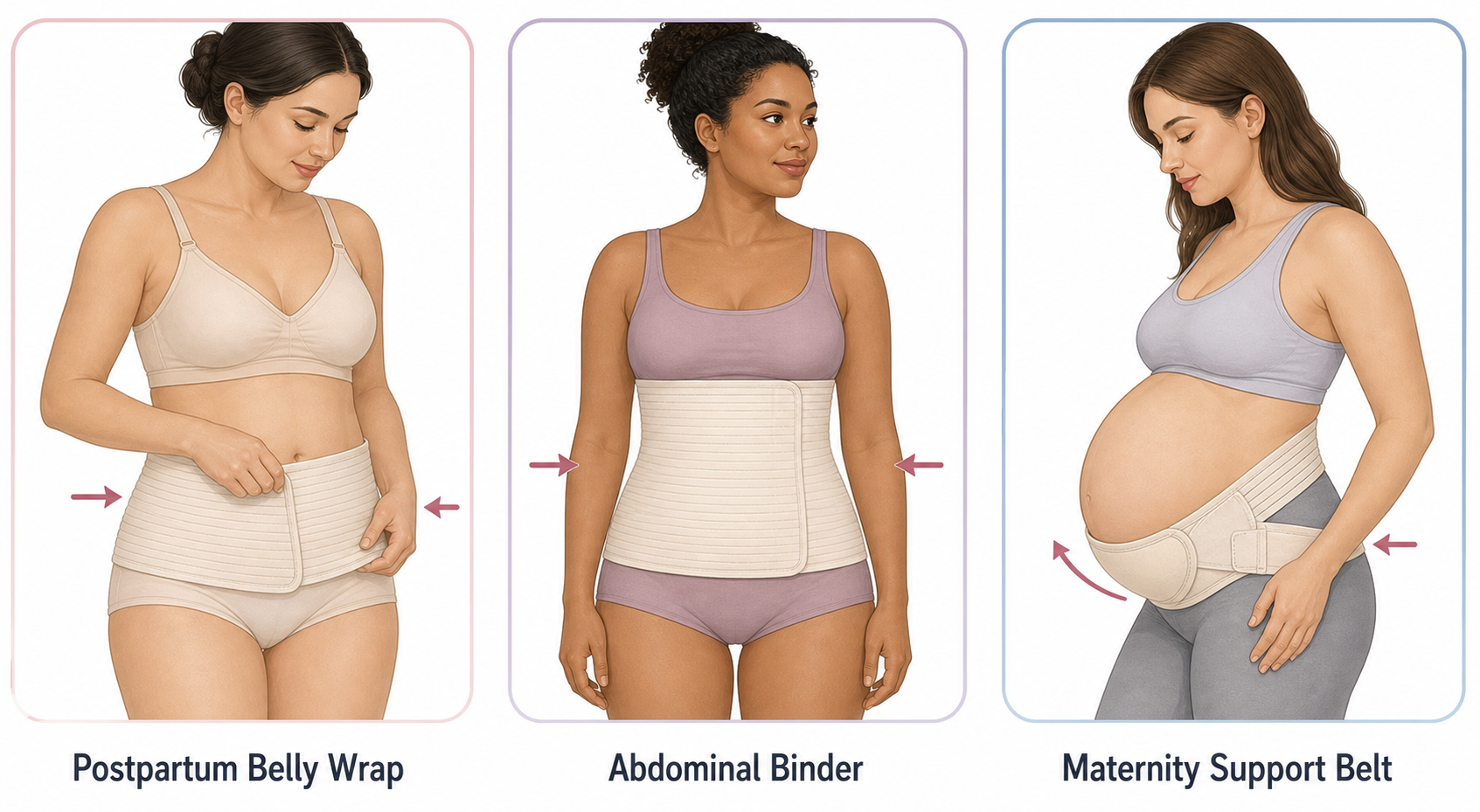
A postpartum wrap is different from a maternity belt. A maternity belt is worn during pregnancy, usually under the belly, to lift and support the bump. A postpartum belly wrap is worn after birth around the midsection. Wearing a tight abdominal wrap during pregnancy is not recommended because compression around the uterus can reduce comfort and may affect blood flow.
How to Wear a Postpartum Belly Wrap Safely
Start with medical approval
Before using a postpartum belly wrap, ask your OB-GYN, midwife, or healthcare provider when it is safe for your situation. This is especially important after a C-section, complicated delivery, heavy bleeding, high blood pressure, blood clot risk, infection, or significant pelvic floor symptoms.
Some people can begin using a wrap soon after birth. Others may be advised to wait a few days, particularly if a Cesarean incision needs time to settle. Follow your provider’s guidance over product packaging or social media advice.
Position the wrap correctly
Place the wrap around your midsection so it covers the lower abdomen and supports the area that feels weak or tender. It should sit flat against your body without rolling, bunching, or digging into your ribs, hips, or incision.
Fasten it snugly, then check your breathing. You should be able to take a deep breath, sit down, stand up, and walk without feeling squeezed. If you feel pressure in your chest, numbness, tingling, dizziness, shortness of breath, reflux, or increased pelvic heaviness, loosen or remove it.
Use gentle compression, not tight binding
A good postpartum belly wrap should feel like firm support, not a corset. Too much pressure can cause discomfort, worsen back pain, irritate the skin, affect circulation, or increase downward pressure on the pelvic floor. Tight binding also does not make the uterus shrink faster or permanently flatten the stomach.
Light to moderate compression is enough. Think stable and comfortable, not rigid. If the wrap leaves deep marks, causes pain, or changes how you breathe or move, it is too tight.
How Long Should You Wear a Postpartum Belly Wrap?
Many parents wear a postpartum support belt for short periods, such as 2 to 3 hours at a time, then take a break. Breaks matter because your muscles still need to work naturally. Wearing a wrap all day may make you rely on external support instead of gradually rebuilding strength.
A practical routine is to wear it during activities that feel uncomfortable, such as walking around the house, feeding the baby, light chores, or getting in and out of bed. Remove it while showering, swimming, resting comfortably, or anytime it feels irritating.
Some people use a wrap for the first few weeks after delivery. Others continue for 4 to 8 weeks, depending on comfort, birth experience, and provider advice. Stop using it when you feel stable without it, or earlier if it causes discomfort. A wrap should support recovery, not become something you feel unable to function without.
Benefits of a Postpartum Belly Wrap
Detailed illustration
Core support after birth
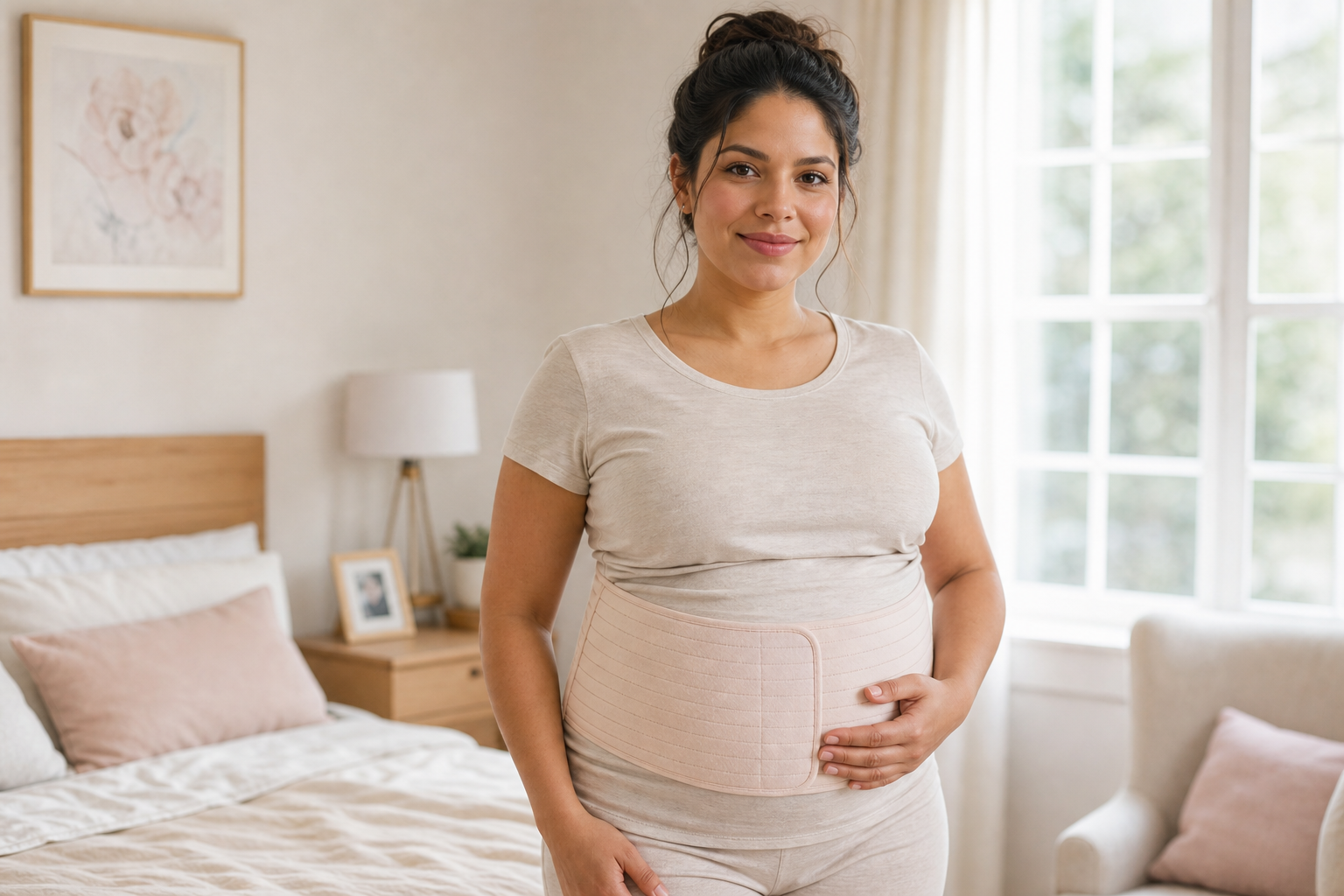
After delivery, the abdominal muscles may feel soft, stretched, or disconnected. A postpartum belly wrap can provide external support while those tissues recover. This may make standing, walking, coughing, laughing, or changing positions feel easier in early postpartum days.
For people with diastasis recti, or separation of the abdominal muscles, a wrap may improve comfort and body awareness. However, it does not replace proper rehab. Gentle breathing work, pelvic floor coordination, and guided core exercises are usually more important for long-term recovery.
Back and pelvic comfort
Pregnancy often changes posture by pulling the pelvis forward and increasing strain on the lower back. After birth, feeding positions, baby carrying, and sleep deprivation can add more tension. A postpartum belly wrap may help support posture and reduce mild back or pelvic discomfort during daily movement.
It works best when paired with smart habits: keep feeding pillows nearby, bring baby toward your body instead of hunching forward, switch sides when carrying, and avoid lifting heavy items before your provider clears you.
C-section recovery support
After a Cesarean birth, an abdominal binder can help reduce pulling around the incision when you stand, walk, cough, or sneeze. Many people find that gentle pressure makes movement feel less vulnerable.
Do not place a rough or tight wrap directly against an uncovered healing incision. Keep the incision clean and dry, use clothing or a recommended dressing as a barrier if needed, and watch for redness, drainage, bad odor, fever, worsening pain, or opening of the incision. Contact your healthcare provider if any of these occur.
What a Belly Wrap Cannot Do
A postpartum belly wrap is useful, but it has limits. It cannot replace rest, nutrition, hydration, medical care, pelvic floor therapy, or gradual exercise. It also cannot erase stretch marks, guarantee a flat stomach, or speed every part of healing.
Postpartum body changes are normal. The uterus, skin, connective tissue, hormones, and muscles all need time. Some changes improve over weeks, while others take months. A wrap may help you feel more supported during that process, but it should not be used as a body-shaping pressure tool.
Medical note: This information is educational and not a substitute for professional medical advice. Always follow your doctor’s instructions for postpartum recovery, especially after surgery or delivery complications.
How to Choose the Best Postpartum Belly Wrap
Choose adjustable support
Your belly size and swelling can change quickly after birth. An adjustable wrap lets you loosen or tighten support without forcing your body into a fixed size. Look for wide, flexible closures that stay secure without scratching your skin.
Pick soft, breathable materials
Postpartum skin can be sensitive, and sweating under a wrap can cause irritation. Soft, breathable fabric is easier to wear for several hours. Avoid stiff seams, rough edges, and bulky panels that dig into the ribs or hips.
Match the style to your needs
Different designs work for different bodies and recovery goals. A full wrap covers more of the abdomen and may feel more supportive after a C-section. A narrower postpartum support belt can feel less restrictive and easier to wear under clothes. Multi-panel binders offer more custom compression but may take longer to adjust.
-
Full belly wrap: Best for broad abdominal support and early postpartum stability.
-
Abdominal binder: Often used after surgery and may help with C-section movement comfort.
-
Postpartum support belt: Usually lighter and easier for daily wear.
-
Postpartum shapewear: More discreet under clothing, but may offer less targeted support.
Avoid waist trainers, tight corsets, or cinchers marketed mainly for shrinking the waist. These products often focus on appearance rather than healthy postpartum recovery and may apply too much pressure.
Tips for Comfortable Daily Use
Related context illustration
Try the wrap for 10 to 20 minutes the first time, then reassess. If it feels good, use it during short activity windows. If it shifts, pinches, or makes you feel restricted, adjust the fit or try a different style.
-
Put the wrap on while standing or lying slightly reclined, whichever feels easiest.
-
Center it over the lower abdomen and smooth the fabric before fastening.
-
Tighten only until you feel supported, not squeezed.
-
Sit, stand, breathe deeply, and walk a few steps to test comfort.
-
Remove it for breaks and check your skin for redness or irritation.
Wash the wrap according to its care label. If instructions are missing, hand wash with mild detergent in cool water, rinse well, and air dry fully before wearing again. Keeping it dry and clean helps prevent odor, skin irritation, and mildew.
When to Stop Wearing One
Stop wearing a postpartum belly wrap if it increases pain, causes numbness, makes breathing harder, worsens reflux, irritates your incision, or creates pelvic pressure. Also stop if you feel comfortable and stable without it. Recovery should move toward independence, not tighter compression.
If you still feel significant weakness, doming along the midline of the abdomen, pelvic heaviness, leaking, or ongoing back pain after the early postpartum period, ask your provider about pelvic floor physical therapy. Targeted rehab can address issues that a wrap can only temporarily support.
Bottom Line
A postpartum belly wrap can be a helpful recovery tool when worn safely with gentle compression and regular breaks. It may support your core, improve comfort during movement, and make C-section recovery feel more manageable. Choose a soft, adjustable wrap, use it for short periods, and follow your healthcare provider’s advice. The best postpartum recovery plan combines support, rest, nourishment, medical guidance, and gradual strength rebuilding.