
A great vegan burger should be hearty, flavorful, and sturdy enough to hold together from the first bite to the last. It should not taste like a compromise, and it should not fall apart on the grill. Whether you are cooking for a plant-based household, planning a meatless Monday dinner, or serving vegan guests at a backyard cookout, learning how to make a vegan burger at home gives you full control over texture, seasoning, and nutrition.
Introductory illustration
This guide walks through a practical, reliable homemade vegan burger recipe built with common U.S. grocery store ingredients: beans, mushrooms, oats, walnuts, vegetables, and bold seasonings. It also covers binding tips, cooking methods, toppings, storage, and common mistakes so your plant-based burger comes out juicy, savory, and satisfying.
What Makes a Great Vegan Burger?
A strong vegan burger patty needs three things: flavor, structure, and moisture. Many weak veggie burgers fail because they lean too hard on soft beans or watery vegetables without enough binding ingredients. Result: mushy center, broken edges, or bland flavor.
Best vegan burgers balance protein-rich ingredients with umami boosters and absorbent binders. Black beans, chickpeas, lentils, brown rice, oats, breadcrumbs, mushrooms, flaxseed, and nuts all have roles. Beans give body, mushrooms add savory depth, oats absorb moisture, and walnuts create meaty bite.
For flavor, think like you would with classic American burgers: smoky, salty, peppery, slightly sweet, and deeply savory. Soy sauce or tamari, smoked paprika, garlic powder, onion powder, tomato paste, Dijon mustard, and vegan Worcestershire sauce help build that burger-like taste without meat.
Best Ingredients for Homemade Vegan Burger Patties
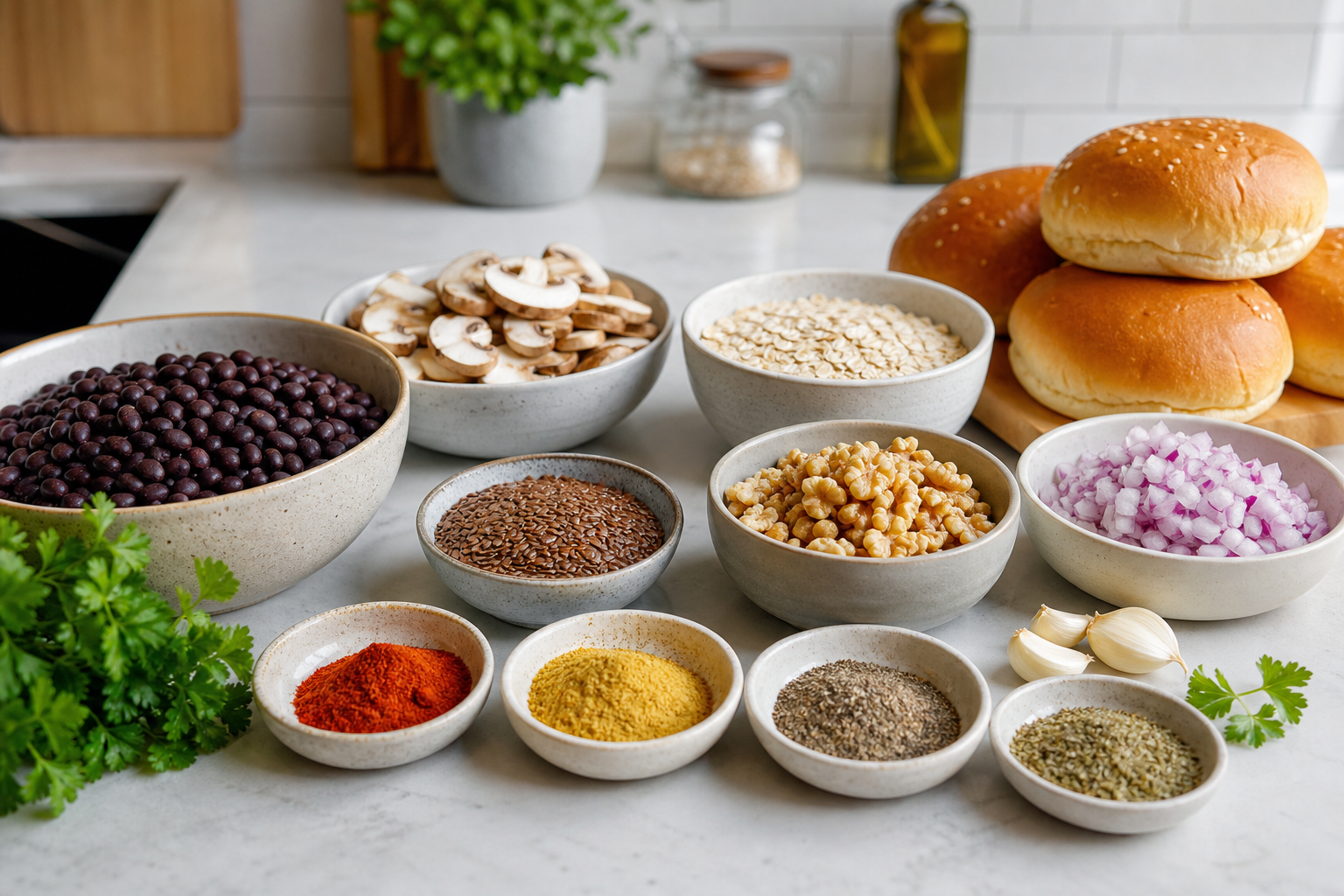
This recipe uses affordable, easy-to-find ingredients that work well together. You can find most of them at major supermarkets such as Kroger, Safeway, Publix, Walmart, Whole Foods, or Trader Joe’s.
Core Patty Ingredients
- Black beans: Firm, earthy, protein-rich base. Canned beans work well when drained, rinsed, and dried.
- Mushrooms: Cremini or baby bella mushrooms add deep umami flavor and reduce blandness.
- Rolled oats: Natural binder that helps patties hold shape without eggs.
- Walnuts: Add texture, healthy fat, and rich flavor. Sunflower seeds can replace them for nut-free version.
- Onion and garlic: Build classic burger flavor.
- Ground flaxseed: Mixed with water, it becomes a vegan egg substitute.
- Tomato paste: Adds color, richness, and mild sweetness.
- Soy sauce or tamari: Brings salty, savory depth.
Seasonings That Make It Taste Better
Seasoning matters more in vegan burger patties than in beef burgers because plant-based ingredients need help developing deep savory flavor. Use smoked paprika for grilled flavor, cumin for warmth, black pepper for bite, and a little chili powder if you want mild heat.
A splash of vegan Worcestershire sauce also works well. Check labels carefully because traditional Worcestershire often contains anchovies. Many U.S. grocery stores now carry vegan versions near condiments or natural foods.
How to Make a Vegan Burger Step by Step
This method creates four to six sturdy patties, depending on size. For thinner diner-style patties, make six. For thicker pub-style patties, make four.
Ingredients
- 1 can black beans, 15 ounces, drained and rinsed
- 1 tablespoon ground flaxseed mixed with 3 tablespoons water
- 1 tablespoon olive oil, plus more for cooking
- 1 cup finely chopped cremini mushrooms
- 1/2 cup finely diced yellow onion
- 2 cloves garlic, minced
- 1/2 cup rolled oats
- 1/3 cup walnuts
- 1 tablespoon tomato paste
- 1 tablespoon soy sauce or tamari
- 1 teaspoon smoked paprika
- 1/2 teaspoon ground cumin
- 1/2 teaspoon garlic powder
- 1/2 teaspoon onion powder
- 1/2 teaspoon kosher salt, plus more to taste
- 1/4 teaspoon black pepper
- 1/3 cup breadcrumbs, use more only if mixture feels too wet
Instructions
- Make flax egg: Stir ground flaxseed and water in a small bowl. Let it sit for 5 to 10 minutes until thickened.
- Dry beans: Spread rinsed black beans on paper towels or a clean kitchen towel. Pat dry well. Excess moisture makes patties soft.
- Cook vegetables: Heat olive oil in a skillet over medium heat. Add onion and mushrooms. Cook 6 to 8 minutes until moisture evaporates and mixture browns slightly. Add garlic and cook 30 seconds more.
- Pulse dry ingredients: Add oats and walnuts to a food processor. Pulse until coarse, not powdery.
- Mix patty base: Add beans, cooked vegetables, flax egg, tomato paste, soy sauce, spices, salt, and pepper. Pulse until mixture holds together but still has visible texture.
- Add breadcrumbs: Transfer mixture to a bowl. Fold in breadcrumbs. If mixture feels sticky or loose, add 1 tablespoon breadcrumbs at a time.
- Chill mixture: Refrigerate for at least 20 minutes. Chilling helps firm up patties and improves shape.
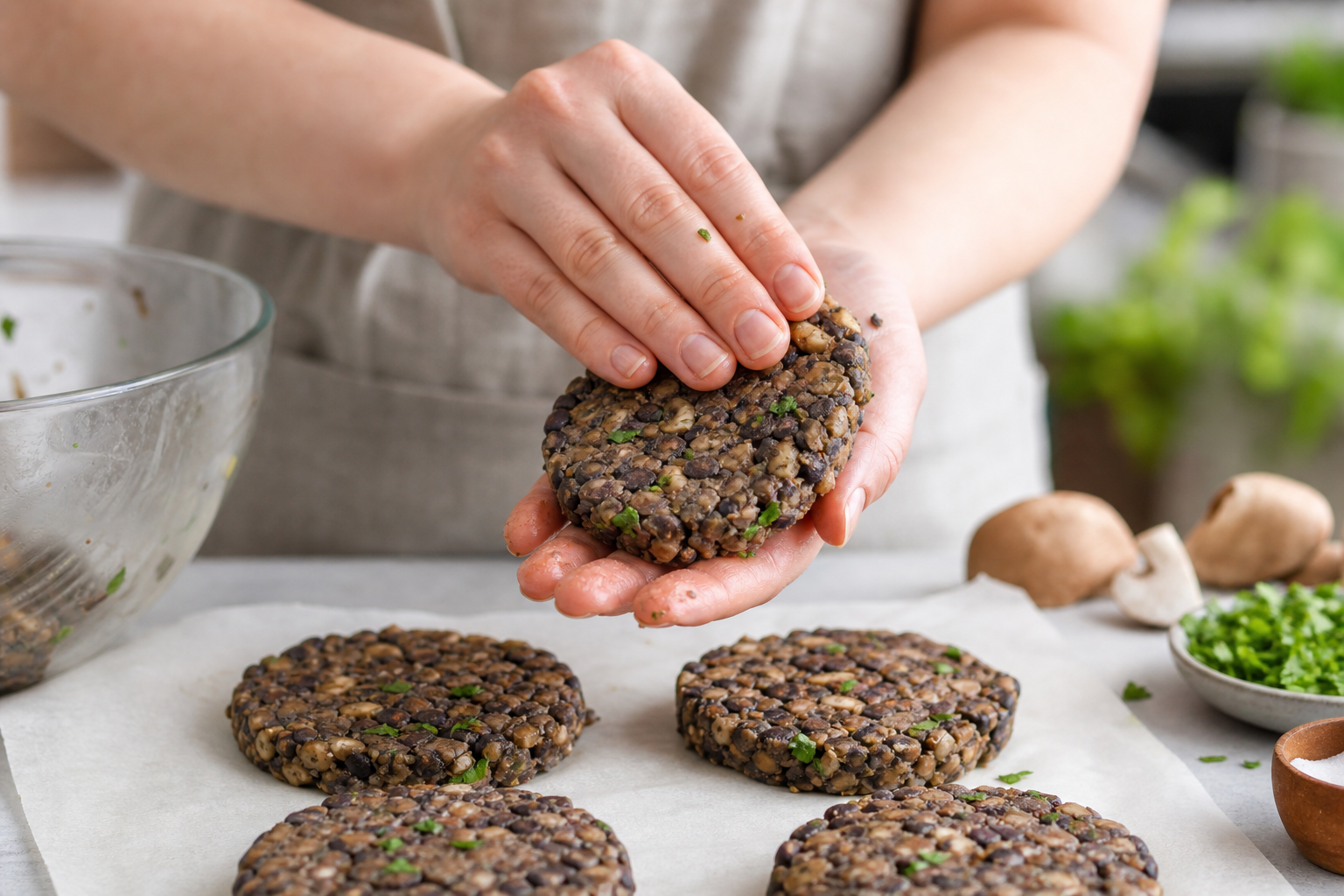
- Form patties: Shape into four to six patties, pressing edges tightly so they do not crack.
- Cook: Pan-sear, bake, air fry, or grill using methods below.
Best Cooking Methods for Vegan Burgers
Detailed illustration
Different cooking methods create different results. For most home cooks, pan-searing gives best balance of crisp exterior and tender center. Grilling works too, but patties need enough firmness and oil to prevent sticking.
Pan-Seared Vegan Burger
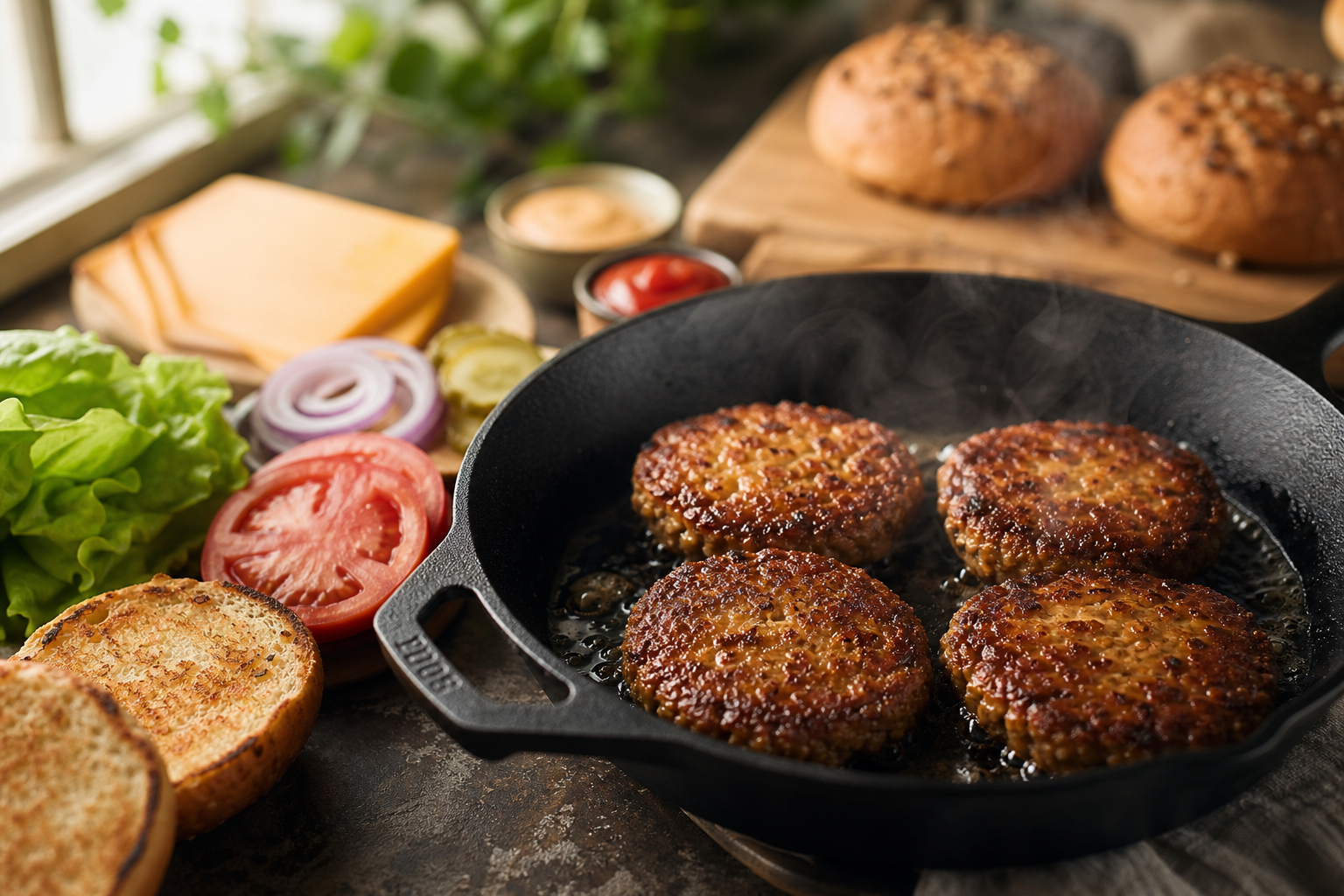
Heat a large skillet over medium heat with a thin layer of oil. Cook patties for 4 to 5 minutes per side until browned and firm. Do not move them too early. Let crust form before flipping.
Baked Vegan Burger
Preheat oven to 375 degrees Fahrenheit. Place patties on parchment-lined baking sheet. Brush both sides lightly with oil. Bake 15 minutes, flip, then bake 10 to 12 minutes more. Baked patties are lighter and less oily but slightly less crisp.
Grilled Vegan Burger
For grilling, chill patties for at least 30 minutes first. Oil grill grates well. Grill over medium heat for 4 to 5 minutes per side. Use a wide spatula and flip once. Avoid pressing patties down, because that can break them and dry them out.
Air Fryer Vegan Burger
Preheat air fryer to 375 degrees Fahrenheit. Spray patties lightly with oil. Cook 8 to 10 minutes, flipping halfway. This method gives crisp edges with less oil.
How to Keep Vegan Burger Patties from Falling Apart
Texture problems usually come from excess moisture or weak binding. If patties crumble, they may need more binder. If they turn mushy, they likely contain too much water or were overprocessed.
- Dry beans well: Wet beans create soft patties.
- Cook mushrooms fully: Mushrooms release water. Cook until most moisture evaporates.
- Use flax egg: Ground flaxseed helps bind plant-based burger mixtures.
- Do not overblend: Pureed mixture becomes paste-like. Pulse only until combined.
- Chill before cooking: Cold patties hold shape better.
- Flip once: Too much handling can break crust.
Best Vegan Burger Toppings and Buns
A good patty needs good toppings. For classic U.S. burger flavor, use toasted buns, crisp lettuce, tomato, pickles, onion, ketchup, mustard, and vegan mayo. Many supermarket buns are accidentally vegan, but check labels for milk, butter, eggs, or honey.
For richer flavor, add avocado, caramelized onions, grilled jalapeños, dairy-free cheese, barbecue sauce, or vegan chipotle mayo. If you want a high-protein vegan burger, serve it on a whole grain bun with extra hummus, tempeh bacon, or a side of roasted chickpeas.
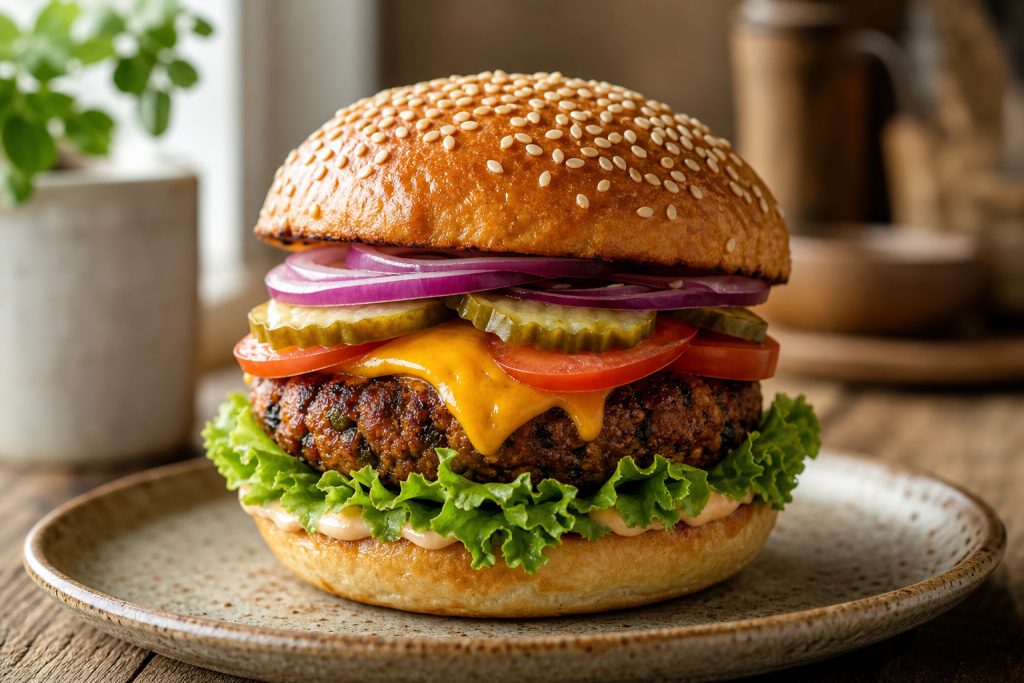
Best build: toasted vegan brioche-style bun, lettuce on bottom, patty, vegan cheese, tomato, pickles, red onion, and smoky burger sauce. Lettuce under patty helps protect bottom bun from moisture.
Vegan Burger Sauce Ideas
Sauce can turn a good veggie burger into a memorable one. Stir together vegan mayo, ketchup, mustard, pickle relish, smoked paprika, and a splash of hot sauce for a fast burger sauce. For barbecue flavor, mix vegan mayo with BBQ sauce and black pepper. For a fresher option, use avocado mashed with lime juice, salt, garlic powder, and cilantro.
If serving kids or picky eaters, keep toppings familiar. Ketchup, mustard, pickles, and dairy-free American-style cheese make plant-based patties feel close to classic fast-food burgers.
Storage, Freezing, and Meal Prep
Related context illustration
Vegan burger patties are excellent for meal prep. Shape uncooked patties and store them in an airtight container in the refrigerator for up to 2 days. Separate layers with parchment paper so they do not stick.
To freeze, place shaped patties on a baking sheet and freeze until solid. Transfer to freezer-safe bags or containers. They keep well for up to 3 months. Cook from frozen over medium-low heat, adding a few extra minutes per side, or thaw overnight in the refrigerator before cooking.
Cooked patties keep in the fridge for 3 to 4 days. Reheat in a skillet or air fryer for best texture. Microwave works, but patties will be softer.
Easy Variations
Spicy Southwest Vegan Burger
Add 1/2 teaspoon chili powder, 1/4 cup corn, diced jalapeño, and chopped cilantro. Serve with avocado, salsa, lettuce, and vegan chipotle mayo.
BBQ Mushroom Burger
Add 1 tablespoon barbecue sauce to the patty mixture and top cooked patties with extra BBQ sauce, pickles, and crispy onions.
High-Protein Lentil Burger
Replace half of black beans with cooked brown lentils. Lentils add protein and firmer bite. Make sure they are drained well before mixing.
Common Mistakes to Avoid
Do not skip chilling. This one step can make difference between sturdy vegan patties and broken pieces in skillet. Do not add too many wet vegetables like zucchini unless you squeeze out moisture first. Do not use instant oats if you want best texture; rolled oats work better.
Also avoid under-seasoning. Beans and oats are mild, so taste mixture before cooking if all ingredients are safe to taste. Add more salt, soy sauce, smoked paprika, or pepper as needed.
Conclusion
Learning how to make a vegan burger at home is mostly about balance: dry enough to hold together, moist enough to feel juicy, and seasoned enough to taste bold. Black beans, mushrooms, oats, walnuts, flaxseed, and smoky spices create a reliable base that works for weeknight dinners, cookouts, and meal prep.
Start with the core recipe, then adjust toppings and seasonings to match your taste. Once you understand texture and binding, homemade vegan burgers become easy, flexible, and far more satisfying than many store-bought patties.