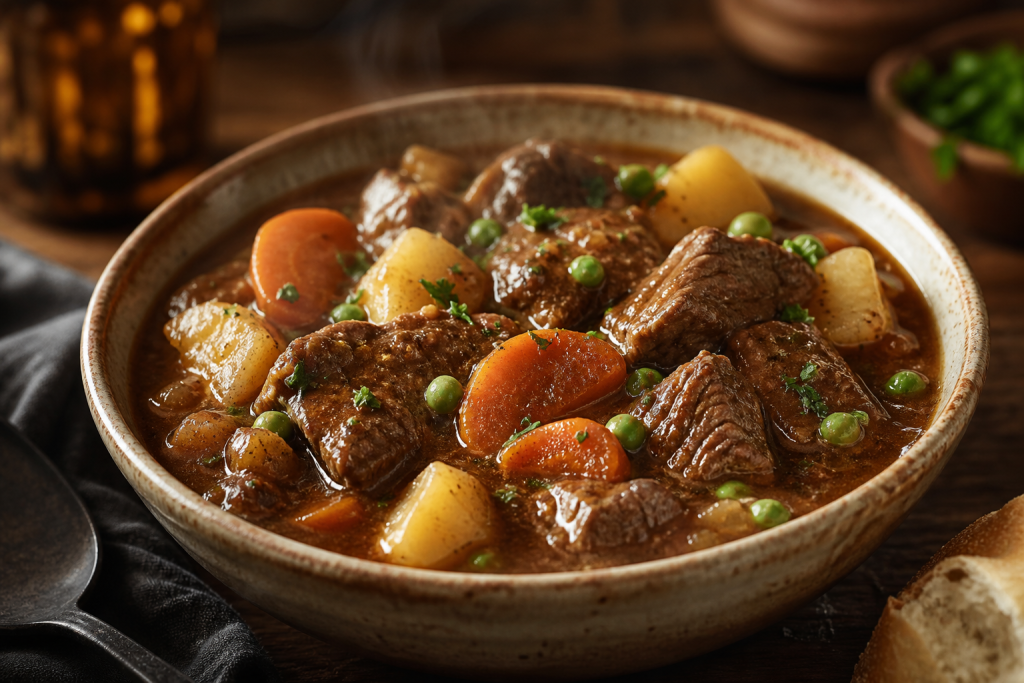

Few dinners feel as comforting as a pot of beef stew that has been cooking low and slow until the meat turns fork-tender and the broth becomes deep, savory, and rich. Learning how to make a slow cooked beef stew is less about rushing through a recipe and more about building flavor in smart stages: choosing the right cut of beef, browning it well, layering vegetables, and letting time do the work. For home cooks in the U.S., this is the kind of meal that fits cold Sundays, busy weeknights with a slow cooker, or meal prep for hearty lunches.
Introductory illustration
This guide walks through a practical, reliable slow cooker beef stew recipe with simple ingredients, clear timing, and small techniques that make a big difference. Expect tender beef, soft potatoes, sweet carrots, and a thick, glossy gravy-style broth that tastes like it simmered all day because it did.
Best Beef for Slow Cooked Stew
The best beef stew starts with the right cut. Expensive steaks are not ideal here because lean, tender cuts can dry out during long cooking. For a classic tender beef stew, choose tougher cuts with connective tissue and marbling. These cuts break down slowly and create rich texture.
Top cuts to use
-
Chuck roast: Best overall choice. It becomes tender and flavorful after hours of low heat.
-
Beef stew meat: Convenient, but quality varies. If pieces look very lean or uneven, trim and cut them yourself.
-
Short ribs: Rich and deeply beefy, though pricier. Great for special-occasion stew.
-
Bottom round: Budget-friendly and works well if cooked long enough.
For most kitchens, boneless chuck roast cut into 1 1/2-inch cubes is the sweet spot. It has enough fat and collagen to create a beef stew with potatoes and carrots that tastes full-bodied rather than thin.
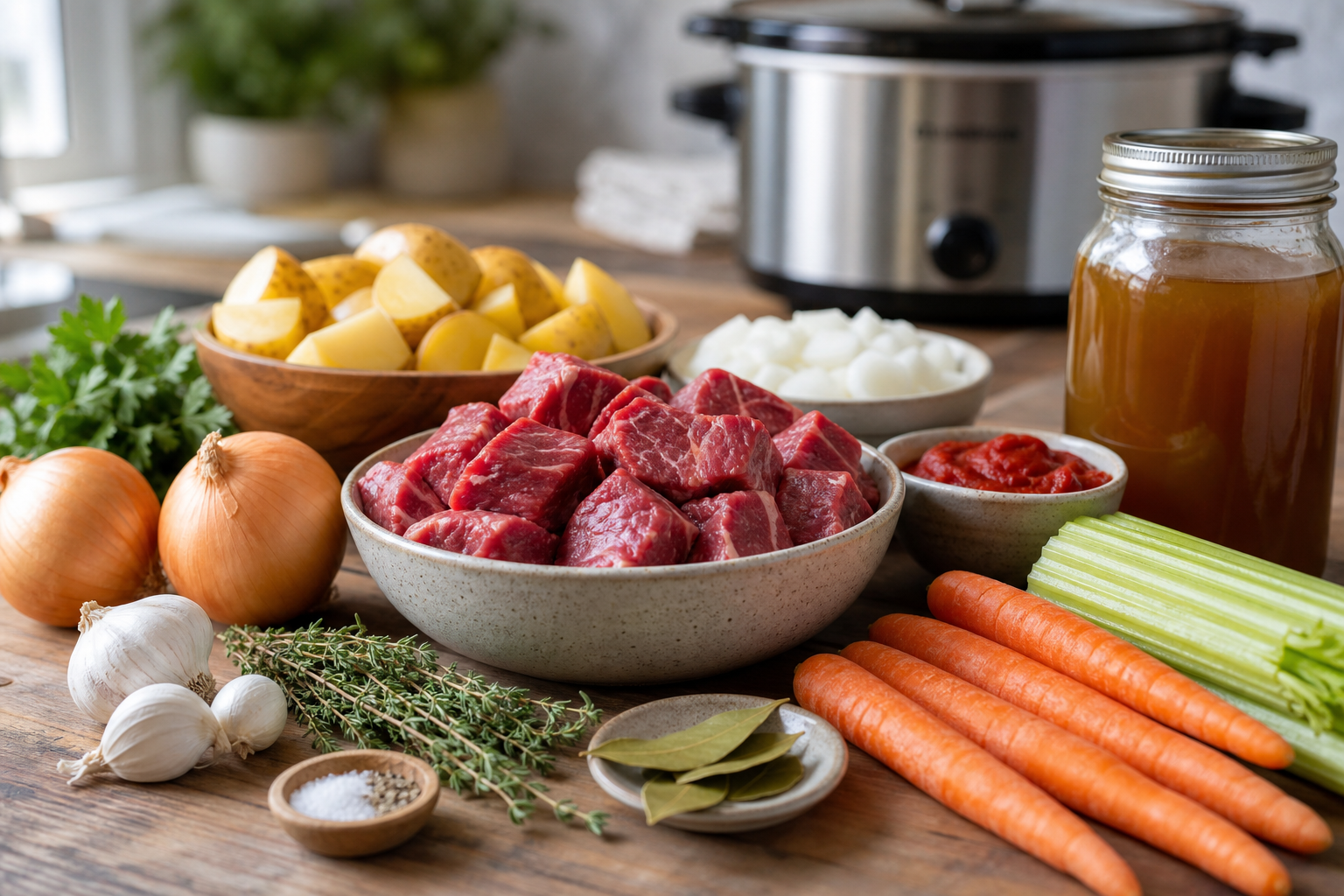
Ingredients for Classic Slow Cooker Beef Stew
This recipe serves about 6 people and uses ingredients found in most American grocery stores. Measurements can be adjusted, but keep the balance of meat, vegetables, liquid, and seasoning close for best results.
Main ingredients
-
2 1/2 to 3 pounds boneless beef chuck roast, cut into 1 1/2-inch cubes
-
1 1/2 teaspoons kosher salt, plus more to taste
-
1 teaspoon black pepper
-
3 tablespoons all-purpose flour
-
2 tablespoons vegetable oil or olive oil
-
1 large yellow onion, chopped
-
4 garlic cloves, minced
-
3 tablespoons tomato paste
-
4 cups beef broth, preferably low-sodium
-
1 tablespoon Worcestershire sauce
-
1 teaspoon dried thyme
-
2 bay leaves
-
1 1/2 pounds Yukon Gold or red potatoes, cut into chunks
-
4 large carrots, peeled and cut into thick slices
-
2 celery stalks, sliced
-
1 cup frozen peas, added near the end
Yukon Gold potatoes are excellent because they hold shape while adding creamy texture. Russet potatoes work too, but they break down more and make the stew thicker. Carrots should be cut thick so they do not turn mushy during long cooking.
How to Make a Slow Cooked Beef Stew Step by Step
The slow cooker handles most of the work, but the first 15 minutes matter. Browning the beef and cooking the tomato paste before adding everything to the pot creates a deeper, more homemade flavor.
1. Season and coat the beef
Pat the beef dry with paper towels. Moisture prevents browning, so this step matters. Toss the beef cubes with salt, pepper, and flour until lightly coated. The flour helps the meat brown and later gives the broth a richer body.
2. Brown the beef in batches
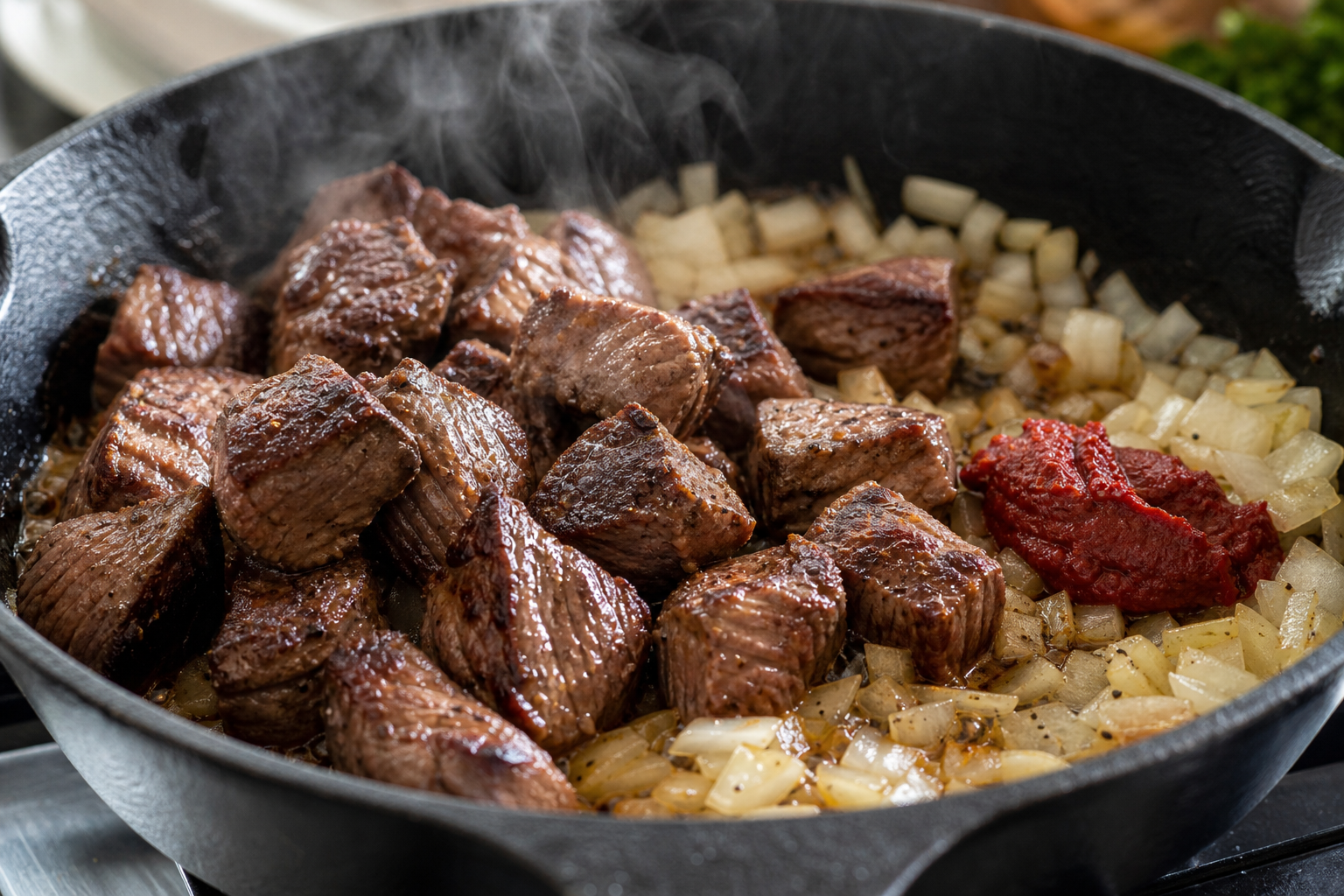
Heat oil in a large skillet or Dutch oven over medium-high heat. Add beef in a single layer without crowding. Brown each side for 2 to 3 minutes, then transfer the meat to the slow cooker. Work in batches so the beef sears instead of steaming.
Good browning is one of the biggest differences between average stew and deeply flavorful homemade beef stew.
3. Build the flavor base
In the same skillet, add the chopped onion and cook for 3 to 4 minutes until softened. Add garlic and tomato paste, then stir for about 1 minute. Tomato paste tastes better when it darkens slightly in the pan. Pour in about 1/2 cup of beef broth and scrape up browned bits from the bottom. Those bits carry concentrated flavor.
4. Fill the slow cooker
Add the onion mixture to the slow cooker with the browned beef. Stir in remaining beef broth, Worcestershire sauce, thyme, bay leaves, potatoes, carrots, and celery. The liquid may not fully cover the ingredients at first, and that is fine. Vegetables release moisture as they cook.
5. Cook low and slow
Cover and cook on low for 8 to 9 hours or on high for 4 to 5 hours. Low heat gives the best texture because connective tissue in chuck roast needs time to melt into gelatin. The stew is ready when the beef can be easily pulled apart with a fork.
6. Add peas and adjust thickness
Stir in frozen peas during the last 20 to 30 minutes. Remove bay leaves. Taste and adjust salt and pepper. If you want a thicker stew, mix 2 tablespoons cornstarch with 2 tablespoons cold water, stir it into the slow cooker, and cook on high for 15 to 20 minutes until the broth thickens.
Tips for Richer Flavor and Better Texture
Detailed illustration
Small details can turn a basic crockpot beef stew into something memorable. These tips are especially useful if you want stew that tastes restaurant-level without extra effort.
Do not skip browning
Browning creates savory flavor through the Maillard reaction. Slow cookers are great for tenderness but not for searing, so use a skillet first. If you are short on time, brown at least half of the meat and all of the tomato paste.
Use low-sodium broth
Long cooking concentrates flavor. Regular broth can make stew too salty by the end. Low-sodium beef broth gives more control, especially when Worcestershire sauce and seasoned beef are already included.
Cut vegetables evenly
Large, even chunks cook at the same pace. Potatoes and carrots should be sturdy enough to hold shape after hours in the slow cooker. Thin slices tend to overcook.
Layer ingredients smartly
Place hearty vegetables near the bottom or sides of the slow cooker where heat is strongest. Meat can sit above or mixed through. Peas should always go in late because they need only brief heating.
Common Mistakes to Avoid
Slow cooked beef stew is forgiving, but a few mistakes can affect flavor and texture. Avoid these issues for best results.
-
Using meat that is too lean: Lean beef can become dry and chewy instead of tender.
-
Adding too much liquid: Slow cookers trap moisture, so stew does not reduce like it does on the stovetop.
-
Cooking vegetables too small: Small pieces can dissolve before the beef finishes.
-
Opening the lid often: Each peek releases heat and can extend cooking time.
-
Underseasoning at the end: Final tasting matters because potatoes absorb salt.
Easy Variations for American Home Kitchens
This classic beef stew recipe can be adapted based on pantry ingredients and personal taste. Keep the core method the same and adjust flavor accents.
Red wine beef stew
Replace 1 cup of beef broth with dry red wine, such as Cabernet Sauvignon or Merlot. Simmer the wine in the skillet for a minute after cooking tomato paste, then add it to the slow cooker. This gives the stew deeper flavor and gentle acidity.
Extra hearty vegetable stew
Add parsnips, mushrooms, or pearl onions. Mushrooms add earthy flavor, while parsnips bring sweetness. Add mushrooms at the beginning for deep flavor or halfway through for firmer texture.
Gluten-free beef stew
Skip all-purpose flour and use cornstarch at the end for thickening. Check Worcestershire sauce and broth labels to confirm they are gluten-free.
What to Serve with Slow Cooked Beef Stew
Related context illustration
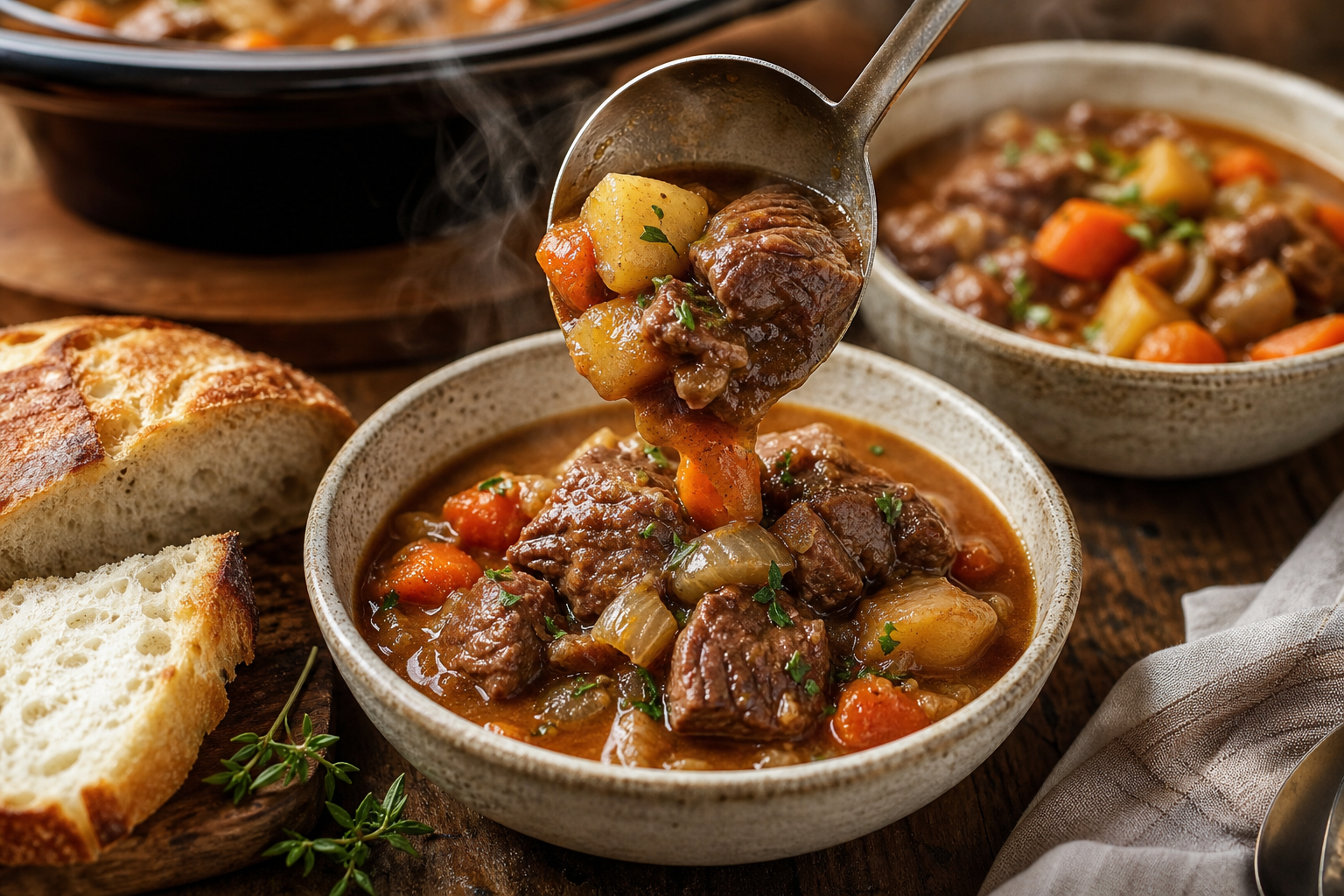
Because stew is already packed with beef, potatoes, and vegetables, sides can stay simple. Crusty bread is ideal for soaking up broth. Buttermilk biscuits, cornbread, or dinner rolls also work well. For something lighter, serve with a green salad dressed with vinaigrette to balance the richness.
For family dinners, ladle stew into wide bowls and finish with chopped parsley. For meal prep, portion it into airtight containers with extra broth to keep the meat moist when reheated.
Storage, Freezing, and Reheating
Beef stew often tastes better the next day because flavors continue to blend. Cool leftovers before storing. Refrigerate in airtight containers for up to 4 days.
To freeze, place cooled stew in freezer-safe containers, leaving a little space for expansion. Freeze for up to 3 months. Potatoes may soften slightly after thawing, but the flavor remains strong. Reheat gently on the stovetop over medium-low heat or in the microwave in short intervals, stirring between each round.
Conclusion
Learning how to make a slow cooked beef stew comes down to patient cooking and strong flavor-building habits. Use chuck roast, brown it well, choose sturdy vegetables, and let the slow cooker work until the beef becomes fork-tender. With potatoes, carrots, savory broth, and a few smart finishing touches, this classic comfort food delivers a warm, satisfying meal that fits weeknight dinners, Sunday cooking, and make-ahead lunches.