
Boiled eggs look simple, but timing changes everything. One minute can turn a creamy jammy yolk into a firm yellow center, and a few extra minutes can leave you with a dry yolk and that gray-green ring no one wants in egg salad. If you have ever wondered how long to boil eggs for breakfast, meal prep, deviled eggs, ramen, or a high-protein snack, the best answer depends on yolk texture, egg size, starting temperature, and cooling method.
Introductory illustration
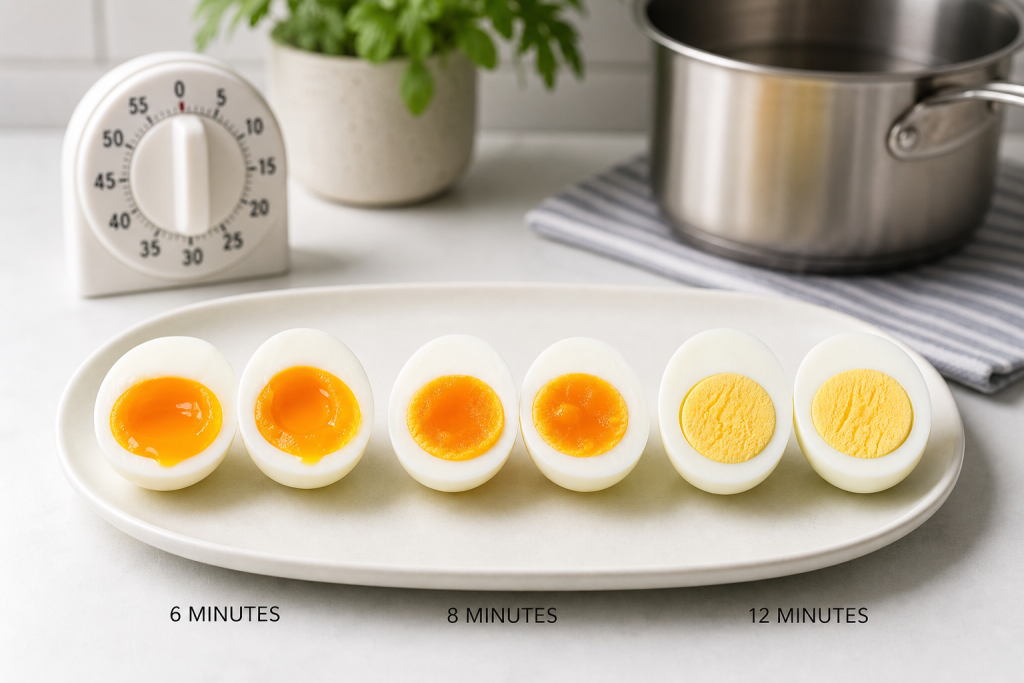
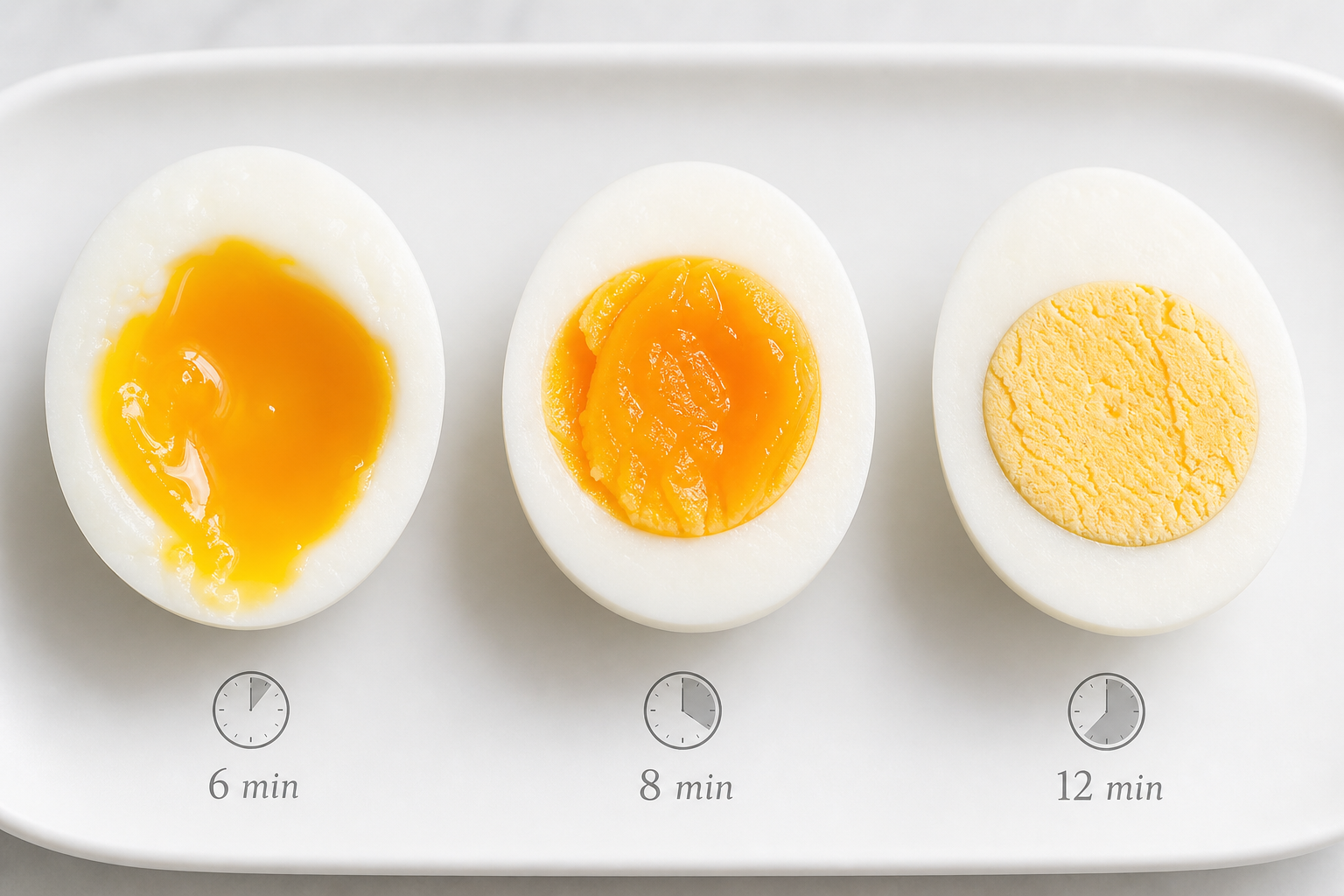
For most large eggs in the U.S., the sweet spot is 6 minutes for soft-boiled eggs, 8 to 9 minutes for medium-boiled eggs, and 10 to 12 minutes for hard-boiled eggs. The method below uses a simple boil-and-rest approach that works on a regular stovetop with a saucepan, water, and an ice bath.
Quick Egg Boiling Time Chart
Use this chart for large eggs straight from the refrigerator, cooked in water that has reached a boil. Times begin once eggs go into boiling water or once water returns to a gentle boil, depending on your method. For best consistency, use eggs of similar size in one batch.
- 4 minutes: Very soft white, runny yolk; best for dipping toast, but whites may be delicate.
- 5 minutes: Set whites, runny yolk; classic soft-boiled texture.
- 6 minutes: Firm whites, thick golden yolk; ideal soft-boiled eggs.
- 7 minutes: Mostly set yolk with soft center; good for ramen or grain bowls.
- 8 minutes: Jammy yolk; rich, spreadable, and slightly glossy.
- 9 minutes: Medium yolk; mostly firm with small creamy center.
- 10 minutes: Fully set yolk, still moist; great all-purpose hard-boiled eggs.
- 11 to 12 minutes: Firm yolk; best for deviled eggs, egg salad, and slicing.
- 13 minutes: Extra-firm yolk; useful if eggs are extra-large, but can become dry.
Best Method for Boiling Eggs
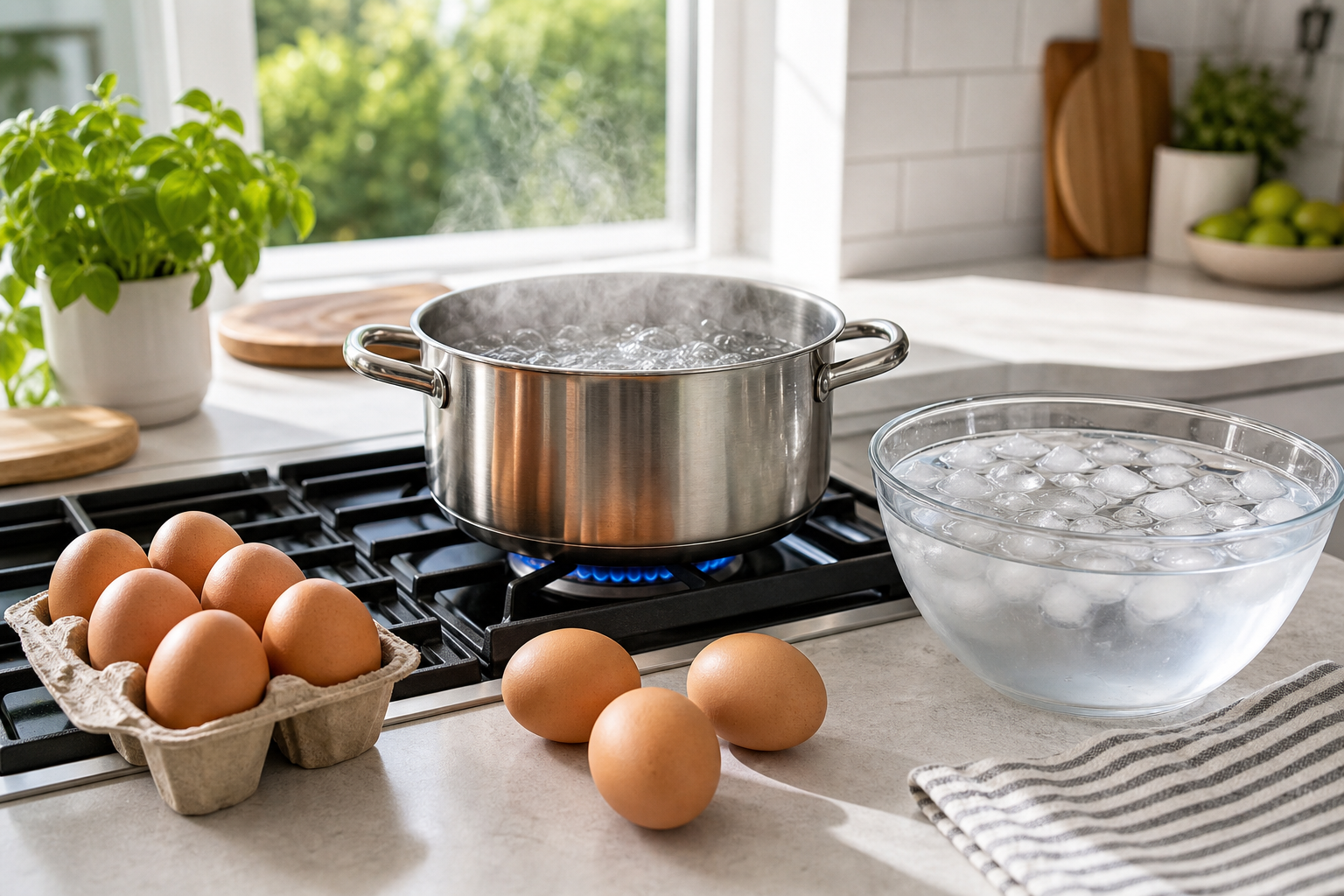
The most reliable way to boil eggs is to control heat, avoid overcooking, and cool eggs fast. A rolling boil is too rough and can crack shells, while a calm simmer gives more even results. The ice bath is not optional if you want easy peeling and precise doneness.
Step-by-Step Stovetop Method
- Place eggs in one layer. Use a saucepan wide enough so eggs do not stack.
- Add water. Cover eggs with about 1 inch of cold water.
- Bring to a boil. Heat over medium-high until water reaches a full boil.
- Lower heat. Reduce to a gentle boil or strong simmer so eggs do not bounce hard.
- Start timer. Cook according to your preferred yolk texture: 6 minutes soft, 8 minutes jammy, 10 to 12 minutes hard.
- Cool immediately. Transfer eggs to an ice bath for at least 5 minutes for soft or jammy eggs and 10 minutes for hard-boiled eggs.
- Peel or store. Peel under cool running water, or refrigerate unpeeled for later.
Soft-Boiled, Jammy, and Hard-Boiled: What Time Should You Choose?
Different dishes call for different yolks. A breakfast egg with toast should be softer than an egg packed for lunch. Egg salad needs a yolk that mashes cleanly, while ramen tastes better with a custardy center. Matching boiling time to use makes eggs taste better and look better.
Soft-Boiled Eggs: 5 to 6 Minutes
Soft-boiled eggs have fully set whites and a runny or thick yolk. Cook large eggs for 5 minutes if you want a spoonable yolk, or 6 minutes if you prefer a slightly thicker center. These are best eaten right away in an egg cup, over avocado toast, or split over roasted asparagus.
Jammy Eggs: 7 to 8 Minutes
Jammy eggs are popular because the yolk is rich and creamy without being liquid. Cook large eggs for 7 minutes for a soft center or 8 minutes for a more set, glossy yolk. This texture works well for ramen, Cobb salads, rice bowls, and packed lunches because the yolk holds together when cut.
Hard-Boiled Eggs: 10 to 12 Minutes
For hard-boiled eggs, 10 minutes gives a fully set but moist yolk. Cook 11 to 12 minutes if you need firm yolks for deviled eggs, potato salad, tuna salad, or meal prep. Avoid cooking much longer than 12 minutes unless eggs are extra-large, because excess heat causes chalky yolks and sulfur smell.
Why Egg Size and Temperature Matter
Detailed illustration
Most U.S. recipes assume large eggs, which weigh about 50 grams each without shell. Medium eggs cook faster, while extra-large and jumbo eggs need slightly more time. If you buy jumbo eggs, add about 1 minute to the timing for hard-boiled eggs. If using medium eggs, subtract about 1 minute for soft or jammy results.
Cold eggs from the refrigerator are standard in American kitchens, and the timing above is based on refrigerated eggs. Room-temperature eggs cook slightly faster and are less likely to crack when placed in hot water, but they should not sit out for more than 2 hours for food safety. If your kitchen is warm, keep eggs refrigerated until cooking.
How to Prevent Cracked Shells
Cracked eggs usually happen because of sudden temperature changes or water movement that knocks eggs against the pan. A few small adjustments make a big difference, especially when cooking a dozen eggs for brunch or Easter dyeing.
- Use a gentle boil. Vigorous bubbling can bounce eggs and split shells.
- Do not crowd the pot. Eggs should sit in one layer with space to move slightly.
- Lower eggs carefully. If starting in boiling water, use a spoon or skimmer.
- Add salt or vinegar if desired. It will not prevent cracking, but it may help egg whites set faster if a crack appears.
- Avoid extreme temperature shock. Cold eggs can go into hot water, but do it gently.
How to Make Boiled Eggs Easy to Peel
Easy-peel eggs come from a mix of egg age, cooking method, and fast cooling. Very fresh eggs are harder to peel because the inner membrane clings tightly to the white. Eggs that have been in the refrigerator for 5 to 10 days usually peel more cleanly.
An ice bath helps the egg contract slightly inside the shell, loosening the membrane. After cooling, tap the egg on the counter, roll it gently to crack the shell all over, then peel from the wider end where the air pocket often sits. Peeling under running water can help lift stubborn bits of shell.
Cold Start vs. Hot Start: Which Works Better?
Both methods work, but they produce slightly different results. A cold start means eggs go into cold water, then heat together with the water. It is gentle and reduces cracking. A hot start means eggs go into boiling water. It often makes eggs easier to peel because the outer white sets quickly, but eggs need careful lowering.
For beginners, the cold-start method is forgiving. For meal prep and easy peeling, the hot-start method can be better once you are comfortable handling eggs gently. Either way, exact timing and an ice bath matter more than the starting method.
Food Safety and Storage Tips
Related context illustration
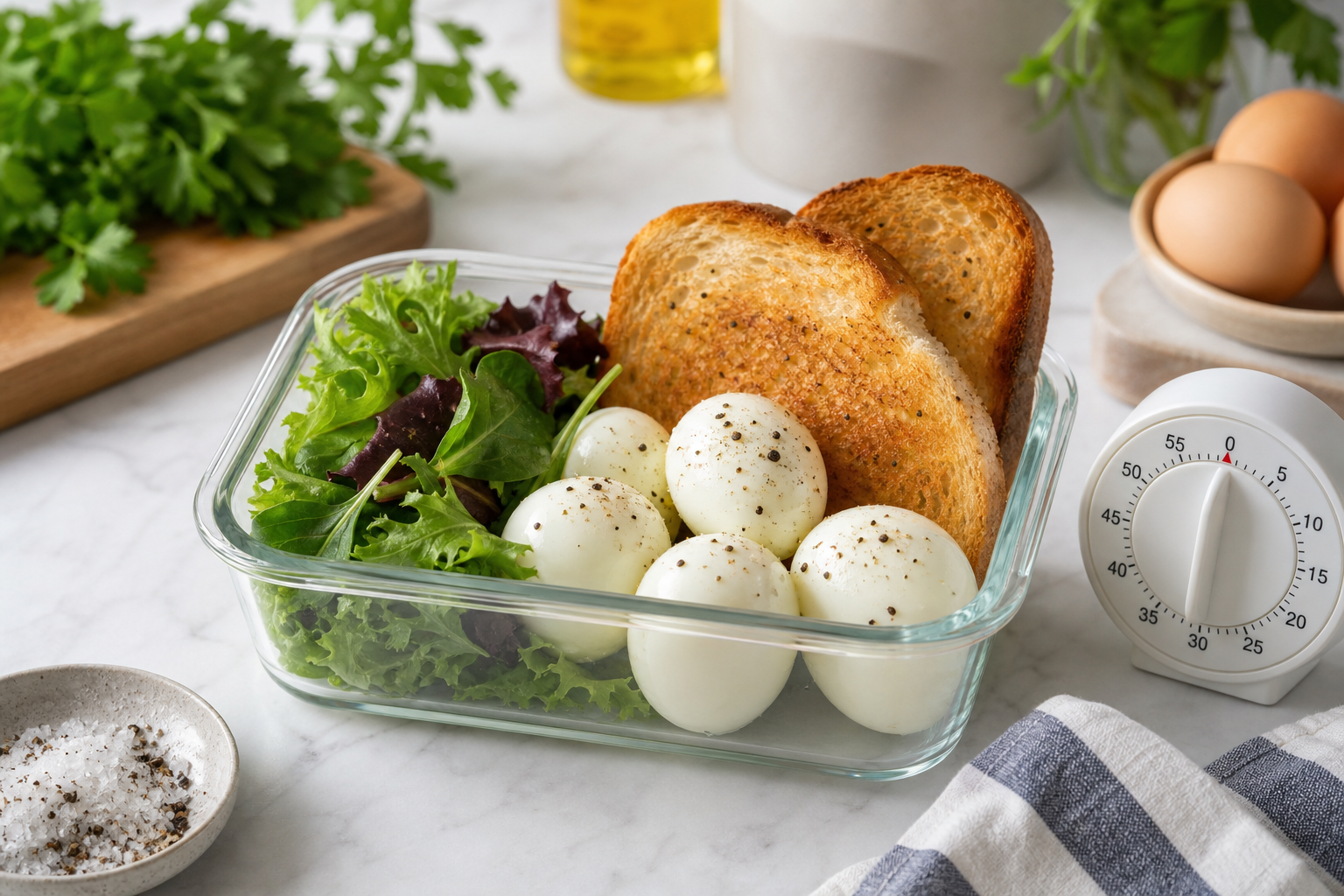
Hard-boiled eggs are convenient for busy U.S. households, school lunches, road trips, and weekly meal prep, but they still need safe storage. According to common food safety guidance, cooked eggs should not stay at room temperature for more than 2 hours. Refrigerate them promptly in a covered container.
- Unpeeled hard-boiled eggs: Store in the refrigerator for up to 1 week.
- Peeled hard-boiled eggs: Store in an airtight container and use within 3 to 5 days for best quality.
- Soft-boiled eggs: Best eaten immediately, though they can be refrigerated for up to 2 days if cooled fast.
- Do not freeze boiled eggs whole. Whites become rubbery after thawing.
Common Mistakes That Ruin Boiled Eggs
Overcooking is the biggest mistake. Eggs keep cooking from residual heat after leaving the pot, so skipping the ice bath can turn a perfect 10-minute egg into a dry 13-minute egg. Another mistake is boiling too aggressively, which causes cracking and uneven texture.
Using different egg sizes in one pot also creates inconsistent results. If one egg is medium and another is jumbo, they will not reach the same doneness at the same time. For clean results, cook similar-size eggs together and use a timer instead of guessing.
Best Uses for Each Boiled Egg Texture
Choose softer eggs for dishes where yolk acts like sauce. Choose firmer eggs for recipes that need structure. If you are cooking for a crowd, 10-minute hard-boiled eggs are the safest middle ground because they are fully set without being too dry.
- 5 to 6 minutes: Toast soldiers, breakfast bowls, steamed vegetables, quick snacks.
- 7 to 8 minutes: Ramen, salads, grain bowls, sandwiches with sliced egg.
- 10 minutes: Lunch boxes, high-protein snacks, simple sliced eggs with salt and pepper.
- 11 to 12 minutes: Deviled eggs, egg salad, potato salad, picnic dishes.
Conclusion
For large refrigerated eggs, boil 5 to 6 minutes for soft-boiled eggs, 7 to 8 minutes for jammy eggs, and 10 to 12 minutes for hard-boiled eggs. Cool them in an ice bath right away to stop cooking, improve peeling, and protect the yolk texture. Once you know your preferred timing, boiled eggs become one of the easiest, most reliable foods to prepare for breakfast, snacks, salads, and weekly meal prep.