
A makeup sponge touches foundation, concealer, cream blush, sunscreen, facial oil, and skin every week, sometimes every day. That makes cleaning more than a neat-freak habit. Clean sponge gives smoother blending, better color payoff, and less product buildup. Choosing best soap for beauty blender matters because wrong cleanser can leave residue, break down foam, or fail to remove long-wear makeup.
Introductory illustration
For most U.S. makeup users, best choice is soap that cuts oil, rinses clean, and stays gentle on sponge material. Bar soaps, liquid brush cleansers, baby shampoo, and solid makeup sponge cleansers can all work, but each has strengths. Below, you will find practical picks, what to look for, and how to wash a beauty sponge without damaging it.
What Makes a Soap Good for a Beauty Blender?
Beauty sponges are porous. They absorb water, makeup, and cleanser fast. Good soap must remove pigment and oil without leaving film inside sponge. If cleanser is too harsh, sponge may tear, feel stiff, or lose bounce. If cleanser is too weak, stains and bacteria-friendly residue stay trapped inside.
Strong beauty sponge cleanser should do three things well: dissolve makeup, rinse fast, and preserve soft texture. Fragrance-free or low-fragrance formulas are usually better for sensitive skin, especially if sponge touches acne-prone or reactive areas. Antibacterial claims can sound appealing, but complete rinsing and proper drying matter more for daily hygiene.
Key Features to Prioritize
-
Gentle surfactants: Clean makeup and oil without stripping sponge foam.
-
Low residue: Rinses clear, leaves no slick or waxy feel.
-
Oil-cutting power: Handles foundation, concealer, and cream products.
-
Skin-friendly formula: Fewer irritants, dyes, and heavy fragrances.
-
Easy grip or format: Solid soaps help scrub stains from sponge surface.
Best Soap Types for Cleaning a Beauty Blender
There is no single perfect cleanser for everyone. Best option depends on makeup type, skin sensitivity, budget, and how often sponge gets cleaned. Here are main categories worth considering.
Solid Makeup Sponge Cleansers
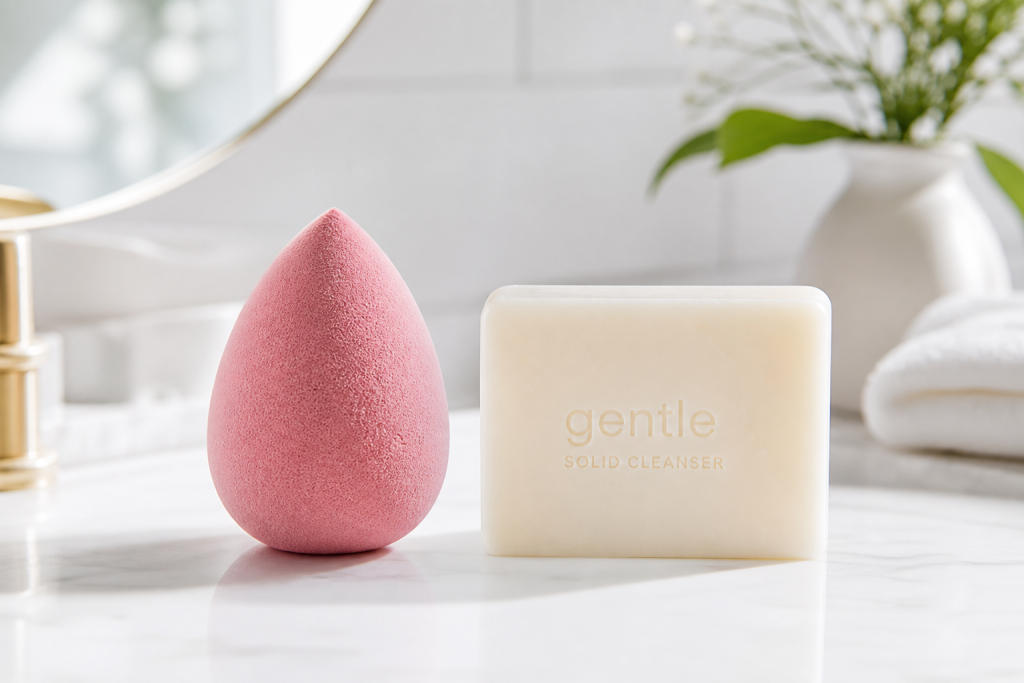
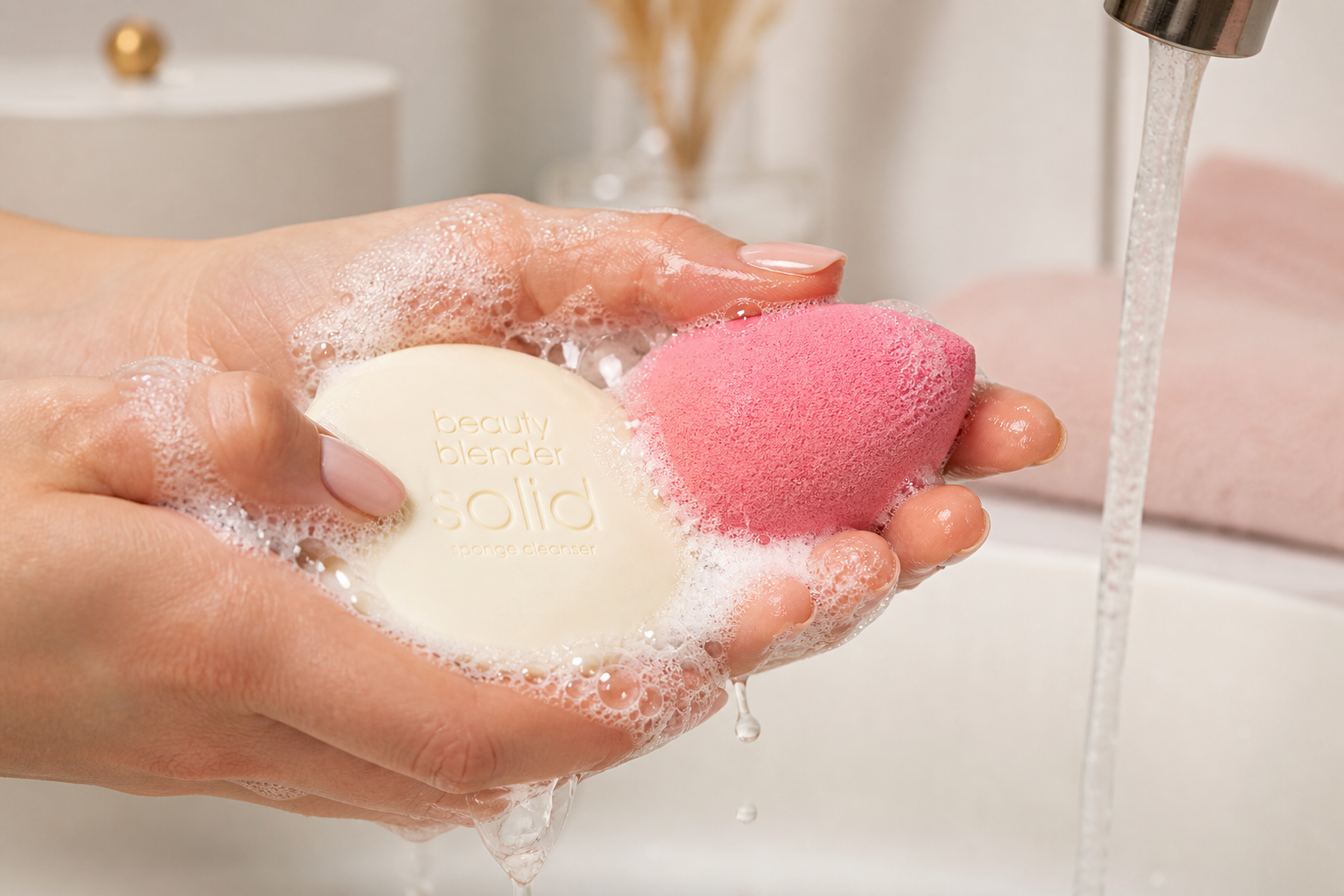
Solid cleansers made for makeup tools are often most convenient. They usually come in compact jars or tins, lather quickly, and give controlled scrubbing power. You wet sponge, swirl it over soap, squeeze, and rinse. This format works especially well for thick foundation stains because direct contact helps lift pigment from surface pores.
Solid sponge cleansers also travel well and last long. Many users in U.S. beauty communities prefer them because they are less messy than liquid soap and easy to keep near sink or vanity. Downside: some formulas cost more than basic soap, and scented versions may bother sensitive skin.
Gentle Bar Soap
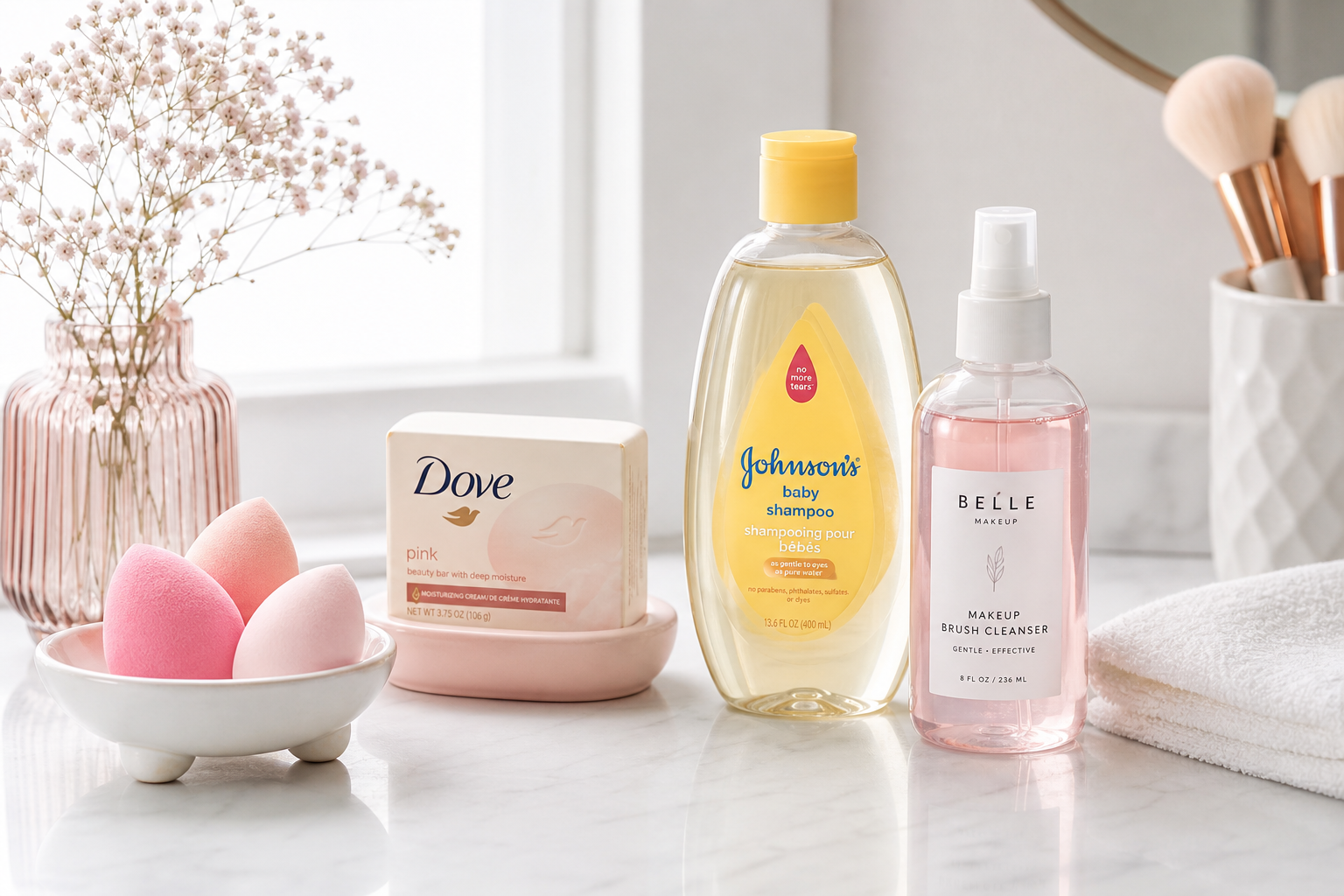
Classic unscented bar soap can be surprisingly effective. A mild facial bar or sensitive-skin cleansing bar removes makeup residue well when used with warm water. Bar format gives enough friction to loosen product without needing extra tools. For budget-friendly cleaning, this is one of best options.
Look for bars labeled gentle, fragrance-free, or suitable for sensitive skin. Avoid deodorant body bars with strong perfume, exfoliating grains, or heavy moisturizers. Those can leave residue or rough up sponge surface.
Liquid Brush Cleanser
Liquid brush cleanser works well for quick washing and for users who clean brushes and sponges together. It spreads easily through sponge and can remove daily foundation buildup with less rubbing. Many professional makeup artists prefer liquid formulas for sanitation routines because they measure cleanly and rinse predictably.
However, liquid cleanser can be overused. Too much soap gets trapped inside sponge, causing long rinse times. Use small amount, massage gently, then rinse until water runs clear.
Baby Shampoo
Baby shampoo is popular because it is gentle, affordable, and easy to find at Target, Walmart, CVS, and grocery stores. It works best for light to moderate makeup residue. It is also useful for users who want low-irritation option and clean sponge frequently.
Weak point is oil removal. Long-wear matte foundation, waterproof makeup, and sunscreen-heavy base products may need stronger cleanser. If sponge still feels slippery after washing, baby shampoo may not be enough.
Dish Soap: Use with Caution
Dish soap removes oil extremely well, which makes it tempting for stained sponges. Small amount of gentle dish soap can rescue sponge from stubborn foundation, but it should not be daily cleanser. Many dish soaps are too strong for repeated use and may leave sponge feeling dry or fragile.
If using dish soap, dilute it, rinse thoroughly, and avoid formulas with strong fragrance or antibacterial additives. For routine cleaning, dedicated makeup sponge cleanser or mild bar soap is safer.
Top Soap Picks by Need
Instead of chasing one universal winner, match cleanser to your routine. These practical categories help choose best soap for beauty blender based on real use.
Best Overall: Solid Makeup Sponge Cleanser
Solid cleanser made for beauty sponges is best all-around choice. It offers strong stain removal, controlled lather, and easy rinsing. It also helps clean small areas where foundation gathers, especially pointed tip and rounded base. For people who wear liquid foundation most days, this format gives most consistent results.
Choose fragrance-free version when possible. If product includes silicone scrub pad, use light pressure. Too much rubbing can tear sponge surface.
Best Budget Option: Unscented Gentle Bar Soap
Unscented gentle bar soap is low-cost, easy to replace, and effective for most makeup. It is especially useful if you clean sponge every one to three uses. Frequent washing prevents heavy buildup, so cleanser does not need to be aggressive.
Keep bar in dry soap dish. Wet, mushy bar can collect residue and become less hygienic. Let it air-dry fully after each wash.
Best for Sensitive Skin: Fragrance-Free Baby Shampoo
Fragrance-free baby shampoo is smart pick for sensitive skin. It cleans gently and reduces risk of leftover perfume touching face. It is best for tinted moisturizer, light foundation, and everyday concealer. Pair it with warm water and repeated squeezing for best result.
If you wear full-coverage makeup, pre-rinse sponge longer before adding shampoo. This removes loose pigment and helps shampoo work better.
Best for Heavy Foundation: Makeup Brush and Sponge Cleanser
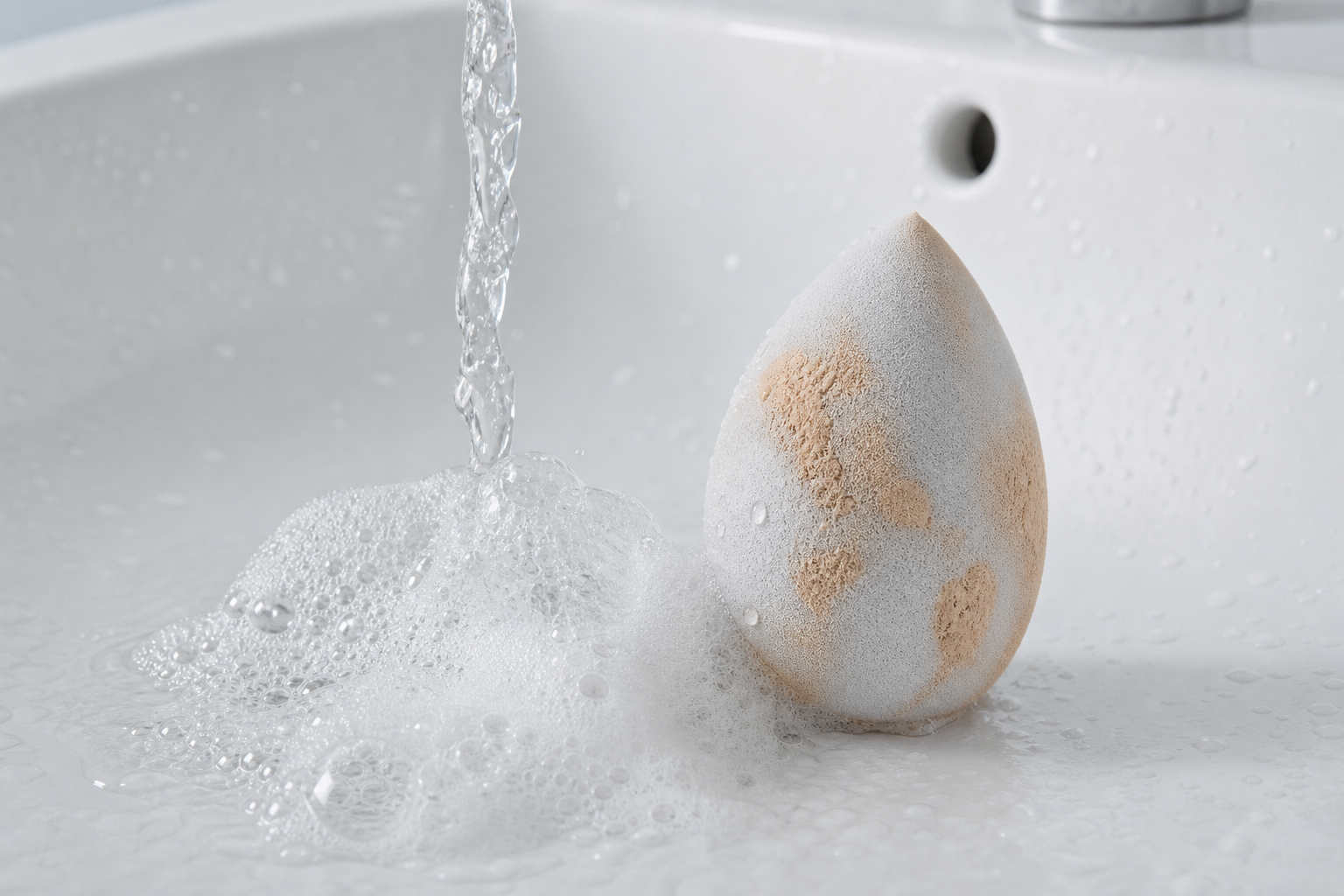
For long-wear foundation, cream contour, stage makeup, or sunscreen-rich base products, stronger makeup brush and sponge cleanser is worth it. These formulas are designed to break down cosmetic oils and polymers without damaging tools. They usually outperform baby shampoo on stubborn beige stains.
Use small amount and rinse patiently. Sponge should feel soft, clean, and springy after wash, not slick.
How to Clean a Makeup Sponge Properly
Detailed illustration
Good soap fails if cleaning method is rough or rushed. Beauty sponge cleaning needs water, gentle pressure, and complete drying. Never scrub sponge with fingernails, twist it hard, or microwave it dry. Heat and friction can shorten sponge life.
-
Soak sponge with warm water: Let sponge expand fully. Warm water loosens foundation and helps soap spread.
-
Add cleanser: Rub sponge onto solid soap or add small drop of liquid cleanser.
-
Massage gently: Squeeze and release. Focus on stained areas without pulling foam.
-
Rinse until water runs clear: Keep squeezing under running water until no bubbles or pigment remain.
-
Remove excess water: Press sponge in clean towel. Do not wring hard.
-
Air-dry completely: Place sponge in open, ventilated area, not sealed drawer or makeup bag.
Clean sponge should have no soap smell, no slippery feel, and no beige water when squeezed.
How Often Should You Wash a Beauty Blender?
For daily makeup users, wash sponge after every use or at least every two uses. Cream makeup and damp sponge create environment where residue builds fast. If you have acne-prone skin, sensitive skin, or active breakouts, daily cleaning is better.
Deep clean once weekly even if you do quick rinses during week. Replace sponge every one to three months, depending on use, staining, tears, and smell. If sponge has black spots, persistent odor, or texture breakdown, throw it away. Soap cannot fix mold or damaged foam.
Ingredients and Formulas to Avoid
Not every cleanser belongs on beauty sponge. Some soaps clean skin well but perform poorly on porous makeup tools. Heavy oils, rich butters, exfoliating beads, and strong perfume can stay trapped inside sponge. That residue may transfer to skin and disrupt makeup finish.
Avoid These Common Problems
-
Exfoliating soap: Grit can tear sponge surface.
-
Heavy moisturizing bar: Butters and oils may leave film.
-
Strong fragrance: Scent can linger and irritate skin.
-
Bleach or harsh disinfectants: These can damage sponge and are unsafe for skin-contact tools.
-
Alcohol-heavy cleaners: May dry and weaken foam over time.
Solid Soap vs Liquid Cleanser: Which Is Better?
Related context illustration
Solid soap wins for stain removal and control. You can target dirty areas directly and create rich lather with less product. It is ideal for foundation-heavy routines and small bathroom counters. Liquid cleanser wins for speed and multi-tool cleaning. It is easier to use when washing several brushes and sponges at once.
If you want one cleanser for everything, choose gentle liquid makeup brush cleanser. If main goal is keeping sponge spotless, choose solid sponge cleanser. If budget matters most, unscented bar soap is hard to beat.
Common Cleaning Mistakes
Most sponge problems come from over-squeezing, under-rinsing, or poor drying. Soap left inside sponge can cause breakouts, texture changes, and patchy makeup application. Damp storage can lead to odor and visible contamination.
-
Using too much soap: More cleanser does not mean cleaner sponge. It means longer rinse.
-
Rushing rinse step: Bubbles inside sponge can irritate skin and affect makeup.
-
Drying in closed container: Trapped moisture creates odor risk.
-
Scrubbing with nails: Nails make tiny tears that grow over time.
-
Keeping sponge too long: Old sponge stays stained and loses bounce even after cleaning.
Final Verdict: Best Soap for Beauty Blender
Best soap for beauty blender is a gentle solid makeup sponge cleanser if you want strongest all-around performance. It removes foundation stains, rinses well, and keeps sponge soft when used correctly. For budget users, unscented gentle bar soap is excellent. For sensitive skin, fragrance-free baby shampoo is safest daily option. For heavy makeup, dedicated brush and sponge cleanser gives deeper clean.
Clean sponge improves makeup finish and skin hygiene. Pick soap that matches your routine, rinse until water runs clear, and let sponge dry in open air. Simple habit, better blend, healthier tool.