
A makeup sponge can make foundation look smooth, but it also traps oil, pigment, dead skin, and bacteria after every use. If you ran out of sponge cleanser or do not want to buy another specialty product, you still have safe options at home. Learning how to clean beauty blender without cleanser helps extend sponge life, protect skin, and keep makeup application fresh without extra cost.
Introductory illustration
The key is using gentle, effective household products that break down makeup without tearing foam or leaving irritating residue. Dish soap, mild hand soap, baby shampoo, micellar water, and even a short microwave sanitizing method can work when used correctly. Below is a practical, skin-conscious guide for cleaning reusable makeup sponges with items common in many U.S. bathrooms and kitchens.
Why Cleaning Your Beauty Blender Matters
A damp sponge is ideal for blending makeup, but moisture also creates a friendly place for bacteria and mold if the sponge sits dirty in a makeup bag or closed drawer. Foundation, concealer, sunscreen, and cream blush can settle deep inside the sponge, not just on the surface. Over time, that buildup affects both hygiene and performance.
When a sponge is not cleaned often, it may cause patchy makeup, clogged pores, breakouts, or irritation, especially for acne-prone or sensitive skin. Cleaning after each use is best, but at minimum, wash it thoroughly every one to three uses if you wear makeup often. If the sponge smells bad, has black or green spots, feels slimy, or no longer rinses clean, replace it instead of trying to rescue it.
Best Household Products to Use Instead of Sponge Cleanser
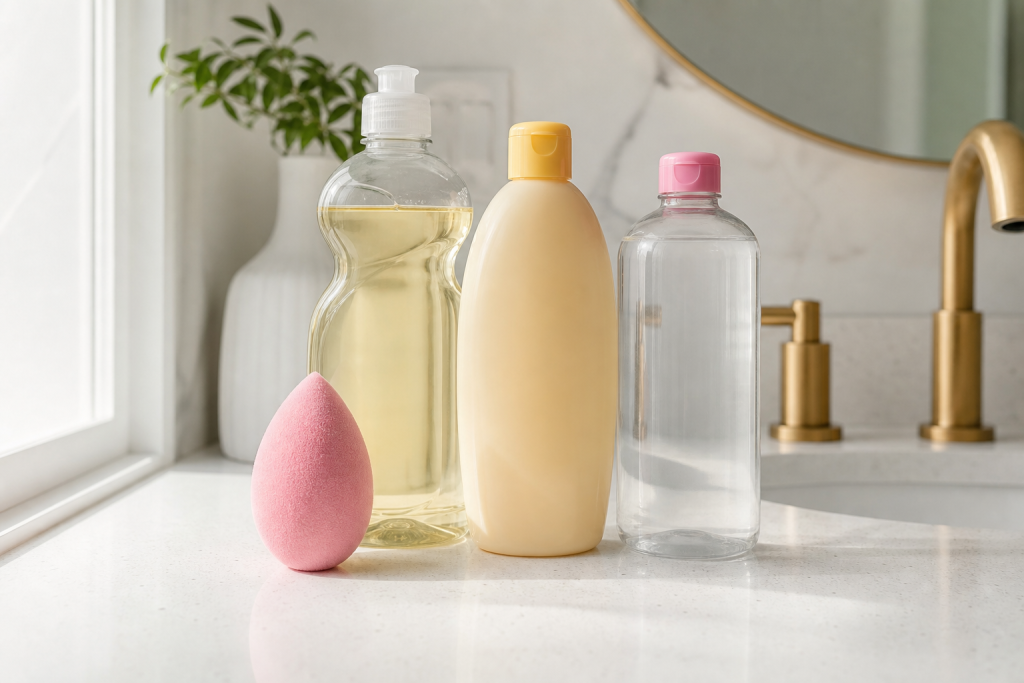
You do not need a branded sponge wash to remove most makeup stains. The safest substitutes are mild, rinseable products that dissolve oils without being too harsh on foam. Choose fragrance-free options when possible, especially if your skin reacts easily.
Gentle Dish Soap
Dish soap is one of the most effective options because it cuts through oil-based foundation and long-wear formulas. Use only a small drop, because concentrated dish soap can create too many suds and take longer to rinse. In the U.S., many people already have gentle formulas like Dawn or similar mild dish liquids near the sink, making this a fast option.
Baby Shampoo
Baby shampoo works well for regular maintenance cleaning. It is milder than many soaps and less likely to leave the sponge feeling dry. It may not remove heavy foundation as quickly as dish soap, but it is good for sensitive skin routines and frequent washing.
Mild Hand Soap or Face Wash
A simple hand soap or gentle facial cleanser can clean a makeup sponge in a pinch. Avoid exfoliating cleansers, acne washes with strong acids, benzoyl peroxide formulas, and heavily fragranced soaps. These can damage sponge texture or leave ingredients you may not want pressed into your skin later.
Micellar Water
Micellar water helps loosen makeup before washing, especially around stained areas. It is useful for spot-cleaning stubborn concealer or foundation marks. However, micellar water alone is not always enough for deep cleaning because you still need to rinse out trapped makeup, oil, and residue.
How to Clean a Beauty Blender Without Cleanser: Sink Method
This is safest everyday method for most reusable makeup sponges. It works with dish soap, baby shampoo, or mild hand soap.
-
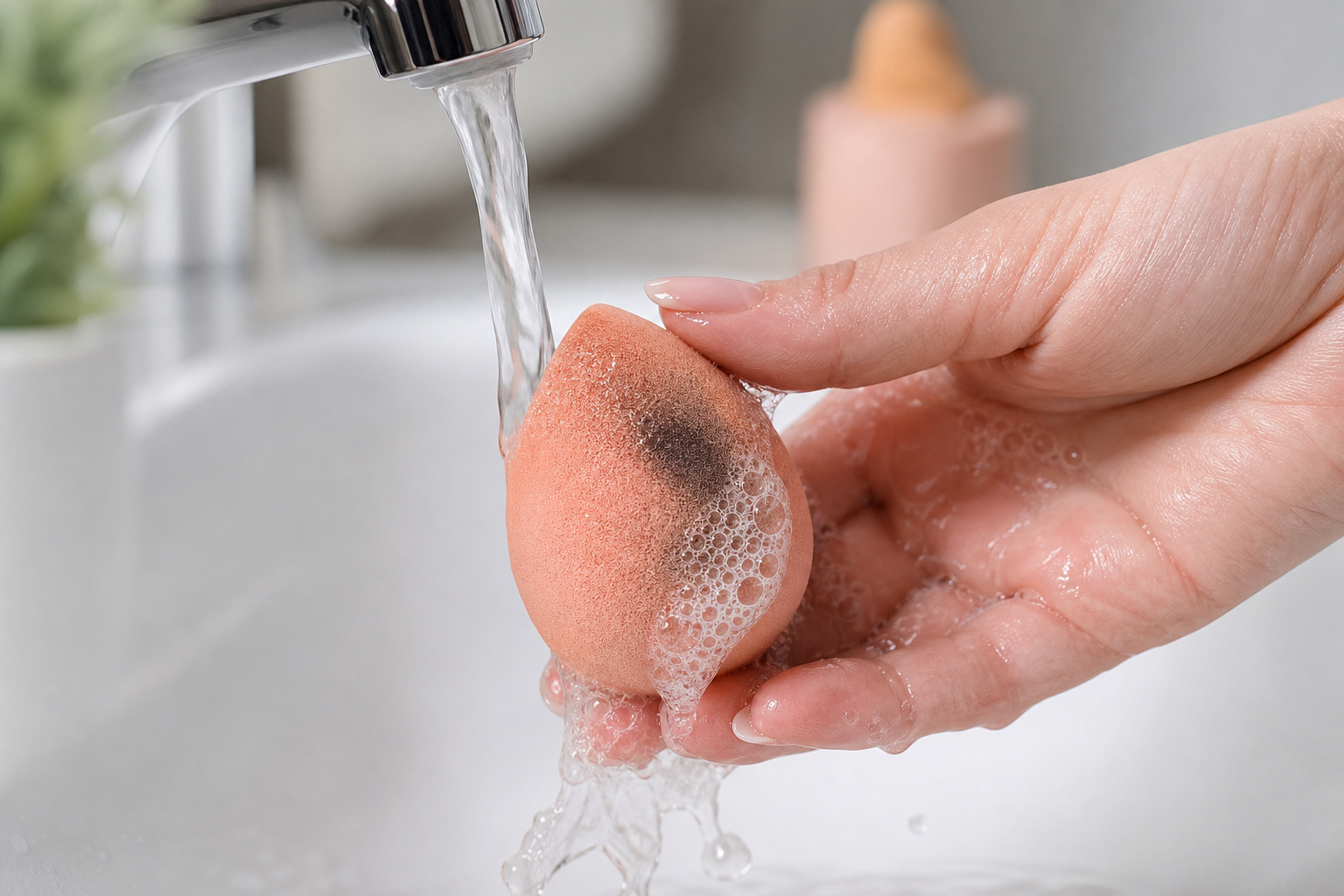
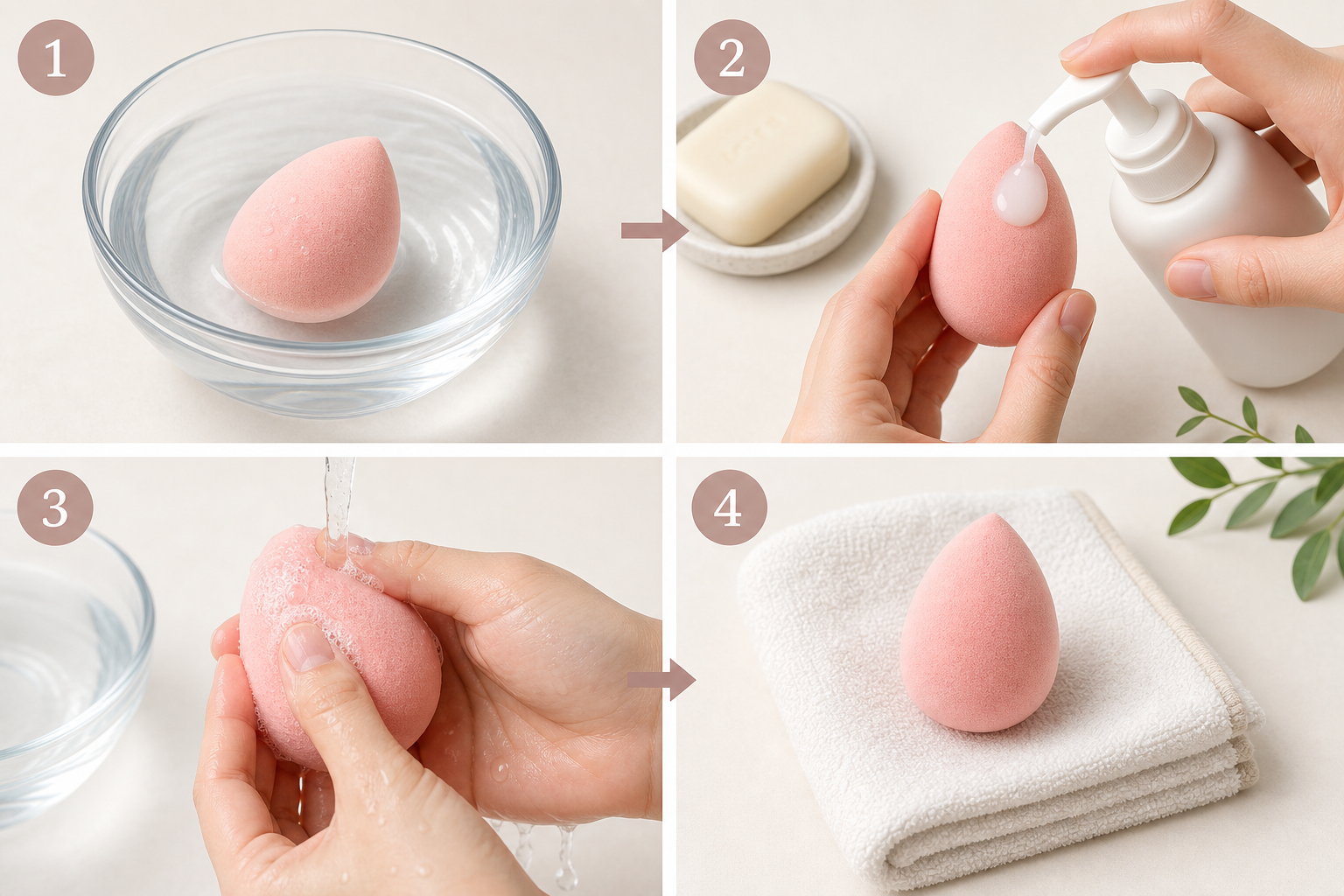
Wet sponge fully. Hold sponge under lukewarm running water until it expands and feels completely soaked. Avoid hot water, which can weaken material over time.
-
Add small amount of soap. Place one drop of dish soap or a pea-sized amount of baby shampoo on stained areas. More soap does not mean cleaner sponge; it often means longer rinsing.
-
Massage gently. Squeeze and release sponge under water. Roll it between fingers instead of twisting or wringing. Twisting can tear foam and shorten sponge life.
-
Work on stains. For heavy foundation spots, apply tiny extra drop of soap directly to stain and press sponge in palm. Repeat until water starts running clearer.
-
Rinse thoroughly. Keep squeezing under lukewarm water until no bubbles or makeup color come out. This step matters because leftover soap can irritate skin.
-
Dry properly. Press sponge in clean towel to remove excess water, then air-dry it in an open, well-ventilated spot. Do not store it wet in sealed container.
This method usually takes two to five minutes, depending on how stained sponge is. For daily makeup wearers, fast washing right after application is easier than waiting until product dries deep into foam.
Dish Soap and Olive Oil Method for Stubborn Foundation
Long-wear foundation, waterproof concealer, and cream contour can be hard to remove with soap alone. A small amount of oil can break down makeup before soap washes everything away. This method works, but it must be rinsed very well so oil does not remain inside sponge.
Mix one part olive oil with two parts gentle dish soap in palm or small bowl. Wet sponge, then press stained areas into mixture. Massage gently, focusing on makeup-heavy zones. Rinse under lukewarm water, then wash again with plain soap to remove oil residue. Keep rinsing until sponge feels light, bouncy, and free of slickness.
Use this method occasionally, not every day. Too much oil can be hard to rinse from porous makeup sponges and may affect how foundation applies next time.
Microwave Method to Sanitize Makeup Sponge
Detailed illustration
The microwave method can help sanitize a sponge, but it is not a replacement for washing. Makeup and soap must be removed first. Microwaving a dry sponge is dangerous and can burn or melt it, so follow safety steps carefully.
-
Wash sponge first using soap and lukewarm water.
-
Place sponge in microwave-safe cup filled with enough water to fully cover it.
-
Add one or two drops of mild soap if desired.
-
Microwave for about one minute, watching carefully.
-
Let cup cool before touching, because water will be very hot.
-
Rinse sponge again and air-dry fully.
This technique is useful when you want extra sanitation after breakouts or when sponge has been sitting damp. Still, if sponge has visible mold, a sour smell, or texture changes, throw it away. Sanitizing cannot make a damaged or contaminated sponge safe again.
Can You Clean a Beauty Blender With Bar Soap?
Yes, bar soap can clean a makeup sponge if it is mild and not heavily scented. Wet both sponge and bar, then rub sponge lightly across soap surface. Squeeze under running water to pull makeup out. Repeat only as needed.
Choose gentle bars, such as unscented sensitive-skin soap, over deodorant bars or strong antibacterial soaps. Harsh bars can leave film, dry sponge, or cause skin irritation. After using bar soap, rinse sponge until water runs fully clear and no slippery residue remains.
What Not to Use on a Makeup Sponge
Some household products may seem powerful, but they are not safe or practical for beauty sponges. Avoid anything that can damage foam or leave residue on tool that touches face.
-
Bleach: Too harsh, unsafe for skin contact, and difficult to rinse fully from porous sponge.
-
Rubbing alcohol: Can dry out foam and degrade sponge texture.
-
Vinegar only: May reduce odor but does not remove oily makeup well and can leave strong smell.
-
Hair conditioner: Leaves coating that can affect makeup application.
-
Laundry detergent: Too strong for skin-adjacent beauty tools.
-
Boiling water: Can damage sponge structure and may cause burns during handling.
How Often Should You Wash Your Makeup Sponge?
If you use sponge daily with liquid or cream products, washing after every use is ideal. At minimum, clean it every few uses and let it dry fully between applications. For acne-prone skin, daily cleaning is strongly recommended because bacteria and product buildup can worsen congestion.
Replace sponge every one to three months, depending on use, cleaning habits, and sponge quality. Replace sooner if sponge tears, loses bounce, keeps stains after washing, smells musty, or shows dark spots. Even best cleaning routine cannot make sponge last forever.
How to Dry and Store It Correctly
Related context illustration
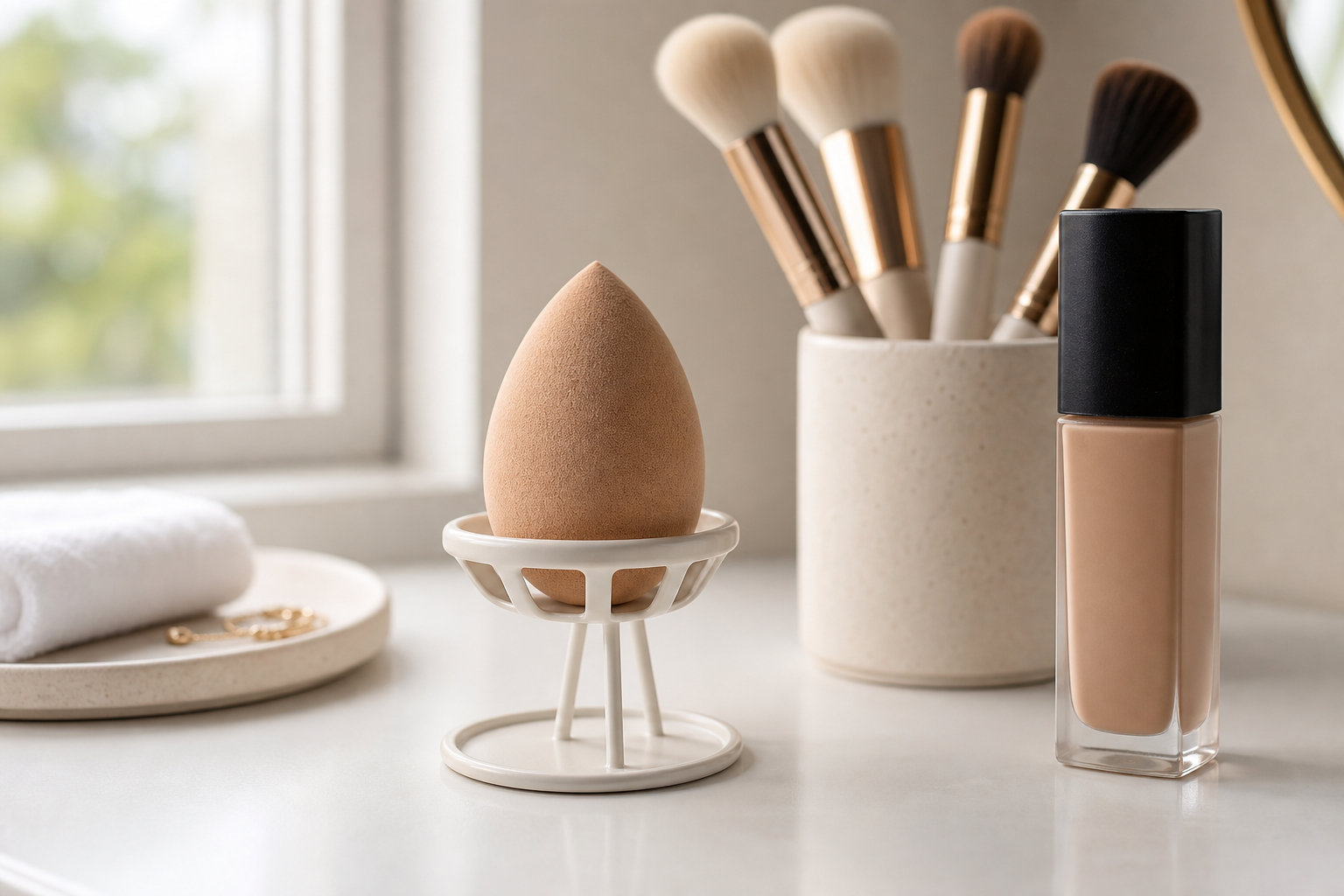
Drying matters as much as washing. After cleaning, press sponge gently in clean towel. Do not twist it. Place it on open tray, sponge stand, or clean counter area with airflow. Avoid sealed makeup bags, closed plastic containers, and damp bathrooms with poor ventilation.
Many beauty sponge cases sold in U.S. drugstores have vent holes, which help during travel. If using one, make sure sponge is only slightly damp or fully dry before closing it. For everyday storage, open air is better than airtight storage.
Quick Fix: Cleaning Sponge When You Are Traveling
Travel makes sponge cleaning harder, especially in hotel bathrooms or shared spaces. Pack a small travel-size bottle of baby shampoo, gentle face wash, or unscented dish soap in a leakproof container. Wash sponge at night so it has time to dry before morning makeup.
If you cannot deep clean immediately, rinse sponge thoroughly after use and let it dry in a ventilated place. Do not leave wet sponge inside toiletry bag. For short trips, consider carrying disposable makeup wedges as backup if you cannot clean reusable sponge properly.
Common Mistakes That Ruin Beauty Sponges
The most common mistake is using too much soap. Excess soap gets trapped inside sponge and takes longer to rinse. Another mistake is squeezing aggressively or twisting, which causes cracks and tears. Some people also store sponge damp in its original plastic packaging, which can encourage odor and bacteria growth.
Another issue is expecting every stain to disappear. Some pigments, especially from full-coverage foundation or tinted sunscreen, can leave light discoloration even when sponge is clean. Focus on clear rinse water, fresh smell, and no product residue rather than perfect color restoration.
A clean sponge should feel soft, springy, and residue-free. If it smells fresh and releases clear water when squeezed, it is usually clean enough for makeup application.
Best No-Cleanser Method for Different Situations
-
Daily quick clean: Baby shampoo or mild hand soap.
-
Heavy foundation stains: Gentle dish soap.
-
Waterproof or long-wear makeup: Dish soap with tiny amount of olive oil, followed by second rinse.
-
Extra sanitation: Microwave method after washing, only with sponge fully submerged in water.
-
Sensitive skin: Fragrance-free baby shampoo or gentle facial cleanser.
Final Takeaway
You can clean a Beauty Blender or any similar makeup sponge without specialty cleanser by using mild household products and proper technique. Best everyday choice is lukewarm water plus baby shampoo, gentle dish soap, or mild hand soap. For stubborn makeup, add careful oil pre-cleanse or use micellar water to loosen pigment before washing.
The real secret is consistency: wash gently, rinse completely, dry in open air, and replace sponge when it shows signs of wear. With right routine, your sponge stays cleaner, your makeup applies better, and your skin gets less exposure to old product buildup.