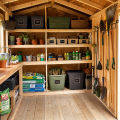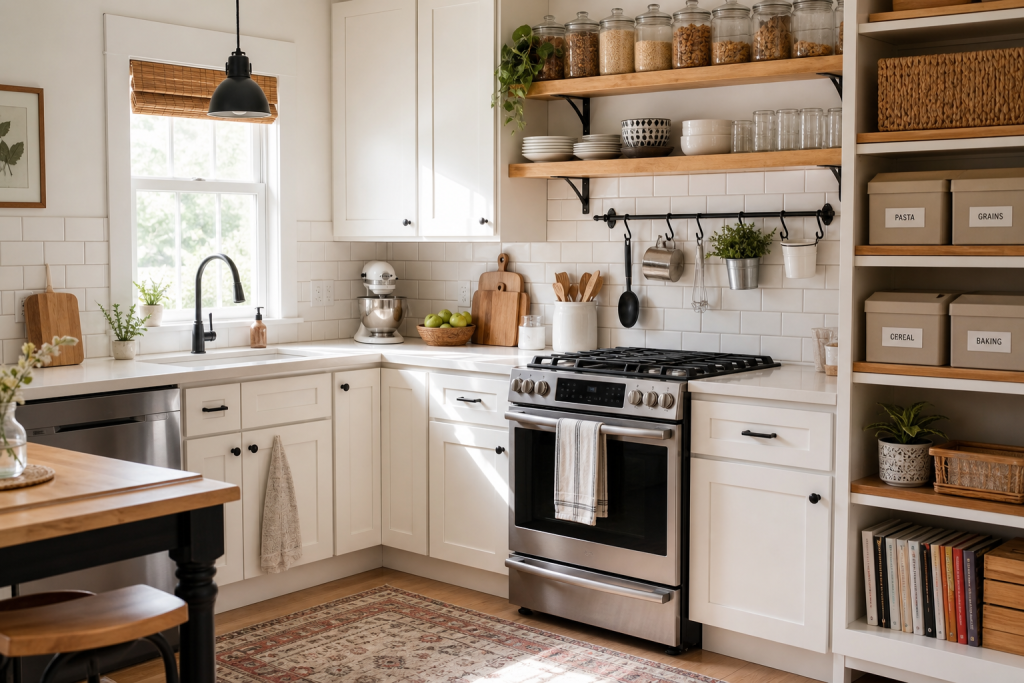

A kitchen does not need more square footage to feel bigger. It needs smarter places for pans, spices, cutting boards, pantry staples, and cleaning supplies. Best diy kitchen storage ideas use dead space, cheap materials, and habits already inside everyday cooking. In many U.S. homes, especially apartments, condos, older houses, and builder-grade kitchens, cabinets are deep, drawers are few, and countertops become landing zones for everything. These practical projects help clear clutter without full remodel cost.
Introductory illustration
Most ideas below use common supplies from stores like Home Depot, Lowe’s, Target, IKEA, Amazon, Dollar Tree, or local hardware stores. Many take one afternoon, need basic tools, and work for renters when removable hardware or tension systems are used.
Start With Zones Before Building Storage
Good kitchen organization starts with matching storage to daily movement. Coffee mugs should sit near coffee maker. Sheet pans belong near oven. Knives and cutting boards make sense near prep space. Pantry bins should group items by meal type, not by package shape. Before adding shelves or baskets, empty one cabinet or drawer at a time and sort items into four groups: keep, relocate, donate, and toss.
Small kitchen storage solutions work best when duplicate tools leave first. Three spatulas may be useful; twelve rarely are. Bulky seasonal items, such as turkey roasting pans or holiday cookie cutters, can move to garage shelving, basement bins, or top cabinets. Everyday kitchen space should hold everyday kitchen items.
Use Cabinet Doors for Hidden Storage
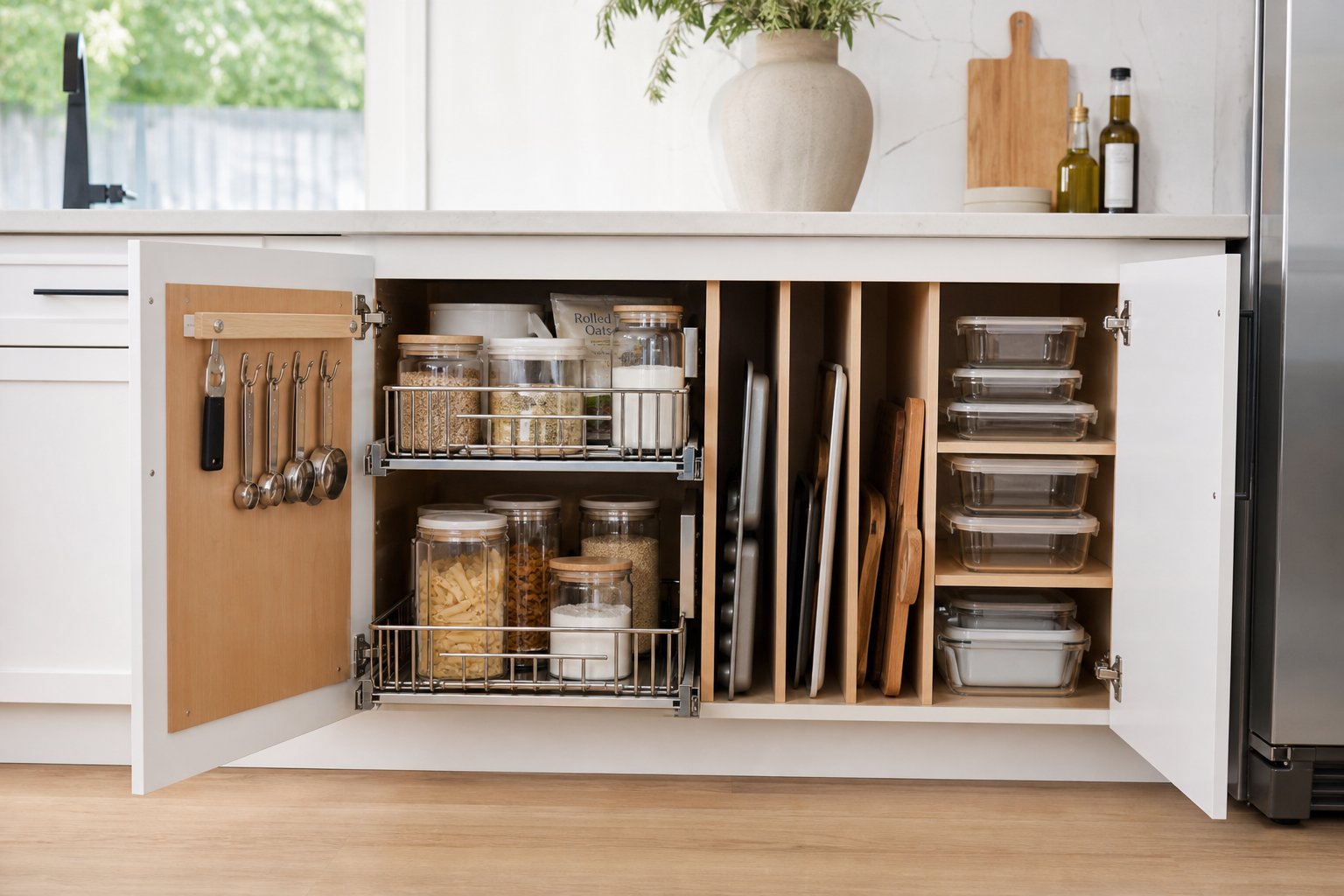
Cabinet doors are wasted real estate in many kitchens. Door-mounted racks, adhesive hooks, and slim caddies create storage without touching counter space. Under sink doors can hold dish gloves, scrub brushes, trash bags, and dishwasher pods. Pantry doors can hold spice jars, foil, wraps, snack bags, and seasoning packets.
Easy Door Storage Projects
-
Measuring spoon hooks: Add small adhesive hooks inside baking cabinet door, then hang spoons and cups by size.
-
Cutting board rack: Mount slim wire organizer inside lower cabinet door to hold flexible mats or thin boards.
-
Wrap station: Use magazine holders or stick-on racks for foil, parchment paper, plastic wrap, and freezer bags.
-
Cleaning caddy: Attach lightweight basket inside sink cabinet for sponges and microfiber cloths.
For renters, choose removable adhesive hooks rated for kitchen humidity. For homeowners, small screws give stronger hold, especially for heavier wood cutting boards or glass spice jars.
Add Pull-Out Storage to Deep Cabinets
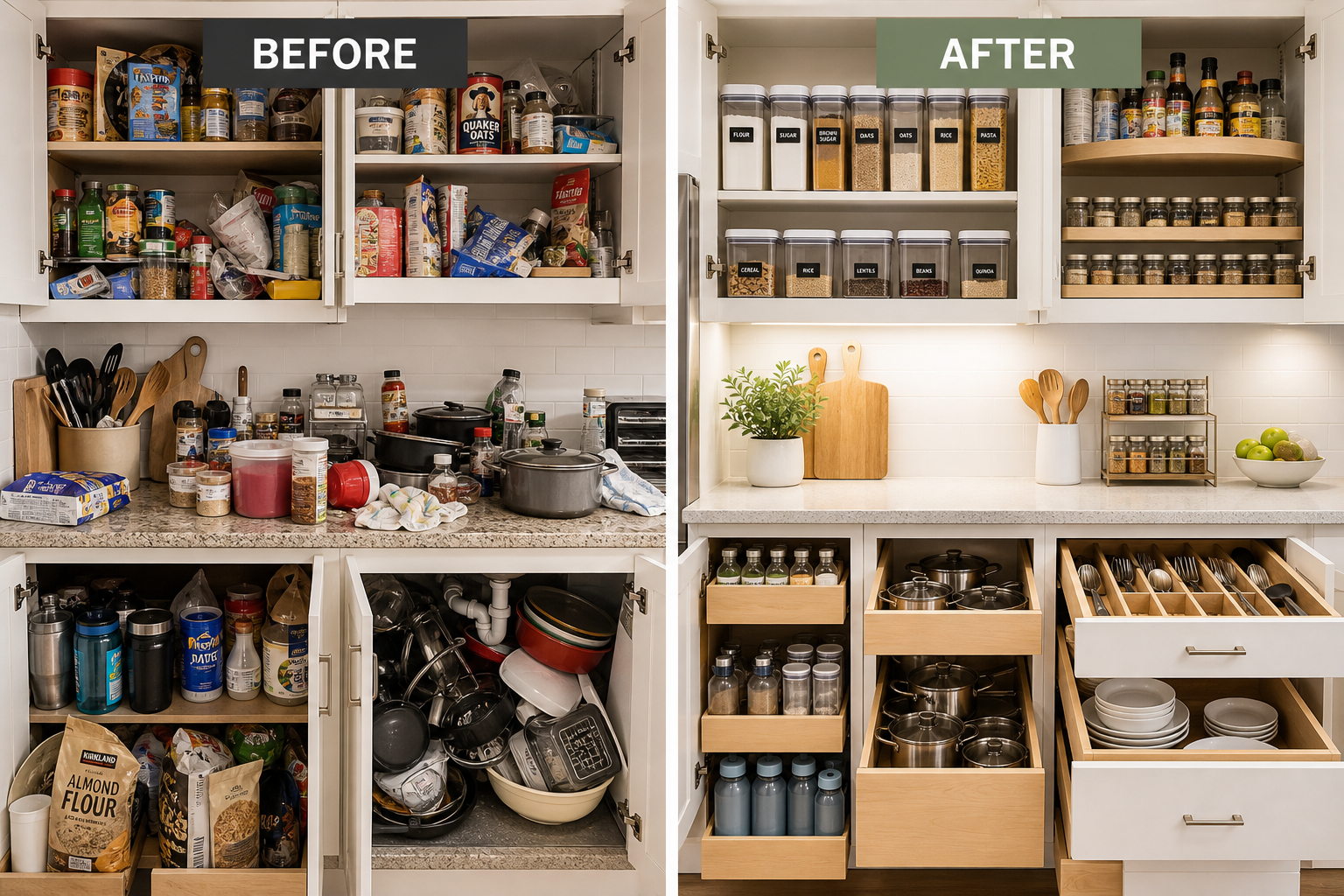
Deep lower cabinets often become black holes. Items in back disappear, then duplicates get bought. Pull-out kitchen storage fixes this by bringing everything forward. Ready-made sliding shelves cost more, but DIY versions are possible with plywood, drawer slides, and basic screws. For easy upgrade, use wire pull-out baskets sized to cabinet width.
Best places for pull-outs include pots and lids, mixing bowls, food storage containers, small appliances, and pantry staples. Measure cabinet opening, hinge clearance, depth, and plumbing before buying parts. Leave space for door hinges so basket can slide out cleanly.
Budget Pull-Out Alternative
If drawer slides feel too advanced, use handled bins. Place oils, vinegars, baking supplies, or snacks in labeled bins that pull out like drawers. This cheap method works well in rentals and needs no drilling. Clear bins make contents visible; opaque bins look cleaner on open shelves.
Build Vertical Storage for Pans, Lids, and Boards
Stacked pans waste time and scratch surfaces. Vertical dividers turn one messy cabinet into a file system. Use tension rods, wire rack dividers, or DIY plywood slots to stand baking sheets, muffin tins, cutting boards, cooling racks, and skillet lids upright.
This is one of most useful kitchen cabinet organization upgrades because it changes access, not just appearance. Instead of lifting five trays to reach one cookie sheet, each piece slides out on its own. Put heaviest items closest to cabinet side for stability. Add felt pads or rubber bumpers if metal pans rattle.
Make Pantry Storage Work Harder
Detailed illustration
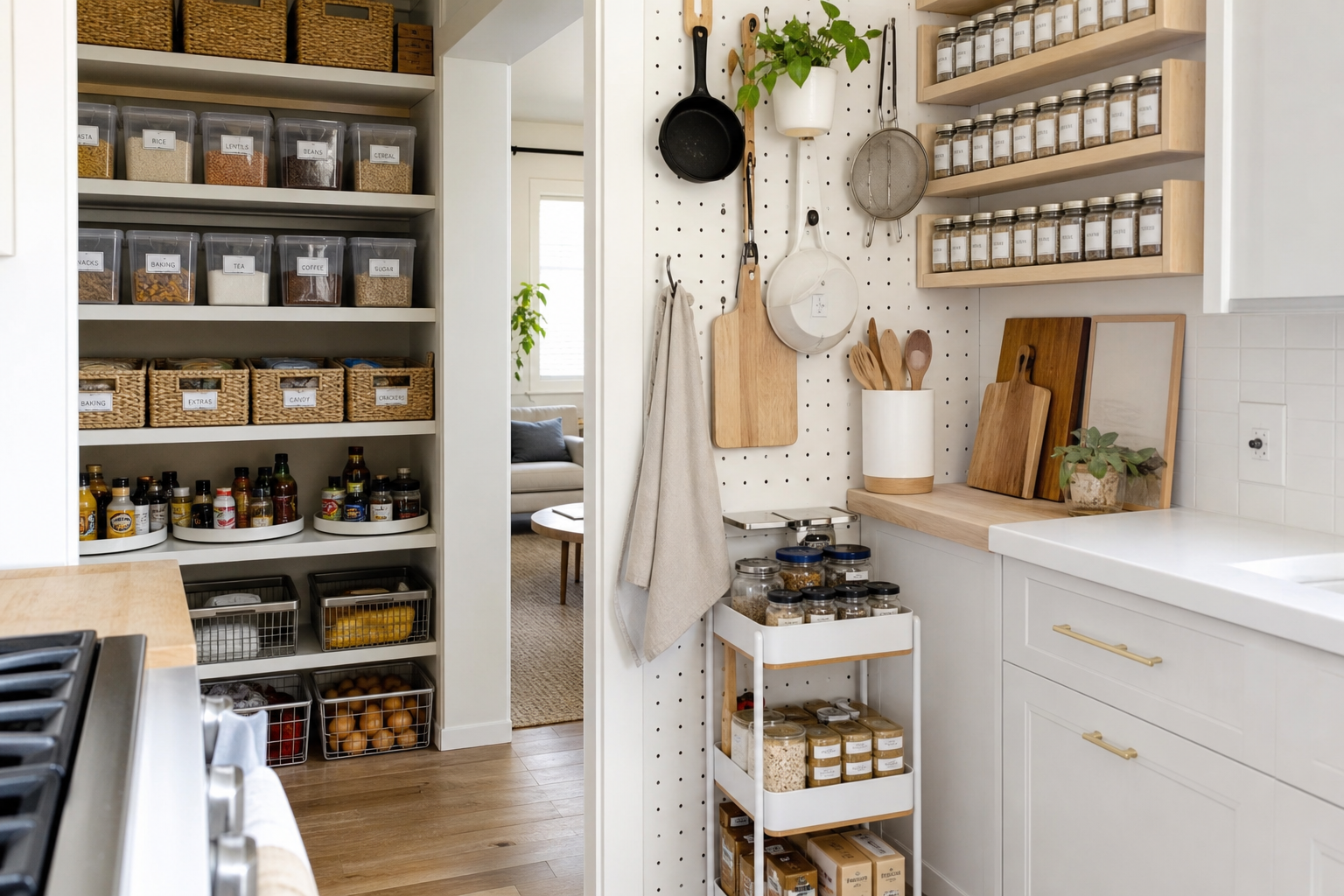
A pantry can be a walk-in closet, single cabinet, wire shelf, or freestanding bookcase. Size matters less than system. DIY pantry organization works when food is grouped by purpose: breakfast, baking, dinner sides, snacks, school lunches, canned goods, sauces, and backstock.
Pantry Upgrades With Big Impact
-
Tiered risers: Use for cans, spices, and small jars so back row stays visible.
-
Lazy Susans: Put oils, sauces, nut butters, or condiments on turntables for quick access.
-
Label bins: Group snack packs, pasta, rice, baking chips, and lunch supplies.
-
Decant dry goods: Use airtight containers for flour, sugar, cereal, oats, and pet treats.
-
Backstock shelf: Keep unopened bulk items together so Costco or Sam’s Club runs do not overwhelm daily shelves.
Do not decant everything for looks alone. Keep cooking instructions, expiration dates, or allergen information by cutting labels and taping them to container back. For busy households, function beats perfect matching jars.
Free Counter Space With Wall Storage
Walls can carry tools that usually crowd drawers. Pegboards, rail systems, magnetic strips, and floating shelves help small kitchens feel open. A painted pegboard near prep zone can hold measuring cups, colanders, scissors, peelers, and small pans. A magnetic knife strip frees drawer space and keeps blades safer when installed away from children’s reach.
Open shelves work best for items used often, such as plates, bowls, glasses, coffee mugs, or cookbooks. Avoid putting rarely used items on open shelves unless dusting is part of routine. In U.S. kitchens with limited upper cabinets, a short floating shelf above coffee station or microwave cart can hold mugs, sugar, tea, and filters.
Turn Awkward Gaps Into Useful Storage
Narrow gaps beside refrigerator, stove, or laundry-style kitchen wall can become storage with slim rolling carts. These carts fit canned goods, spices, oils, wraps, water bottles, or cleaning products. If gap is visible, choose cart material that matches kitchen style: white metal for modern farmhouse, black for industrial, bamboo for warm minimal look.
Toe-kick drawers are another clever option for homeowners. Space below base cabinets can hold baking sheets, placemats, pet bowls, or rarely used serving trays. This project takes more skill but adds hidden capacity without changing kitchen footprint.
Organize Drawers With Custom Dividers
Drawer dividers stop tools from sliding into chaos. Instead of buying one-size-fits-all trays, make custom dividers from thin wood strips, bamboo, acrylic, or sturdy foam board. Measure drawer interior, lay out utensils by category, then create compartments around actual items.
Drawer Categories That Stay Neat
-
Everyday flatware
-
Cooking utensils near stove
-
Baking tools near mixer or pantry
-
Food storage lids and containers
-
Tea towels and dishcloths
-
Junk drawer essentials, limited to one small tray
Food storage drawers need special attention. Match containers with lids, recycle warped pieces, and store lids vertically in a small bin. Square and rectangular containers stack better than round ones and save fridge space too.
Create Small Appliance Parking
Air fryers, Instant Pots, blenders, stand mixers, and coffee machines can dominate counters. Decide which appliances earn permanent counter space by weekly use. Daily coffee maker stays. Monthly waffle maker moves. Heavy appliances should live between waist and shoulder height when possible, not on top shelves where lifting becomes risky.
A DIY appliance garage can be made from a countertop cabinet, repurposed hutch, or section of pantry shelving with outlets nearby. Use baskets for accessories: blender cups, air fryer liners, mixer attachments, and pressure cooker seals. Keeping accessories with appliance prevents drawer clutter elsewhere.
Use Under-Sink Space Safely
Related context illustration
Under-sink cabinets must work around plumbing, garbage disposals, and moisture. Use stackable drawers on one side, tension rod for spray bottles, and waterproof mat on cabinet floor. Keep dishwasher detergent, cleaners, and chemicals locked or high if children or pets live in home.
Never store food, paper plates, or absorbent pantry items under sink. Leaks and cleaning products make this area better for non-food supplies only.
Check under-sink area monthly for drips. Storage is useful only if it does not hide plumbing problems.
Try Rental-Friendly Kitchen Storage Ideas
Renters need upgrades that remove cleanly. Tension shelves, over-door racks, rolling carts, removable hooks, freestanding islands, and magnetic organizers can add real capacity without violating lease terms. A rolling island with shelves can work as prep station, coffee bar, or breakfast cart. Choose locking wheels for safety.
Command-style hooks can hold pot holders, measuring tools, lightweight baskets, or mugs. Magnetic spice tins can stick to refrigerator side, but keep spices away from heat and direct sun. If fridge side faces stove, use that space for timers, shopping list pads, or lightweight tools instead.
Budget Materials for DIY Kitchen Storage
Many projects need more planning than money. Dollar stores sell bins, baskets, shelf risers, and drawer trays. Hardware stores carry tension rods, hooks, pegboard, brackets, and plywood. Thrift stores often have baskets, jars, small shelves, and rolling carts that can be cleaned and repurposed.
Best budget buys include clear shoe bins for pantry groups, adhesive labels, wire shelf risers, lazy Susans, magnetic hooks, and magazine holders. Spend more only where durability matters: drawer slides, heavy-duty shelves, knife magnets, and pull-out trash systems.
Common Mistakes to Avoid
-
Buying bins before measuring: Always measure width, depth, height, and door clearance first.
-
Storing by looks only: Pretty containers fail if family cannot maintain system.
-
Ignoring weight limits: Adhesive hooks and thin shelves can fail under heavy cookware.
-
Overfilling cabinets: Leave breathing room so items come out easily.
-
Mixing unrelated items: Keep baking, coffee, snacks, and dinner prep in separate zones.
Best DIY Storage Plan for Weekend Upgrade
For fast transformation, start with one high-impact zone. Saturday morning, declutter pantry or lower cabinets. Saturday afternoon, install door racks, bins, or vertical dividers. Sunday, label categories and test cooking flow. If something feels awkward during meal prep, move it before system becomes permanent.
Strong kitchen storage does not need matching containers in every cabinet. It needs visible items, easy access, and less movement during cooking. Choose ideas that fit household habits, not social media trends. With few smart DIY changes, even small kitchens can hold more, look calmer, and work better every day.