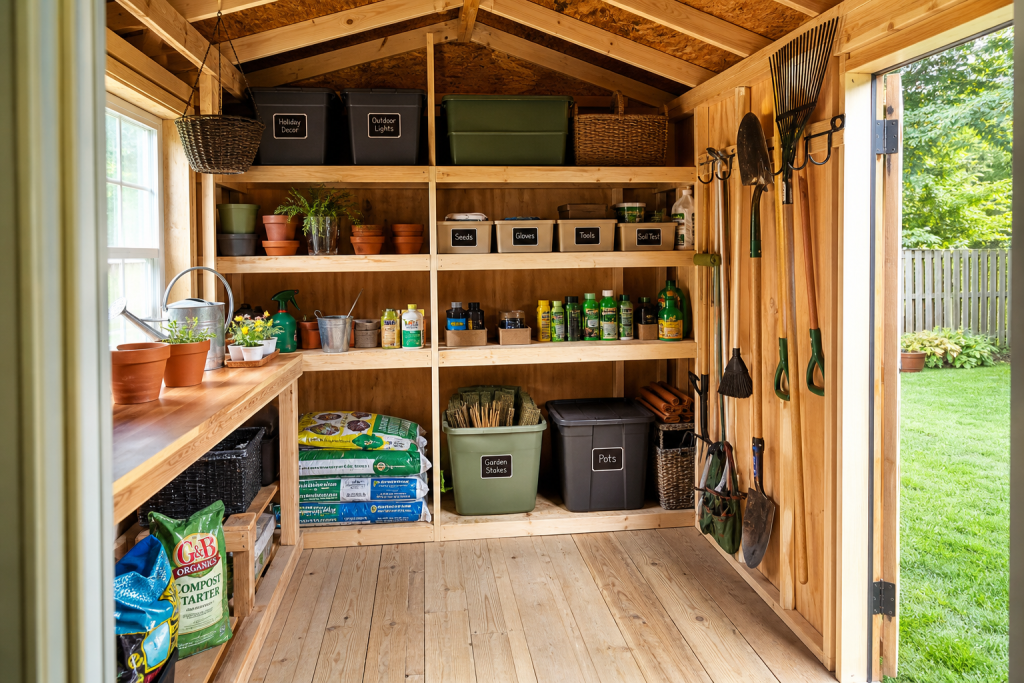

A well-organized shed can turn weekend chores from frustrating to fast. Instead of digging through stacked bins, leaning rakes, and half-empty paint cans, smart shelving gives every tool, tote, and garden supply a clear home. The best diy shed shelving ideas are not complicated or expensive; they are practical, sturdy, and matched to how you use your shed day to day.
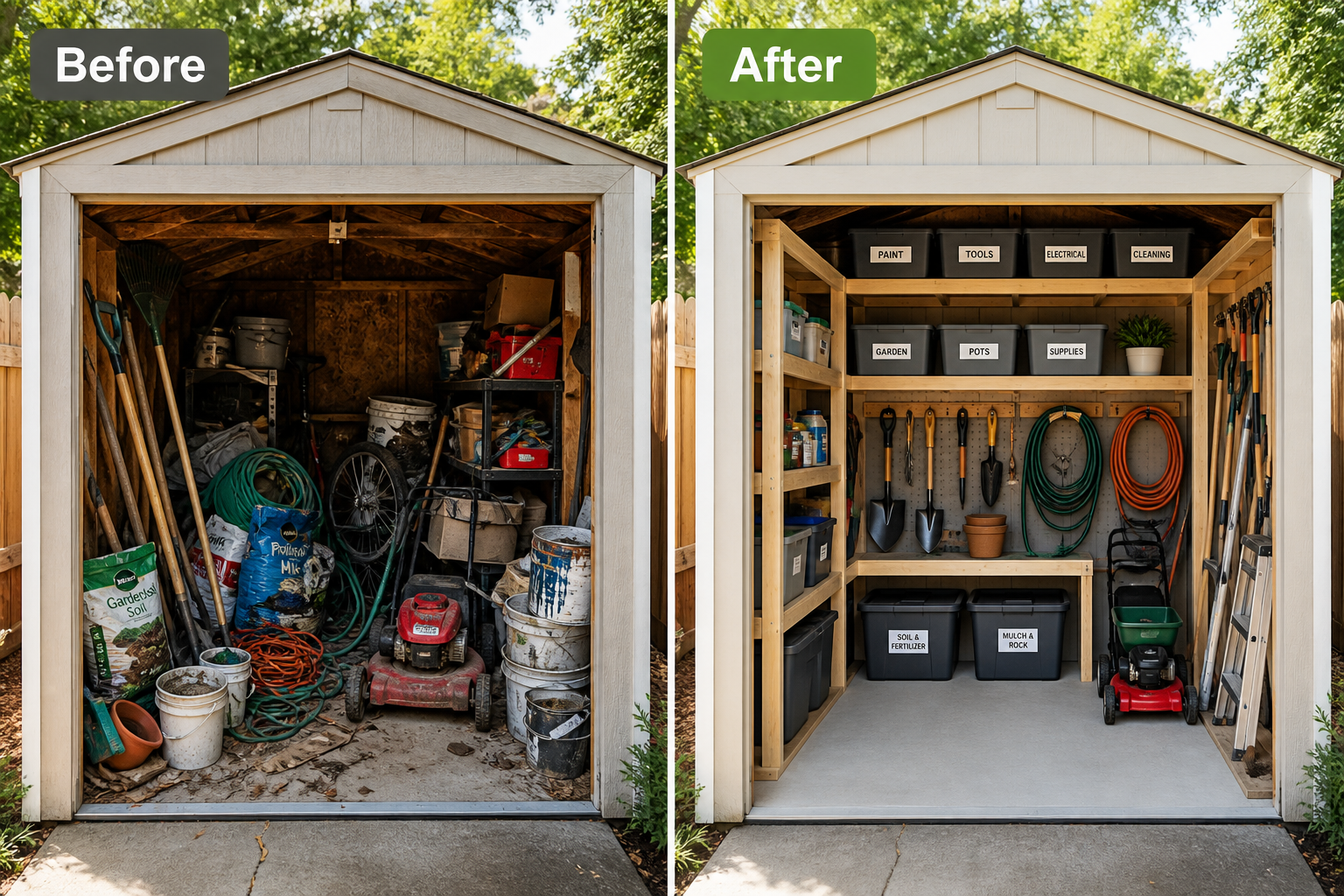
Introductory illustration
Whether you have a small backyard shed for lawn equipment or a larger workshop-style shed with power tools and seasonal storage, the right shelf system can help you use vertical space, protect supplies from moisture, and keep heavy items safely off the floor. Below are practical shed storage ideas that work for typical U.S. backyard sheds, using common materials from home improvement stores like plywood, 2×4 lumber, wall brackets, pegboard, and heavy-duty storage bins.
Best DIY Shed Shelving Ideas for Real Backyard Storage
Before building, think about what you store most often. Lawn fertilizer, potting soil, tool batteries, camping gear, sports equipment, holiday decorations, and paint supplies all need different shelf depths and weight ratings. A good shed organization plan starts with zones: heavy items low, frequently used items at eye level, and seasonal items higher up.
For most homeowners, shelves between 16 and 24 inches deep are useful without becoming clutter traps. Shallow shelves work better for hand tools, sprays, and small containers. Deep shelves work better for plastic totes, bags of soil, and power tools. If your shed has exposed studs, you can attach shelves directly to framing. If walls are thin or unfinished, free-standing shelves may be safer and easier.
Wall-Mounted 2×4 and Plywood Shelves
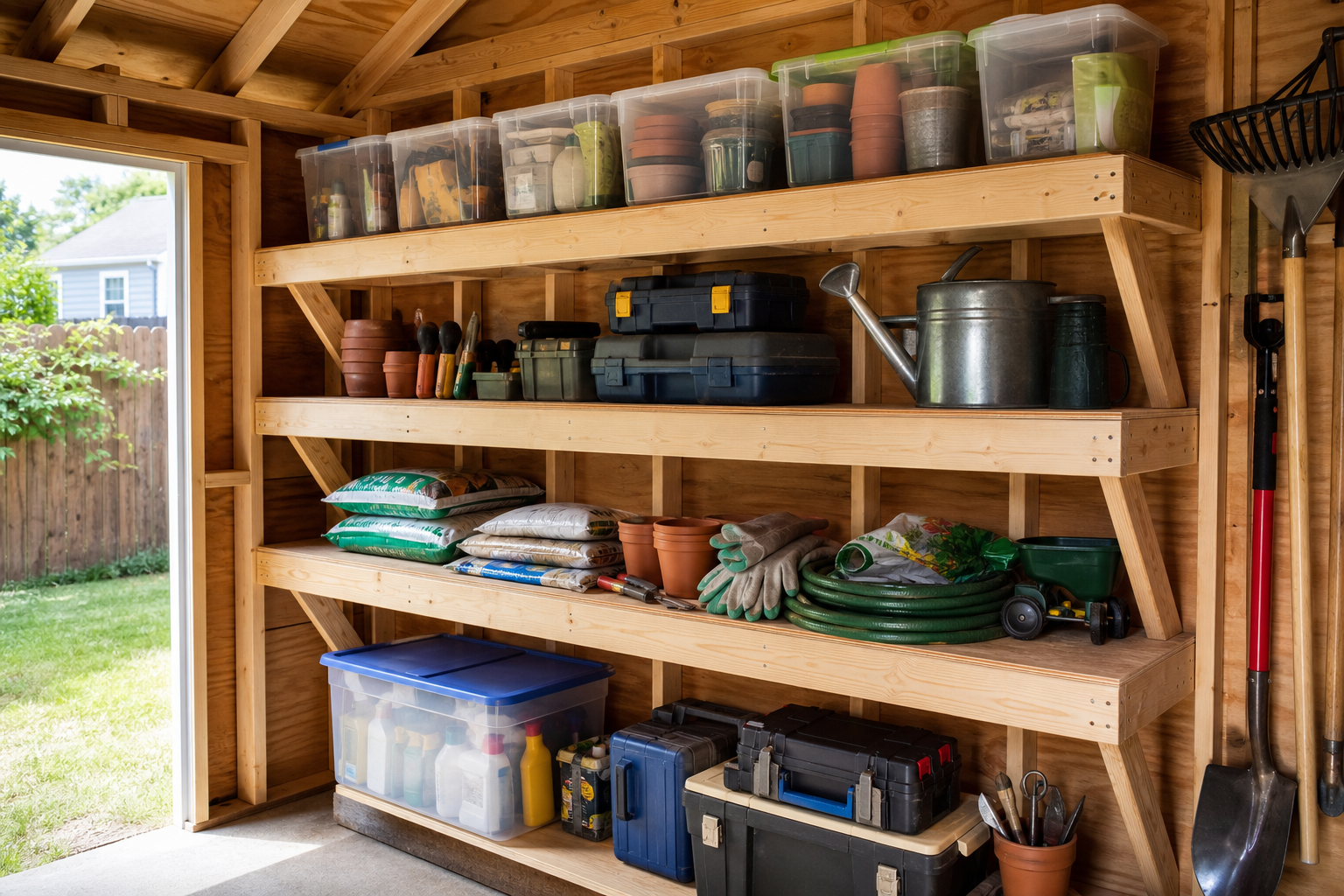
Wall-mounted shelves made from 2x4s and plywood are among the most reliable DIY shed storage solutions. They are affordable, customizable, and strong enough for many household storage needs when secured properly. This design works well in wood-framed sheds where studs are easy to locate.
Why this shelf style works
2×4 frames provide strong support, while plywood creates a flat surface for bins, cans, and boxes. You can build one long shelf along a wall or stack two to three levels vertically. For a typical 8×10 shed, one full-length wall of shelves can free up major floor space.
Practical build tips
-
Use 3/4-inch plywood for shelves that will hold heavier items.
-
Anchor shelf supports into wall studs, not thin paneling.
-
Keep the lowest shelf high enough for a mower handle, leaf blower, or long-handled tools underneath.
-
Add front support legs if shelves will hold heavy paint cans, toolboxes, or bulk supplies.
This is one of the most flexible backyard shed shelving options because shelf spacing can be adjusted around your actual items instead of forcing everything into a store-bought rack.
Free-Standing Shelves for Sheds Without Strong Walls
Not every shed wall can safely hold shelving. Resin sheds, metal sheds, and older lightweight structures may not have framing strong enough for wall-mounted storage. In that case, free-standing shelves are better. They distribute weight to the floor and can be moved later if your layout changes.
A simple free-standing unit can be built with 2×4 legs, horizontal braces, and plywood shelves. For extra stability, keep heavier items on the bottom shelf and attach the top of the unit to the wall with a safety strap if possible. This helps prevent tipping, especially in sheds where kids may enter or where heavy bins get pulled forward.
Best uses for free-standing shed shelves
-
Large storage totes for holiday decor or camping gear.
-
Automotive supplies, oil, and cleaning products.
-
Garden bags, seed trays, and watering cans.
-
Power tool cases and battery chargers.
If moisture is a concern, raise the lowest shelf a few inches off the shed floor. This protects boxes and bags from dampness after heavy rain or snowmelt.
Corner Shelving to Use Awkward Shed Space
Corners often become dead space in a shed, but they are perfect for compact shelving. Corner shelves work especially well for smaller items like spray bottles, plant food, gloves, twine, fasteners, and small hand tools. They also keep narrow sheds from feeling crowded because they use space that would otherwise sit empty.
You can build triangular plywood shelves supported by cleats on both walls, or install L-shaped shelves that wrap around a corner. For best access, keep corner shelves shallower than standard shelves. A 12- to 16-inch depth is usually enough for small supplies while keeping items visible.
Overhead Shed Storage for Seasonal Items
Detailed illustration
Overhead storage is useful when floor and wall space are already packed. Ceiling-mounted shelves or loft-style platforms can hold lightweight, seasonal items such as empty coolers, patio cushions, holiday wreaths, pool floats, and camping pads. This approach makes sense in taller sheds with solid rafters or ceiling framing.
Safety matters here. Do not overload ceiling joists or attach shelves to weak roof panels. If unsure about framing strength, use overhead storage only for bulky but light items. Clear plastic totes with labels work well because you can see contents without pulling everything down.
Store light items high, heavy items low. This simple rule makes shed shelving safer and easier to use.
Adjustable Shelf Tracks for Flexible Organization
Adjustable wall tracks are a smart option if your storage needs change throughout the year. In spring, you may need space for seed trays and soil amendments. In summer, shelves may hold pool chemicals and garden tools. In winter, they may store snowmelt, extension cords, and holiday bins.
Metal shelf standards and brackets let you move shelves up or down without rebuilding. They cost more than basic wood cleats but offer better flexibility. Use them for medium-weight storage, and always follow load ratings from the manufacturer. For heavier items, combine adjustable tracks with plywood shelves and strong anchors into studs.
Narrow Shelves for Paint, Sprays, and Small Supplies
Small items create big messes when they share deep shelves with bulky gear. A narrow shelf rail can solve that problem. Build shallow shelves 4 to 8 inches deep along a side wall for spray paint, lubricants, garden sprays, wood glue, fasteners, and small jars.
Add a small front lip to keep containers from falling. A strip of 1×2 lumber works well. This kind of shelf is fast to build and makes commonly used supplies easy to grab. If your shed gets very hot in summer, check product labels before storing paint, aerosols, fuels, or chemicals inside. Some materials need temperature-controlled storage away from flames or direct heat.
Pegboard and Shelf Combo for Tool Storage
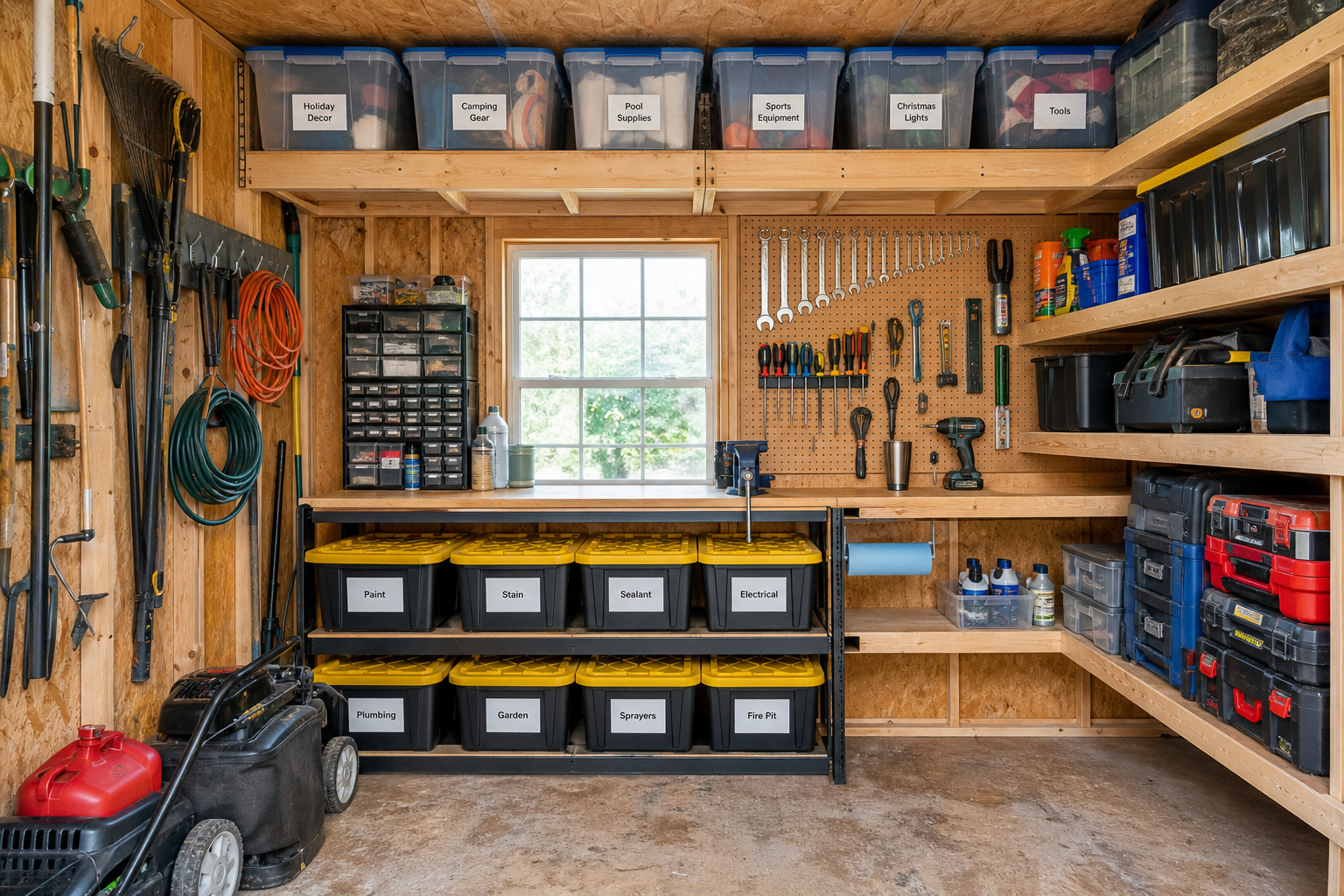
For sheds that double as small workshops, combine shelves with pegboard. Pegboard keeps hand tools visible, while shelves hold boxes, chargers, and supplies. This layout works well above a potting bench or workbench.
Install pegboard with spacers behind it so hooks fit correctly. Then add a shelf above for less-used items and a narrow shelf below for screws, tapes, markers, and measuring tools. This setup keeps the main work surface clear and prevents tools from ending up in random bins.
Good items for pegboard zones
-
Pruners, trowels, and garden hand tools.
-
Hammers, pliers, screwdrivers, and wrenches.
-
Safety glasses, gloves, and tape measures.
-
Extension cords, zip ties, and small hardware packs.
Heavy-Duty Shelving for Lawn and Garden Supplies
Related context illustration
Garden supplies can be surprisingly heavy. Bags of fertilizer, soil, ice melt, grass seed, and charcoal need stronger shelves than lightweight holiday decor. For heavy storage, use thicker plywood, shorter shelf spans, and vertical supports. Long shelves without center support can sag over time.
A practical heavy-duty shelf might use 2×4 frames, 3/4-inch plywood, and legs every 4 feet. Place the heaviest materials on the lowest level. Keep chemicals in original containers and away from children, pets, and ignition sources. If storing gasoline, propane, pesticides, or pool chemicals, follow local safety rules and manufacturer instructions.
Budget-Friendly Shelving With Repurposed Materials
Good shed shelves do not always require new lumber. Repurposed kitchen cabinets, old bookcases, leftover plywood, pallet boards, and salvaged garage shelving can work if they are sturdy and dry. This is useful when organizing a shed on a tight budget.
Be selective with reused materials. Avoid warped boards, moldy wood, weak particleboard, or shelves damaged by water. Many indoor bookcases are not built for damp shed conditions or heavy loads. If using old cabinets, mount them securely and reserve them for lighter items like gloves, seed packets, and small tools.
Small Shed Organization Tips That Make Shelves Work Better
Even good shelves fail if everything gets tossed onto them without a system. Use bins, labels, and zones to make shed shelving more useful. Clear totes are helpful for seasonal items. Open bins work better for items you grab often, like gloves, sprinkler parts, and hand tools.
-
Group by task: Keep gardening, lawn care, painting, and car wash supplies in separate zones.
-
Label bins clearly: Use large labels you can read in low light.
-
Use vertical space: Add hooks under shelves for cords, hoses, and small tools.
-
Leave walking space: Do not build shelves so deep that they block mower access.
-
Review twice a year: Clean out expired chemicals, broken tools, and empty containers.
Common Mistakes to Avoid When Building Shed Shelves
One common mistake is building shelves too deep. Deep shelves seem useful, but small items disappear in the back. Another mistake is ignoring weight. A shelf that looks fine with empty bins may sag when loaded with paint, tools, or garden products.
Moisture is another issue. Sheds often experience humidity, leaks, and temperature swings. Avoid storing cardboard directly on the floor, and choose sealed bins for items that need protection. If your shed leaks, fix the roof or wall gaps before building permanent shelving.
Finally, avoid blocking vents or windows. Airflow helps reduce musty smells, rust, and mildew. Shelving should improve shed function, not trap moisture or make the space harder to use.
Conclusion: Build Shelves Around How You Use Your Shed
The best diy shed shelving ideas are practical, sturdy, and tailored to your tools, climate, and storage habits. Wall-mounted 2×4 shelves are great for strong wood-framed sheds, free-standing shelves work better for lighter metal or resin sheds, and corner, overhead, and narrow shelves help capture space that usually gets wasted.
Start with the items you use most, measure your shed carefully, and build storage zones that keep heavy supplies low and everyday tools within reach. With a few smart shelves and a simple labeling system, even a crowded backyard shed can become clean, safe, and easy to use.