
Trying to sleep while your mind keeps running can feel frustrating, especially when morning alarms, work, school drop-offs, or early gym plans are waiting. If you are searching for how to fall asleep fast, the best approach is not one magic trick. It is a set of small, practical changes that help your body feel safe, cool, calm, and ready for sleep.
Introductory illustration
Most adults in the United States need about seven or more hours of sleep per night, yet stress, late caffeine, bright screens, irregular schedules, and bedroom discomfort often make that hard. Good sleep starts before your head hits the pillow. With right routine, environment, and relaxation method, many people can reduce the time it takes to drift off.
Why Falling Asleep Fast Starts Before Bedtime
Your body runs on a circadian rhythm, an internal clock that responds strongly to light, temperature, meals, movement, and habits. When your evenings change every night, your brain gets mixed signals. One night you scroll in bed until midnight. Next night you try to sleep at 10 p.m. Your body may not know what to do.
Fast sleep depends on two forces: sleep pressure and circadian timing. Sleep pressure builds the longer you stay awake. Circadian timing tells your body when sleep should happen. If either is off, you may feel tired but wired.
Common reasons people struggle to fall asleep include:
- Drinking coffee, energy drinks, or strong tea too late in the day
- Using phones, tablets, or laptops in bed
- Eating heavy meals close to bedtime
- Working late or checking email at night
- Keeping bedroom too warm or too bright
- Napping too long in late afternoon
- Worrying about sleep itself
Goal is to create signals your brain can recognize. Same bedtime window, dim lights, lower temperature, quiet wind-down, and calm breathing all tell nervous system that night is for rest.
Best Bedroom Setup for Better Sleep
Bedroom should support sleep, not compete with it. In many U.S. homes, bedrooms double as offices, entertainment spaces, and scrolling zones. That makes sleep harder because brain links bed with alert activity.
Keep Room Cool, Dark, and Quiet
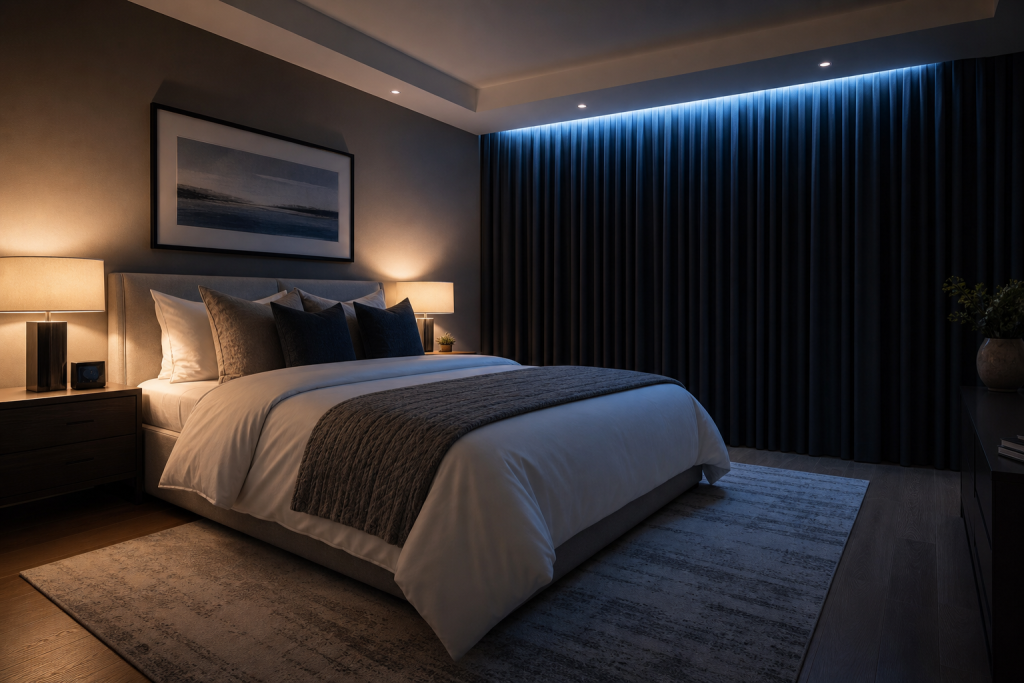
Most people sleep better in a cool room, often around 60 to 67 degrees Fahrenheit. A cooler environment helps body temperature drop, which is part of natural sleep onset. If you wake up sweaty or restless, try lighter bedding, breathable pajamas, fan, or lower thermostat setting.
Light matters too. Streetlights, hallway light, TV glow, and phone screens can delay melatonin release. Blackout curtains, eye mask, or turning alarm clock away can help. For noise, consider earplugs, white noise machine, fan, or sleep sounds if traffic, neighbors, pets, or household members keep you alert.
Make Bed a Sleep Cue
Use bed mainly for sleep and intimacy. Avoid working, eating, watching intense shows, or arguing in bed. This helps brain rebuild connection between mattress and rest. If you cannot fall asleep after about 20 minutes, get out of bed and do something quiet in dim light. Read calm pages, stretch lightly, or listen to soft audio. Return when sleepy.
Fast Relaxation Techniques That Work
When people ask how to fall asleep fast, they often need a way to turn down physical tension and racing thoughts. Relaxation techniques help shift body from fight-or-flight mode into rest-and-digest mode.
Use 4-7-8 Breathing
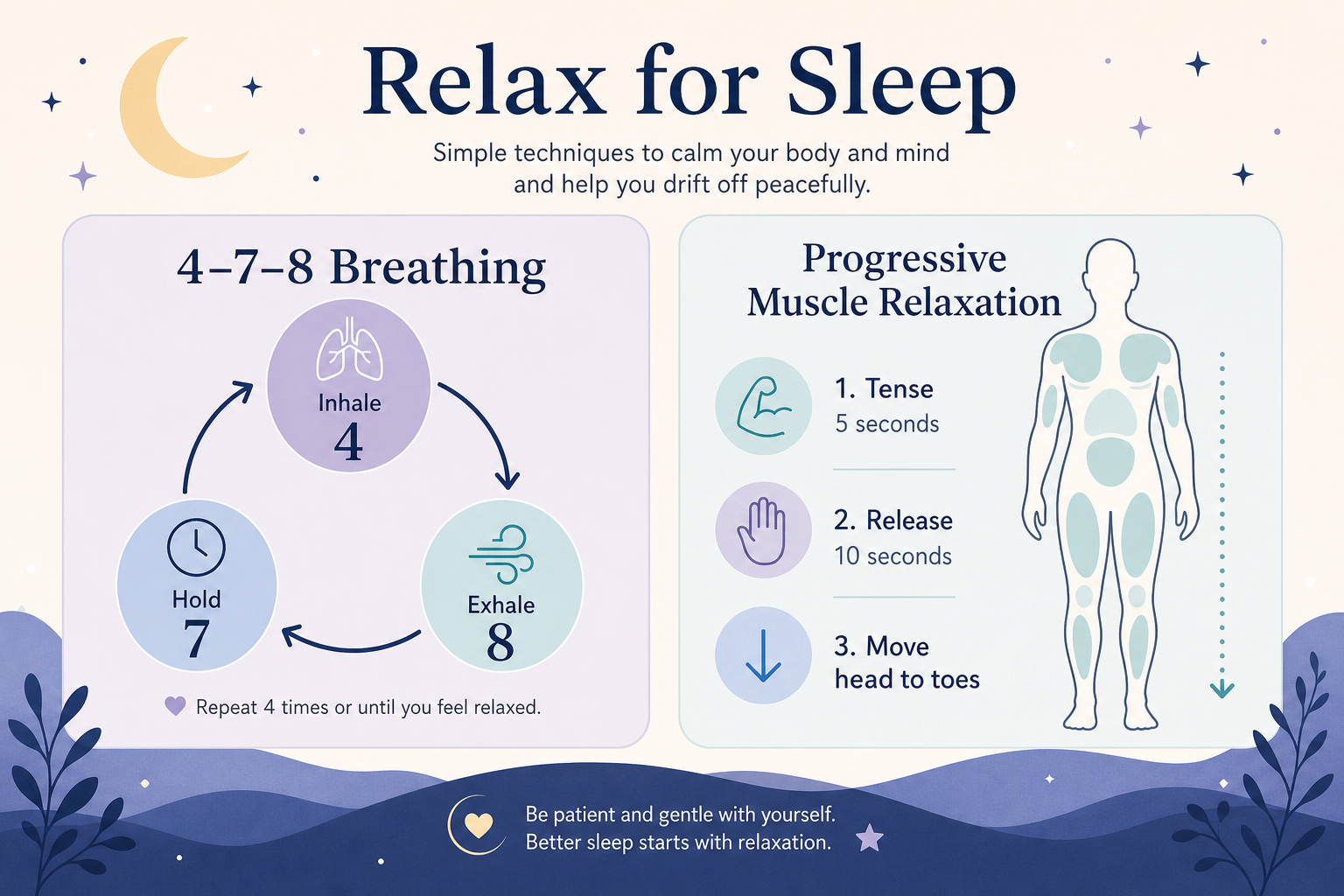
The 4-7-8 breathing method is simple and popular because it gives mind something steady to follow. Breathe in through nose for four seconds, hold for seven seconds, then exhale slowly for eight seconds. Repeat several rounds. If holding breath feels uncomfortable, shorten counts while keeping exhale longer than inhale.
Long exhales can calm nervous system and reduce the sense of urgency that often appears at bedtime. Do not force deep breathing. Gentle, slow breathing works better than effort.
Try Progressive Muscle Relaxation
Progressive muscle relaxation helps when your jaw, shoulders, hands, or legs feel tense. Start at feet. Gently tighten muscles for five seconds, then release for ten to fifteen seconds. Move upward through calves, thighs, stomach, hands, arms, shoulders, face, and forehead.
This method trains body to notice difference between tension and release. Many people realize they were holding stress without knowing it. By releasing each area, you make sleep feel more accessible.
Use a Simple Mental Anchor
If your mind jumps from bills to work deadlines to tomorrow’s schedule, use a boring anchor. Count backward from 300 by threes. Picture slow waves reaching a beach. Repeat a calming phrase such as, “I am safe, I can rest.” The goal is not to think perfectly. The goal is to stop feeding stressful thoughts.
Evening Routine to Fall Asleep Faster
Detailed illustration
A consistent bedtime routine can be more powerful than one single sleep hack. It lowers stimulation and creates repeatable signals. Begin 30 to 60 minutes before bed.
- Dim lights: Turn off bright overhead lights and use warm lamps.
- Stop work: Close laptop, silence work notifications, and avoid checking email.
- Prepare tomorrow: Set clothes, pack bag, and write short to-do list so brain stops rehearsing tasks.
- Do quiet care: Brush teeth, wash face, take warm shower, or stretch lightly.
- Choose calm input: Read fiction, listen to quiet music, or do breathing practice.
Warm shower or bath can help because body cools afterward, which supports sleepiness. Keep routine realistic. If you have kids, shift work, or unpredictable evenings, choose two or three habits you can repeat most nights.
What to Avoid If You Want Sleep Quickly
Some habits seem relaxing but delay sleep. Small changes here can make a big difference.
Limit Caffeine After Lunch
Caffeine can stay active for hours. Coffee at 3 p.m. may still affect sleep at 10 p.m., especially if you are sensitive. In U.S. routines, caffeine often hides in cold brew, soda, energy drinks, pre-workout supplements, iced tea, and chocolate. Try cutting caffeine after noon for one week and track results.
Be Careful with Alcohol
Alcohol may make you feel sleepy at first, but it can fragment sleep later in night. You may wake at 2 or 3 a.m. with dry mouth, racing heart, or restless sleep. If sleep quality matters, avoid using alcohol as sleep aid.
Do Not Doomscroll in Bed
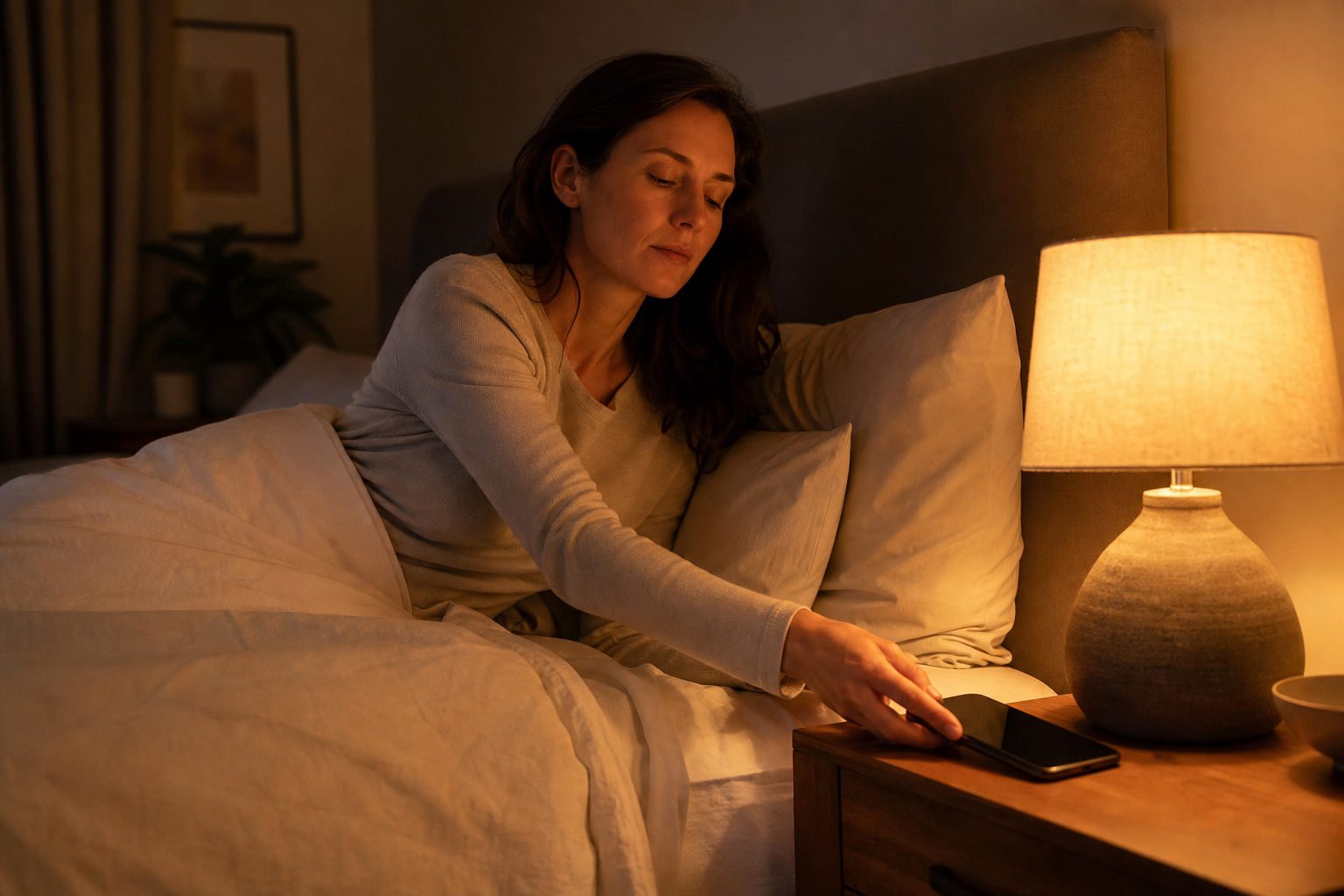
Phones combine bright light, emotional content, social comparison, and endless novelty. That is not sleep-friendly. If you need phone for alarm, place it across room. Use night mode, but do not rely on it as full solution. Best move is screen-free time before bed.
Food, Exercise, and Daytime Habits That Help
Daytime choices shape nighttime sleep. Morning sunlight, movement, and meal timing all affect your internal clock.
Get outside in morning if possible, even for 10 minutes. Natural light helps anchor circadian rhythm and can make bedtime sleepiness stronger. Exercise also improves sleep, but intense workouts too close to bed can keep some people alert. If evening is only option, finish hard training at least one to two hours before bedtime when possible.
Avoid heavy, greasy meals right before lying down. Heartburn and digestion can interfere with sleep. If you are hungry, choose light snack such as banana, Greek yogurt, whole-grain toast, or small bowl of oatmeal. Keep fluids moderate near bedtime if bathroom trips wake you.
What to Do When You Wake Up at Night

Related context illustration
Falling asleep fast is one problem. Staying calm after waking is another. If you wake during night, avoid checking clock. Clock-watching creates pressure and starts mental math: “If I fall asleep now, I get five hours.” That stress wakes you more.
Keep lights dim, avoid phone, and use same breathing or muscle relaxation method. If you feel wide awake after 20 minutes, leave bed and do quiet activity until drowsy. This protects bed-sleep connection.
Do not fight wakefulness in bed. Calm body first, then let sleep return.
When Sleep Problems Need Professional Help
Occasional trouble sleeping is common. But if you struggle to fall asleep three or more nights per week for several weeks, or if poor sleep affects work, driving, mood, or relationships, consider talking with a healthcare professional.
Seek help sooner if you snore loudly, stop breathing during sleep, wake gasping, have restless legs, experience panic at night, or feel extremely sleepy during day. Conditions such as insomnia disorder, sleep apnea, anxiety, depression, reflux, chronic pain, and medication side effects can all interfere with sleep.
Cognitive behavioral therapy for insomnia, often called CBT-I, is one of the best-supported treatments for chronic insomnia. It focuses on sleep habits, thoughts, and behaviors without relying only on medication.
Quick Night Plan for Faster Sleep
If you want a simple plan tonight, try this:
- Set phone away from bed 45 minutes before sleep.
- Dim lights and lower room temperature.
- Write tomorrow’s top three tasks on paper.
- Take warm shower or do light stretching.
- Get in bed and use 4-7-8 breathing for five rounds.
- If still awake after about 20 minutes, get up and read something calm in dim light.
This plan works because it removes stimulation, reduces worry, cools body, and gives brain a predictable path toward rest.
Conclusion
Learning how to fall asleep fast is less about forcing sleep and more about creating right conditions for it. Cool bedroom, consistent bedtime routine, less caffeine, fewer screens, calm breathing, and healthy daytime light exposure can make nights easier. Start with two changes tonight instead of overhauling everything. When your body receives same sleep-friendly signals often enough, falling asleep can become less of a battle and more of a natural rhythm.